Looking at norms developed in other fields can provide useful lessons for better development, implementation and respecting of norms in the area of cybersecurity.
The development and implementation of norms should include both policy / diplomatic professionals as well as technical experts.
Norms development should be open and inclusive in order to include developing countries and stakeholders.
Even if not binding themselves, norms can play an important role in helping to interpret and implement binding aspects of international law. Norms matter for cybersecurity because the internet is a decentralized, multinational entity that is hard to govern. Internet governance therefore relies on multistakeholderism, which forms the basis for norms. There are useful lessons to learn from norms developments in other areas:
- Successful norms are concrete, specific, and often create processes to foster implementation and accountability
- Powerful norm promoters can be critical for success, as can be incentives and persuasion
- Failures happen and are inevitable but can become the basis for success
- Norms development, even without results, creates socialization, which can be critical for further success
While norms are often developed via multilateral diplomacy and state-driven efforts, there is an important role for non-state actors from private sector and civil society, providing expert input into both the substance of the norms as well as how they can be implemented. It is also important to involve technical experts, both in the development of norms (to avoid creating unintended negative consequences on the technical operation of the Internet), and to bring technical and policy professionals together to work on implementation of norms.
There are challenges in both developing norms that have wide support and then subsequently in having them implemented. Guidelines can be helpful in supporting implementation of norms.
There are also concerns that cybersecurity norms development processes are not always open and inclusive to all countries and stakeholders.
The work of the BPF has been valuable in tracing norms and finding commonalities, even where there are differences in language and terminology.
When developing and implementing norms to improve cybersecurity, governments should take a joined-up approach by ensuring the involvement of technical experts alongside the policy experts which often tend to lead the processes.
Governments and bodies working on norms should be open and inclusive in order to benefit from technical expertise and diverse viewpoints, and to ensure that developing countries and stakeholders are able to participate.
1. Introduction to the work of the BPF in 2020
Maarten Van Horenbeeck, FIRST
Sheetal Kumar, Global Partners Digital
2. Norms development in cyber vs. the real world
Apratim Vidyarthi, University of Pennsylvania Law School
Anastasiya Kazakova, Kaspersky
3. Analysis of new cybersecurity agreements
John Hering, Microsoft
4. Discussion
Moliehi Makumane, Government of South Africa
Pablo Hinojosa, APNIC
Sherif Hashem, SUNY Polytechnic Institute
Louise-Marie Hurel, Igarapé Institute
Isaac Morales, Government of Mexico
Stéphane Duguin, CyberPeace Institute
Full details of the BPF’s work this year can be found at the BPF’s webpage - https://www.intgovforum.org/content/bpf-cybersecurity. These include:
- What Cybersecurity Policymaking Can Learn from Normative Principles in Global Governance - Background document (download .pdf)
The Internet Governance Forum’s thematic intersessional work on cybersecurity intends to guide submissions to the 2020 Best Practice Forum on Cybersecurity’s final, annual report. By taking the time to identify successful norms initiatives and their role in policy change, the BPF Cybersecurity grounds its analysis of a wide variety of Cyber Norms initiatives in the lessons learned throughout the stages from early development to implementation. The examples studied in this review were chosen for their effectiveness and are not necessarily related to or even tangential to technology or the internet. By looking to successful norms frameworks the BPF Cybersecurity, and the initiatives it has invested in, might better understand the strengths, flaws, and why some norms initiatives have ultimately succeeded.
- Exploring Best Practices in Relation to International Cybersecurity Agreements - draft Research paper (download .pdf)
The IGF 2020 Best Practice Forum (BPF) on Cybersecurity’s workstream on exploring best practices in relation to international cybersecurity agreements is focused on updating and further advancing the analysis of the 2019 BPF report on the state of international cybersecurity agreements, with a more narrow focus on cyber norms agreements. Its work includes:
- Identifying new agreements and developments since last year to include in the analysis.
- Reviewing and refining the scope of agreements to be included in the report.
- Identifying a core group of agreements to include in the 2020 analysis.
- Identifying trends and commonalities between contents of cyber norms agreements.
- Releasing a call for contributions to gain further input on these selected agreements and their implementation.
- Updating last year’s research paper with new learnings about implementation regarding these core agreements.
- Identifying additional international agreements and initiatives on cybersecurity, and performing a deeper analysis of a set of agreements - Call for contributions
In 2020, the BPF Cybersecurity is building on its 2019 report by focusing on identifying additional international agreements and initiatives on cybersecurity, and performing a deeper analysis of a narrower set of agreements. In this deeper analysis, we’re looking specifically at whether the agreement includes any of the UN-GGE consensus norms; and whether any additional norms are specifically called out.
The narrower set of agreements is focused on those that are specifically normative, rather than having directly enforceable commitments. The Best Practice Forum on Cybersecurity is calling for input for its 2020 effort. Input will feed into the BPF discussions, the BPF workshop during the virtual IGF2020 and this year’s BPF output report.
Ms Concettina Cassa welcomed participants and explained the purpose of the IGF Best Practice Forums, and specified that the IGF 2020 BPF Data and New Technologies in an Internet Context focussed on best practices related to the collection and use of users’ data by new technologies that contribute to ensure that the data is used to provide benefit and not to harm users.
Mr Wim Degezelle presented the Data and New Technologies Issues Card developed by the BPF as a tool to structure stakeholder discussions on the topic.
Ms Emanuela Girardi introduced the case studies submitted to the BPF: Ms Verónica Arroyo presented the ‘Dos and don’ts for COVID-19 tracing apps’ developed by AcessNow for lawmakers and governments. Mr. Ricardo Chavarriaga shared the experiences of the CLAIRE COVID-19 TaskForce. Mr. Cathal McDermott focussed on Microsoft’s privacy principles related to the collection of data to tackle COVID-19.
Mr Michael Nelson led a panel discussion on concepts and mindsets and their impact on policy discussions.The roundtable discussion involving all session participants reflected on some frequently used buzzwords and catchphrases, such as ‘cyberspace’, ‘data governance’ ‘ethical artificial intelligence’, ‘data sovereignty’, ‘data is the new oil’, etc. and discussed if they limited, better defined or replaced by new concepts.
The session ended with a discussion, led by Ms. Concettina Cassa, on where in the institutional and Internet governance landscape is a suitable place for policy discussions related to the use of data and new technologies, and how could be avoided that too many talks and processes exist in parallel.
Ms Concettina Casa, MAG BPF Facilitator ( AGID - Agenzia per l’Italia Digitale )
Ms Emanuela Girardi, BPF Co-facilitator ( Pop AI )
Mr Michael R. Nelson, Senior Fellow and Director, Technology and International Affairs, Carnegie Endowment for International Peace
Mr Ricardo Chavarriaga, Senior Scientist at Zurich University of Applied Sciences (ZHAW) and Coordinator of CLAIRE AI & COVID-19 Task Force.
Mr Cathal McDermott, Senior Legal Counsel, Microsoft
Ms Verónica Arroyo, Policy Associate - Latin America, AccessNow
Mr Wim Degezelle, Consultant IGF Secretariat
The final BPF output document will be published one the BPF's webpage after the IGF meeting:
The session tackled the subject of gender at the IGF with a thematic focus on violence, harm, pleasure, and consent. Results from the report put together by the BPF were shared, along with the survey methodology. Overall, the findings show that gender issues tend to be discussed mostly in conjunction with the issue of access and there is a lack of disaggregated data for gender-diverse participants. There was also broad discussion on approaching gender and consent issues online with more positive framing to foster empowerment and focus on subjects such as pleasure. Lastly, speakers and participants also discussed whether a feminist discussion should be included or delineated from the gender and access discourse.
A recurring issue that was raised during the session is the continued silos of various gender subjects at the IGF. Speakers in the session stressed the need to involve more discussions on solutions to gender issues from a policy level in order to make progress on the subject matter. Repeated various speakers also brought up the matter of expanding beyond the UN and the IGF to reaching out to broader communities to instigate lasting change and empower women and gender diverse people. In terms of data, there is overall consensus that more needs to be collected and better disaggregated.
The session underlined the need to distinguish between gender representation and empowered participation. Although women participants and speakers at the IGF have seen a rise over the past few years, there is still more work to be done in regards to agency. Women and gender-diverse individuals need to be encouraged to actively participate and bring forth specific discussions at the IGF; their participation should not be tokenised, nor should it stop at a simple contribution to a session. Proactive efforts to collect more data is required. Going forward, it would be worthwhile to bring forth more discussions on pleasure and consent from a gender diversity perspective. There is also strong recommendation that the IGF make a conscious effort to include regional and local expertise on gender into this policy space.
The session was about gender at the IGF and in other policy spaces, therefore gender issues were the focus.
- There is an urgent need to empower and encourage users (end-users or professional organisations or institutions) to develop digital content in local and indigenous languages, especially those at the risk of disappearing.
- Efforts like the WIPO discussion on a potential treaty on the protection of local traditions and UNESCO’s Internet universality and indigenous language indicators have to be encouraged and promoted. The same has to be done with the development of national and regional policies to support entrepreneurial activities based on local expression.
- Multistakeholder and international cooperation is essential in raising awareness about the need to promote multilingualism online, but also in mobilising resources (human, financial, institutional, etc) to support the availability of local languages and local content online and to lower barriers to access minorities and indigenous languages.
- Joint and sustained efforts are needed to empower indigenous people and local communities to digitise their own cultural heritage and manage the associated IP rights.
- Governments, the private sector and non-profit entities should work together to encourage and support communities and individuals to be content producers themselves and ensure that their languages are present on the Internet. Such support could range from stipends to tech equipment and free Internet access. Libraries and schools could play a pivotal role in this effort.
- Broadcasters and newspapers in local languages need to be supported in their digitalisation efforts (which is a must, if they want to be where the audiences are), because they can help local communities to bridge the digital divide and be connected through what they have most precious: their identity and roots.
- The production and distribution of local and indigenous content in digital forms should be encouraged, and this should be done while ensuring respect for intellectual property rights.
Gender issues were not discussed.
See the takeaways section above and the BPF report.
- There was broad support for the view that problems of media sustainability are interconnected with the ecosystem of Internet governance.
- It was agreed that sustainable funding and business models for media must be achieved together with different stakeholders within the IGF ecosystem.
- Legal obligations and policy regulation were seen as needed in order to guarantee data protection, non-violation of human rights, and access to independent media.
- More transparency for content regulation on Internet platforms regarding sensitive content of human rights activists, journalists, and critical voices across markets and states.
- Robust tech policies are needed to guarantee independent journalism and access to information, while there needs to be greater consideration and respect for smaller markets by technology platforms.
- The COVID-19 pandemic reveals what was evident even before: Global Internet governance has a direct and significant impact on media sustainability.
Tanja Maksic, BIRN Serbia, female
Fiona Nzingo, RNW, Love Matters Kenya Social Media Director, female
Ellery Biddle, Ranking Digital Rights, female
Olaf Steenfadt, Reporters Without Borders, male
Michael J. Oghia, Global Forum for Media Development, male
Mira Milosevic, GFMD, female
It was mentioned that content removal from social media platforms can have negative gender implications especially in the context of online campaigns for health and sexual reproduction issues.
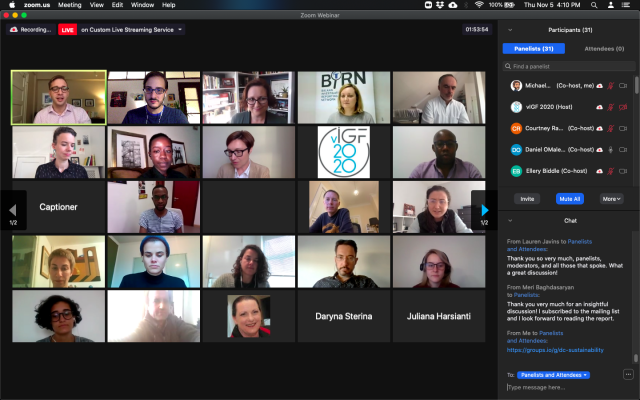
- Paulina Lewandowska
- Petra Rezar
- Muhammad Shabbir Awan
- Peter Crosbie
- Judy Okite
- Shadi Abou-Zahra
- Judith Hellerstein
- Gunela Astbrink
The session did not directly discuss gender issues. However, there was a gender balance in all the discussions.
Areas of broad support/agreement:
- Alternative models of providing connectivity are necessary.
- Community Networks are an efficient alternative to typical models of connectivity, especially for rural or neglected areas.
- COVID19 has accentuated the importance of connectivity for the full enjoyment of personality and citizenship rights. The pandemic is a harsh reminder that without internet connection, people are estranged from opportunities and services. Half of the world still experiences this disconnect, because of a lack of infrastructure and appropriate policies.
- Internet access is a basic right and a public good.
- Community Networks require specific public policies in order to be feasible.
- “Meaningful connectivity” requires more than the simple capacity to access the internet sporadically, under limited infrastructural and technical conditions or with a reduced scope.
- When freeing up more spectrum or implementing spectrum sharing schemes, regulators should allow for the implementation of Community Networks.
Areas of no agreement/areas needing further discussion and development:
- Talking about providing “access” to the internet fits into a conceptual framework that allows for disparities in the real capabilities of internet connectivity. This is due to the fact that “access” may refer to access to concentrated information silos. This means that it is also necessary to de-concentrate the internet, and Community Networks are an efficient way to do so, because they create little “portions” of the Internet connected to the greater whole - the way the Internet was actually meant to be.
- There are context-specific characteristics to meaningful connectivity. For example, the choice of device - a smartphone or a desktop computer, for example - may significantly change from one context to another based on privacy considerations.
- “Meaningful connectivity” is a new concept of connectivity based on four minimum technical thresholds: 1. at least 4G equivalent mobile broadband connection; 2. at a minimum, access to a smart device; 3. a fixed wired or wireless connection at home; and 4. that people can use the internet whenever they need, not sporadically. The Alliance for Affordable Internet is putting together guidelines on how to implement this concept of meaningful connectivity and how to measure the progress toward its realization in practice.
- Community Networks are not seen as rogue initiatives anymore. There have been various successful implementations which have demonstrated their potential and sustainability.
- Community Networks help in dealing with crises such as the COVID19 pandemic because they are more agile than traditional networks. They have been applied to bring communities information on COVID19 with significant success.
- Access to the internet should be framed from a human rights point of view. It is instrumental to the right of access to information, which is particularly relevant in the context of a pandemic. In this context, too, access to data is fundamental and should be included in the scope of the right of access to information. Non-state actors should also comply with human rights legal instruments, given their horizontal effect.
- Regulators should look to innovative spectrum regulations as a means to bridge the digital divide. When implementing spectrum regulations, the interests of the end-user should be taken into account and the preferable approach would be that which increases the variety of providers, especially by allowing Community Network arrangements.
We need to revamp the Universal Access Policies and what the Funds an be used for
We need a renewed focus on Gender and women empowerment and what can be done to make them feel safe.
Community Network are key to support local communities
Sonia Jorge, Alliance for Affordable Internet A4AI
Osama Manzar, DEF
Jane Coffin, ISOC
Rolf H. Weber, University of Zurich
Cynthia El Khoury, APC
Senka Hadzic, CyberBRICS / Research ICT Africa
Nicholas Echaniz, AlterMundi
We need a renewed focus on Gender and women empowerment and what can be done to make them feel safe.
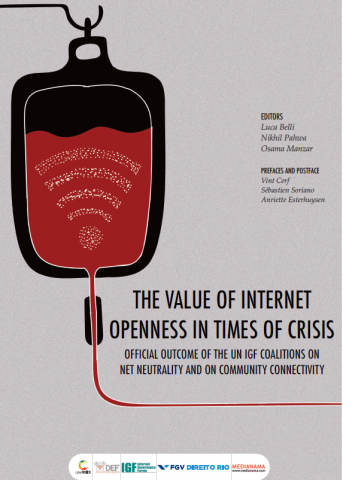
The Value of Internet Openness in Times of Crisis
This volume explores “The Value of Internet Openness in Times of Crisis” and is the official outcome of the Coalitions on Net Neutrality and on Community Connectivity of the United Nations Internet Governance Forum. This work stems from the consideration that the COVID-19 pandemic has harshly highlighted the fundamental importance of Internet access, and the total exclusion that the unconnected face in times of crises. Internet connectivity, has now emerged as the backbone of all social, political and economic interactions along with services during the Covid-19 pandemic. The current crisis brings to light that digital infrastructures play an essential role, shaping our development. The sustainability of such development relies on Internet openness and this book offers an ample range of perspectives exploring why it is more crucial than ever to guarantee that the Internet stays a smooth-running, open, and accessible common good.
THE AUTHORS OF THIS BOOK ARE (IN ORDER OF APPEARANCE): Vint Cerf, Sébastien Soriano, Luca Belli, Osama Manzar, Sarah Farooqui, Dhanaraj Thakur, Teddy Woodhouse, Sonia Jorge, Frode Sørensen, Apar Gupta, Sidharth Deb, Smriti Parsheera, Rolf H. Weber, Senka Hadzic, Pablo Aguera, Alison Gillwald, Alejandro Pisanty, LocNet Team, Carlos Baca, Erik Huerta, Karla Velasco, Anna Orlova, Andrey Shcherbovich, Daniela Parra, Amali De Silva-Mitchell, Nikhil Pahwa, and Anriette Esterhuysen.

The session discussed key perspectives and dimensions of access to content and information, particularly during the COVID-19 pandemic. This includes connectivity infrastructure and capacities of libraries and similar facilities which help deliver this access, digitisation and digital content delivery and access models, and relevant Intellectual Property policy frameworks.
There was a broad agreement among the panelists that access to key content is an high priority, especially since the demand and need for it has grown rapidly. Taking measures that help ensure equitable digital inclusion and access to content and information is therefore crucial.
The panelists discussed policy frameworks and practices that can help support public access and digial inclusion through public access, and emergency measures that have been taken by various stakeholders (governments, libraries and library organisations, NGOs and publishers) to ensure access to key content during the pandemic.
The session defined several key policy issues around access to content and information during the pandemic and future recovery, and suggested several ways equitable access can be expanded:
1) Access to key content, especially during the pandemic, is integral to sustaining and supporting education, employment, health, citizen participation.
2) Expanding the rollout of connectivity infrastructure and capacity-building for libraries and similar facilities helps ensure equitable access to content for the public.
3) Innovative and emerging solutions and practices also offer valuable models for supporting equitable access to content and, more broadly, digital inclusion. This includes, for example, using bands of spectrum open for public use (i.e. TV White Space) for broadening connectivity, offline internet and controlled digital lending.
4) It is also important to ensure that existing Intellectual Property frameworks and mechanisms offer a supportive policy environment that helps ensure equitable access to key content. One example of a key issue here is e-book and textbook pricing and access models.
Initiative: Partnership for Public Access 2020 Declaration
Details: https://p4pa.net/2020-declaration/ Public internet access can offer an economical and equitable way to bring more people and communities online. The P4PA declaration (and accomplaying Pledges) outlines measures that can help achieve meaningful connectivity through public access solutions, including community networks and offline internet.
Nkem Osuigwe, African Library & Information Associations & Institutions
Don Means, Gigabit Libraries Network
Mark Graham, Director, the Wayback Machine at the Internet Archive
Teresa Hackett, Electronic Information for Libraries
Valensiya Dresvyannikova, International Federation of Library Associations and Institutions
Moderator: Stuart Hamilton, Head of Libraries Development, Local Government Management Agency, Ireland
The draft DC-PAL report discussed during the session - "Public access in libraries: achievements and insights from broadband policy implementation" - https://www.ifla.org/digital-plans
* Areas of broad support/ agreement: - Discussed the different entry points for youth to join the IG spaces by sharing the journeys of the panelists and agreed that there are no specific steps to follow.
- The difficulty of being noticed as youth and new comers in virtual conferences and the limited possibility on networking.
- The difficulty of keeping youth involved in the IG spaces after participating in a youth program or receiving a fellowship and maintain a sustainable and meaningful participation.
- Young activists could sometimes prioritize issue from their personal views without checking the youth priorities.
- Youth inputs are not taken seriously during discussions and they are not invited to panels.
- The youth participation is not well-shaped as the voices of youth are not organized
* Areas of no agreement: - A Debate on whether or not Youth should have their own Stakeholder Group.
- Youth Programs and fellowships don't have an effective approach
1. More leadership positions for youth in different stakeholder groups and capacity building opportunities not simply being in the room.
2. Ensuring sustainable and meaningful youth participation as newcomers may find the space not so intuitive and hard to stick around.
3. Solidarity and working together to understand the youth priorities and coordinating efforts to tackle these issues and have unified messages.
4- Initiate a dialogue with the different Stakeholder groups and be open for collaboration to have our voices heard.
Recommendation: - Invite other stakeholders to the dialogue
- Know how we perceive ourselves and how we want the other to perceive us
- Increase the youth presence as they are digital natives and most aware on how to connect the dots
- Enforce diversity as everyone is a stakeholder
- Allow youth to grow in the IG spaces
- Encourage everyone to contribute and make these contributions realized
- Creating opportunities for all youth to be part of the conversation
- Reflect more about what are the youth's priority topics
- Promote the youth experiences in IG spaces through different platforms.
Youth Initiatives
NRIs (Youth IGFs in specific)
Young activists in the IG spaces
Dynamic Coalitions
Internet End users
Recommendations: -Capacity Building Programs in IG & Leadership
- Continuous Engagement in the IG spaces. The participation should be sustainable and go beyond conferences.
- Create a generation of Youth SMEs to represent youth in discussions and Establish Youth Focal Points on specific IG or Technical issues
-Encourage other SGs to take part of the youth discussions so they can involve youth in discussions and decision-making
-Youth to support eachother and have unified messages
-Have a long-term approach of participation instead of only participating in youth programs and stick to the IG eco-system
-Encourage different perspectives in topics
-Influence the technology policy decisions
-Embrace the unique journey of every young people in IG and that they had different entry points and backgrounds
-Raise issues that are relevant to the youth priorities on national, regional and global levels instead of personal interests & Visualize the interest of the youth.
Youth IGFs
The Youth Coalition on Internet Governance
Youth Observatory
Youth Local and regional initiatives
The IGF Intersessional work
Youth Coalition on Internet Governance https://ycigweb.wordpress.com/
Youth Observatory (Youth SIG) https://youthsig.org/
Youth IGF Initiative ( https://www.intgovforum.org/multilingual/content/youth-initiatives) like:
Youth IGF Portugal
Youth IGF Argentina
Youth IGF Poland
Youth IGF Summit
The IGF Secretariat who organized the Youth Engagement Activities Pre & During the IGF
The Schools of IG
Youth Programs like ICANN Fellowships and Internet Society IGF Youth Ambassadors
1- Eileen Berenice Cejas, Argentina, YCIG/Youth Observatory (Civil Society)
2- Emilia Zalewska, Poland, , LegalTech Polska (Civil Society)
3 - Mohammad Atif, India, Youth SIG (Civil Society)
4- Joao Pedro Martins, Portugal, Lusophone Youth IGF, (Civil Society)
5- Lily Edinam Botsyoe, Ghana , Ghyrate Ghana (Private Sector)
6-Augusto Marturin, Argentina, Youth IGF Argentina Technical Community (Technical)
The session reflected on youth issues without specifying a gender and panelists gave examples on advocacy in the LGBTQ Community
The participants drafted their answers collaboratively to the policy questions in a Risepad and their answers were considered in this report as part of the recommendations.
The discussions points including recommendations and debate points will be added to the YCIG final report and shared with the new 2021 Steering Committee members as action items to build on next year. It will be also recommended to the new Steering Committee to continue and increase the engagement of the YCIG with other DCs and other Youth initiatives and organizations especially for the preparation of 2021 IGF and the Youth IGF Summit in Poland.
A blogpost with the summary of the session will be shared on the YCIG webiste (https://ycigweb.wordpress.com/)
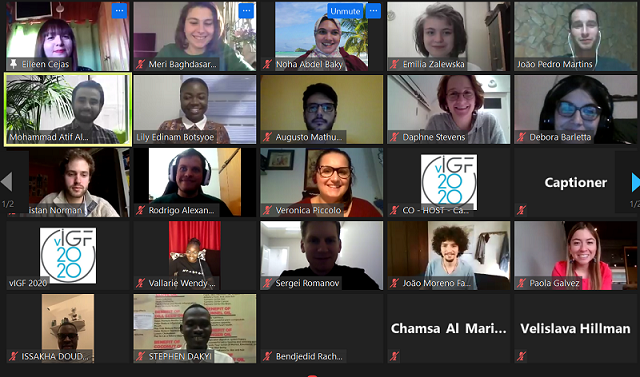
-Inspire people to do more, involve people so they know what's happening and know how to contribute and impact so that we have this going forward
-Strengthening and enhancing the engagement of Stakeholders especially youth and disadvantged stakeholders for future IG mechanisims and deliverables particularly those from developing countries
-The promise of sticking around and keeping involved in the regional level but also trying to seek a more unified approach with getting involved with different institutions to conenct the dots
-Creating opportunities for all youth to be part of the conversation
-Encouraging diversity to have as many as possible points of views hear and creating Networking opportunities next year as it is the best part of the IGF
1. Summary of Gender Report Cards (IGF 2019)
2. Data, privacy and boundary management
Speaker Dr. Anja Kovacs highlights in her essay highlights the concept of 'privacy as boundary management' as being central to whether and how we share our data, what happens with our data, what information about ourselves do we want to share or not share, etc. However, the concept of boundary management doesn’t reflect much in traditional conversations about privacy. In most dominant discourses, data is treated as a resource - separate from the medium that generates it. This has severe implications on a person's agency, privacy and rights. Boundary management is not only important because it allows us to control what we share with others but this control is crucial to living a life of dignity.
3. Gendered implications of data collection by apps
In her essay, Sadaf Khan reflects on menstrual apps, how they track data, and the gendered implications around it. People’s consent to data collection by apps is often not informed consent - they are not fully aware that the apps are ‘authorised’ to share their information, comment and stories. What do these apps do with the data? Who handles the data? Who has access to it? How is it used? For how long is it stored?
4. Feminist values for building transfeminist futures
As Joana Varon reflects in her essay, what would the future look like if algorithms that command our daily interactions were developed based on feminist values? What if the technologies we cherish were developed to crash, instead of maintain, the matrix of domination of capitalism, hetero-patriarchy, white supremacy, and colonisation? How can we build technologies based on feminist notions of consent? How can we use feminist frameworks and values to question, imagine and design tech?
Placing consent at the centre of the conversations around data. Data policies must consider consent & privacy not individualistic matters but collective matters. Policies must take into account economic structures that impact how tech is designed & marketed to men & women, impacting power dynamics.
Media and Information Literacy is focused on technicalities of using the internet but not about meta data, what goes on outside the user interface and the screens we see, implications of biometrics, FRTs, etc. MIL should focus on including these questions.
Speakers:
Dr. Anja Kovacs, Internet Democracy Project, India
Joana Varon, Coding Rights, Brazil
Sadaf Khan, Media Matters for Democracy, Pakistan
Moderator:
Bishakha Datta, Point of View, India
The session directly engaged with gender, focusing on issues such as the gendered implications of data collection by technology, algorithmic biases impacting marginalised genders, the feminist principles of consent, etc.
Covid-19 trends in social media, and self regulatory responses.
Covid-19 a perspective from the EURid Youth Committee on the dynamic coalition. , Covid-19 misinformation in the web environment., What regulatory interventions have been successful in limiting the spread of Covid-19 misinformation online?
- Covid-19
- Misinformation
- Regulatory interventions to limit the spread of misinformation online
- Industry approaches to limiting the spread of misinformation online
- Data leakage and data breaches associated with covid-19 data
- Covid-19 related DNS abuse
- Existing procedures for sharing information on DNS abuse in crisis situations
- Measures taken by registrars to prevent the Spread of Covid-19 related misinformation
- Need for continued dialogue between community of registrars
- Movement of offline problems online
- Closing the digital divide
- Messaging services and online platforms as critical infrastructure
- Importance of encryption
- Encryption ‘backdoors’
- Partnerships between tech companies and health authorities (International and domestic)
- Search engine optimisation and the spread of misinformation
- Third party links and misinformation
- How platforms are helping spread misinformation
- Advertising and misinformation
- Cybersecurity risks generated by working from home
- EU Code of Practice on Disinformation
- 1 Year review of EU Code of practice on Disinformation
- A number of domain name registries and registrars have been actively working to limit the spread of misinformation during covid-19
- EURid and Tucows reported that the quantity of new domain names registered during covid creating a risk of harm by spreading misinformation was relatively minimal (<1%).
- There is a need for reliable information to be shared between registrars regarding DNS abuse during crises.
- Partnerships between tech companies and public institutions (international and domestic) have been crucial to stemming the flow of misinformation during Covid-19
- Misinformation is not only spread by hostile actors, it can be spread by
- It is not just any sort of hostile actors that are spreading false information, different culprits such as algorithms and big data enabled tools that are optimized for junk news are also to blame. We have alternative media outlets that are doing very well over these social media algorithms and that are also having economic incentives.There is also a mainstream problem with misinformation. During the politics of post truth, political leadership both in authoritarian regimes, but also in democracies, is disseminating all sorts of conspiratorial or deceiving information.
- Traditional techniques for professional search engine optimisation are also being employed to spread misinformation such as boosting domain authority, backlinking, and markup and advertising.
- The EU Code of Practice on Disinformation has led to tangible progress in the major platforms approach to addressing disinformation, but this has been limited by the scope of the code and the fact that it only applies within the EU and to the major tech companies.
Giovanni Seppia, EURid
Pablo Bello, WhatsApp
Lisa-Maria Neudert, Oxford Internet Institute
Antoan Shoratov, EURid Youth Committee
Alberto Rabbachin, European Commission
What can we do, how do we use the Internet to foster collaboration in our response to COVID-19? There
is good collaboration in the search for vaccine against the COVID-19 disease, but in other spheres, for
e.g, in using the Internet in the educational setting yet, the tools are not quite right, teachers don't have
the training, the students, they're often uncooperative or outright, you know, misbehaving. We have a
lot of work to do to learn to adapt this technology in a way that makes it more useful. COVID and this
pandemic, it is a gamechanger. The adaptability and the inventiveness of this generation instils hope.
The potentials are enormous.Technical expertise is needed to sort of keep the options open, free and
open source, affordable, apps that don't force you to upgrade your equipment, because of age-old,
decade-old rivalries between large corporates, that's a thing coordinates from the technical expertise
that is brought to the table, it is really important to hear this from the technical experts and formative
influencers and and how the infrastructure operates. It is a resilient infrastructure on the whole. In the
context of increasing traffic, some solutions were identified, that of bringing content closer to
consumers, by global content providers, that of optimizing traffic roles and creating conditions for rapid
expansions of bandwidth. There are cultural aspects as well and due to the COVID crisis there is an
increased need for us to be online, not only as individuals but as communities or as Classes, groups.
There are different ways of using these portals and devices.
The Internet is not to be blamed for every evil. In reference to
Internet’s design principles, online behavior could be mapped to offline behaviour. This brought up the
observation that permissionless innovation needs to be tempered, so that we can do something about
harmful behaviors. The Internet is distance erasing, the Internet permits these harms to occur at a
distance. It creates juxtaposition, where there would not be juxtaposition in the real world, but it
creates juxtaposition in the online world, we need to figure out how we apply law enforcement, or other
kinds of norms, in a very different environment than the real world. However, we have to use human
solutions to solve human problems. The technology won't solve them for us.
Previous debates on Core Internet Values included observations that the core Internet values should not
be harmed. But during the pandemic some of these core values, including freedom of expression are
due to perceived necessity.
The pertinent question was: Such compromises occur during Covid as regulatory measures, how
temporary or how do these regulatory measures?
Another observation was that a new central layer, a center of control, must never be created, and it
appears that during this pandemic, there is a certain degree of regulatory control as being put in place
and that also should be temporary.
The Dynamic Coalition, in 2015, proposed that there be a defined, agreed upon list of core Internet
values, and these core Internet values, they need to be the reference standard for global Internet policy.
It was observed that the “Internet Invariants” as listed by the Internet Society are pertinent to Core
Internet Values, and there has been much discussion on this topic as well.
- Sébastien Bachollet, EURALO Chair - Session Chair
- Olivier Crépin-Leblond, ISOC UK England
- Olga Makarova, MTS
- Gregory Name
- Alejandro Pisanty, UNAM
- Vinton Cerf, Google
Gender Issues did not get addressed in this session.
Before this DC-ISSS launching workshop several preparatory meetings have taken place to decide on the most urgent topics to start work on. These were presented in the day 0 workshop #19 'Let's Work!' and the comments made have been taken into account. This launch was used to present on the urgency of deploying security related Internet standards and ICT best practices in general, after which the working program and main policy questions were presented. All the debates had taken place in the previous sessions. The work programme of the DC-ISSS is seen as ambitious but has full agreement on the three identified Working Groups and the identified topics and questions within the Working Groups, as presented above here.
1) The main recommendations considering the slow deployment of Internet standards and ICT best practices have been identified and agreed upon. Participants in the DC have turned then into specific topics and a workplan that addresses: a) the steps towards the identification of current best practices; b) the ambition to present policy recommendations.
2) There is broad stakeholder support and participation for the three workplans, that in the coming year are expanded to absent stakeholders.
3) The work starts in the last week of November.
Wout de Natris
Jonas Grätz - Hoffmann
Olaf Kolkman
Raymond Onuoha
Ghislain de Salins
Mark Carvell
Yurii Kargapolov
Janice Richardson
Alejandro Pisanty
Short report: The DC-ISSS was successfully launched in this session. Gender issues were not a topic in the DC. Differences on the national and regional level have been mentioned and taken into account. Due to cancelation, declining the invitation to speak and the offered speakers, gender balance unfortunately has not been reached.
Report IGF 2020 Launch of DC Internet Standards, Security & Safety (DC-ISSS)
Friday, 6 November, 2020 - 09:10 to 10:40 UTC
DC-ISSS leadership:
- Wout de Natris
- Mark Carvell
- Marten Porte
This session marks the official launch of the Dynamic Coalition on Internet Standards, Safety and Security (DC-ISSS). Wout de Natris, Chair of the DC, presented the goals of the event and of the DC at large: make policy recommendations and connect both existing stakeholders and new stakeholders. A picture was painted on the status quo of the implementation of Internet standards and the reasons that have led to this. For this, the connection was made to the report that came out of the 2019 IGF pilot project on Internet standards deployment, which investigated both causes and possible solutions of slow standards deployment, of which three were selected, by the DC-ISSS participants, for the initial work of the Dynamic Coalition:
- Security by Design - sub-group IoT security;
- Education and skills;
- Procurement, supply chain management and the creation of a business case.
Following the introduction, four experts gave a short presentation on the importance of a safer internet and the deployment of security standards.
Jonas Grätz-Hoffmann – Office of the Special Envoy for Cyber Foreign and Security Policy, Federal Department of Foreign Affairs, Switzerland – spoke about the importance of digital governance for the Swiss Government. He also warned of the fragmentation of global rules and standards and the Internet as a whole. He stressed that the Dynamic Coalition could become a key milestone in strengthening the IGF in new ways in terms of creating concrete, actionable outcomes.
Olaf Kolkman - Principal, Internet Technology, Policy and Advocacy, Internet Society – spoke about positive examples of standard deployment and the reasons behind them. Based on a book by Everett Rogers, ‘Diffusion of Innovations’, he explained that the deployment of innovations generally goes through five stages:
- Knowledge/awareness is necessary;
- The innovation needs to seem useful to the potential user;
- Decision will be made on deployment;
- Implementation phase;
- Confirmation that the innovation works and you keep using it.
For the persuasion phase, five factors are at play:
- Relative advantage;
- Complexity;
- Compatibility;
- Try-ability (without breaking the system);
- Observability.
Security standards have serious issues on all these five factors. The relative advantage is often missing, especially for first movers. We see deployment especially lacking when complexity is high. Also new standards are often inherently incompatible with other standards. On top of that, big challenges exist with being able to try new standards and observing that a standard has been implemented. Initiatives should focus on improving these five factors.
Raymond Onuoha – Associate Member, African ICT Foundation – showed the challenges that exist in standards deployment in an African context. One report showed the importance of network security as a shared responsibility. Therefore, initiatives exist to avoid duplication of efforts and to bridge capacity deficits. Furthermore, the necessity of capacity building was stressed, which can be considered by Working Group 2 of the DC-ISSS. Lastly, he highlighted that national governments are key actors for promoting best practices and facilitate information sharing.
Ghislain de Salins – Digital Security Policy, OECD – gave a presentation on IoT security by design. He explained the work being done in the OECD and the importance of IoT security. Also, the different stages in which vulnerabilities can appear, such as in the microprocessors, meaning that a once secure product is not necessarily secure forever. Also, an issue with IoT products is legacy products, or products that are no longer updated by the manufacturer. One of the issues is the misalignment of market incentives. The OECD designed a policy tool kit which goes from raising awareness to liability legislation.
Presenting the DC-ISSS
In the following part of the session Mark Carvell recounted the road taken from the pilot project around the IGF in Berlin to the current session. He stressed the commitment to sustain the momentum, including a series of individual stakeholder consultations on key issues and priorities for the first phase of taking the work further under the auspices of the IGF and thus bring the topic of deployment to a next level. The goal is to use the IGF framework to deliver tangible policy outcomes.
The themes of the three DC-ISSS Working Groups were then presented:
WG1: Security by Design: Sub-group 1 - Internet of Things
Yurii Kargapolov – Chair of IoT Special Interest Group, Internet Society – laid out the proposed work for the working group on Internet of Things. He stressed the importance of protecting websites against the most common vulnerabilities and of enhancing the trustworthiness of platforms. It will also be important to avoid duplication of other IoT-related initiatives. The first aim of the working group will be creating guidelines of best practices. Secondly, the working group will aim to identify current barriers to deployment and how to overcome these barriers. Another topic that was touched upon was the disclosure of vulnerabilities which is necessary for safe IoT-devices.
Participants asked if there will be more working groups on security by design. These are foreseen and can be activated by request or when it is necessary to do so.
WG2: Education and Skills
Janice Richardson – International Advisor, Insight S.A. Luxembourg – presented the goals for the second working group on education and skills. She stressed the importance of including Internet security in education and skills programmes. She explained that some of the information or communication technology courses, e.g. at university and the vocational level, currently do not include digital security, which is problematic. The working group will identify best practices. In addition, the security of online learning platforms is important, but might be addressed in another working group. In conclusion, she believes that educational curricula should include greater coverage of Internet security, safety, governance, and architecture depending on the level. Rather than working on public awareness, the working group aims to reach relevant organisations such as ministries of education and universities. Other outreach options were also discussed.
WG3: Procurement, Supply Chain Management and the Business Case
Alejandro Pisanty – Universidad Nacional Autonomico de Mexico (UNAM) – illustrated the difficulty of having many competing standards. He explained that many rules are being created but often not followed up on. This working group on procurement, supply chain management and business case will look at how the normative role of the government can be used to increase deployment of standards. The purchasing power of the state and large corporations should be put to good use to include these standards in their purchasing requirements. One of the goals will be to create a comprehensive practical guide on incorporating relevant and optimal security standards in procurements, including SMEs. Also, knowledge gaps and inconsistencies between countries should be bridged. Best practices are to be shared by the participants, as well as bad practices from the past.
Closing remarks
The three remaining themes, a) regulation, b) human rights and consumer protection, and c) responsible disclosure of vulnerabilities will start at a later phase of the project, as soon as it is opportune to do so. This is the same for other sub-themes in WG1 on Security by design, e.g. for websites, platforms, data storage, software, etc.
The Chair concluded the session by thanking all speakers and inviting everyone who is interested to join and share their knowledge and ideas. It was also requested that people who are interested in chairing one of the working groups get in touch with the leadership.
Furthermore, the need for funding to actively support the work within and progress of this Dynamic Coalition is stressed by the Chair. He concluded by highlighting the progress that has been made on this topic within the IGF framework. Now the real work on content will start. A special thanks goes out to the Swiss Federal Ministry of Foreign Affairs for its support in making the launch of the DC possible.
The working groups will meet on Tuesday 24 November (WG1), Wednesday 25 November (WG2) and Friday 27 November (WG3), all at 12.00 UTC. More information and the link to sign up to the mailing list can be found here.
All three WGs are filled with experts, from around the globe and all stakeholder groups, who have expressed their willingness to contribute. (See the DC-ISSS mailing list.) Since the launch the group has grown further.
One important aspect is that we should differentiate between the production of individual content (legal and illegal) and its dissemination. This covers the content that are self-generated and its dissemination. It is algorithmic amplification that should be addressed properly. In other words, we can argue that companies are "automating the bad". If we look at the topic of algorithmic amplification and the lack of detection of the content with the perspective of a victim portrayed on the material that is further disseminated, we know that they have to live with the fear that someone will recognize them and that they images of abuse is freely available on the net. The protection of the privacy of the victims of sexual abuse and exploitation is vital and should be weight in as an important consideration.
One the other hand, tech companies and all platforms providing content to users should apply age restrictions more rigorously.
We do not approach the virtual world with the right framing which should be: if a business can't manage to make profit without protecting children, they should not be deemed to carry on doing business. These businesses are not fit for purpose. It is well documented that offenders do seek vulnerable children on the clear net where the children are and use the darknet for other purposes, when they do, hence the measures deployed by tech companies need to focus on the clear net. The darknet amplifies the idea that it is fine to sexually abuse and exploit a child, abuse that is performed else where on the clear net or offline, regardless of the modus operandi.
Recommendations:
1- Stronger legal requirement for business who provide online content as duty bearers;
2- More rigorous application of age verification tools by online content providers;
3- Wider deployment of safety by design by tech companies;
4- Certain part of the design must stopped immediately;
5- Conduct a long term impact assessment on services offered by content providers;
6- A stronger algorithmic oversight by external parties;
Recommendation 1- We must think creatively how to leverage technology to support children.
Recommendation 1 - We must revisit the concept of crisis and think extensively how to address all crisis challenging children's rights.
Recommendation 2 - Crisis affecting children's' rights online are the responsibility of all actors across sectors and not a police-only matter.
1- their right to be informed:
2- their right to privacy including issues regarding child data collection and the lack of understanding and awareness of care givers on how to supervise their children without affecting their right to privacy.
3- Their right to be protected from abuse and exploitation: the likelihood of encountering risks and being harmed increased with vulnerable children;
4- Their right to health:
All of these rights are affected in many different ways it times of crisis but we must acknowledge that they are all equally important and there is not hierarchy of rights.
During this crisis we have created a new normal with children who finds themselves disconnected from their usual social network and their school environment that gives them stability and is important to their mental health. Online communications are planned and intentional and off line social interactions are also accidental. This last type of interactions disappear online while they are needed to develop the social skills of children and are essential to their mental health.
We are seeing more than ever, a broad range of risks online that children are facing: this include 1- Misinformation on a range on topics including health, 2- Hate speech and radicalization 3- Domestic violence: in the UK they were reports by Child Helplines of calls from children reporting domestic violence like it was never seen before whereas in Germany, one child helpline reports that prior to Covid19, they received more reports of sexual abuse and of domestic violence while the level of reporting is not an indication or evidence of the prevalence of the cases of abuse and of domestic violence.
1-Digital skills: (i)Our case study analysis has shown that majority of digital skills training programs target students (43%) while the seniors and the disabled are the least represented groups, (ii)the top technology choice for training delivery is computer-based (65%) while the most used technology in these countries is mobile phones. (iii) There is no standard curriculum, which makes it hard to evaluate the effectiveness of the programs (iv) There is no standard duration and frequency of digital skills training, ranging from 2 hours to 1 week, 3 months to 6 months for basic ICT training.
2-Health and gender: Our analysis shows that women in marginalized areas face multiple barriers simultaneously (e.g., low-literacy, financial, social norms, etc) but more often ICT-based health interventions tend to address a single barrier (e.g., providing free service), which is not effective or cost-effective.
3-Community networks: Our analysis shows that lack of supporting infrastructure, poor business models and vague regulatory frameworks frustrate efforts to develop and operate community networks.
Areas of broad support/agreement:
- COVID-19 has significantly increased internet usage and connectivity demand. More than ever, people need the internet to stay connected to their professional, social and cultural environments.
- The current connectivity infrastructure has successfully dealt with the sudden increase in traffic load, without major breakdowns in connectivity worldwide. The problem is lack of access more than traffic load.
- End-user's rights must be safeguarded and Net neutrality rules are key.
- Net neutrality is an essential element of Internet Openness but to preserve openness more must be done e.g. the coalition should consider working on Interoperability and on device neutrality.
- Exceptional connectivity measures taken by ISPs should still be in accordance with net neutrality and an open internet. Examples in various jurisdictions indicate the pathways to the implementation of these measures without offending users’ rights or restricting Internet openness. Some examples also reveal the issues with policy choices that do not carefully observe these standards.
- Internet shutdowns and surveillance measures taken without adequate safeguards represent a concrete menace to the freedom of speech and expression. Net neutrality plays a central part in providing internet openness and realizing such fundamental rights.
Open Net Korea, along with 13 other NGOs — including epicenter.works and Access Now — are appealing to South Korea’s Minister of Science, Technology and ICT, Ki-Young Choe, to stop the government undermining principles of net neutrality via the newly-passed Content Providers’ Traffic Stabilization Law. Through an open letter, the coalition is calling on the South Korean government to repeal the law and the SPNP rule(explained below), and to implement measures that ensure an open and accessible internet across the country. More information here: http://opennetkorea.org/en/wp/3122?ckattempt=1
Luca Belli, FGV
Anriette Esterhuysen, MAG Chair
Frode Sorensen, Norwegian Telecoms Regulator (Nkom)
Aurore Tual, French Telecoms Regulator (ARCEP)
KS Park, Korea University Law School/Open Net
Smriti Parsheera, National Institute of Public Finance and Policy in New Delhi
Apar Gupta, Internet Freedom Foundation
Anya Orlova, CyberBRICS
Andrey Shcherbovich, Higher School of Economics, Moscow
Alejandro Pisanty, Autonomous University Mexico
The Value of Internet Openness in Times of Crisis
This volume explores “The Value of Internet Openness in Times of Crisis” and is the official outcome of the Coalitions on Net Neutrality and on Community Connectivity of the United Nations Internet Governance Forum. This work stems from the consideration that the COVID-19 pandemic has harshly highlighted the fundamental importance of Internet access, and the total exclusion that the unconnected face in times of crises. Internet connectivity, has now emerged as the backbone of all social, political and economic interactions along with services during the Covid-19 pandemic. The current crisis brings to light that digital infrastructures play an essential role, shaping our development. The sustainability of such development relies on Internet openness and this book offers an ample range of perspectives exploring why it is more crucial than ever to guarantee that the Internet stays a smooth-running, open, and accessible common good.
THE AUTHORS OF THIS BOOK ARE (IN ORDER OF APPEARANCE): Vint Cerf, Sébastien Soriano, Luca Belli, Osama Manzar, Sarah Farooqui, Dhanaraj Thakur, Teddy Woodhouse, Sonia Jorge, Frode Sørensen, Apar Gupta, Sidharth Deb, Smriti Parsheera, Rolf H. Weber, Senka Hadzic, Pablo Aguera, Alison Gillwald, Alejandro Pisanty, LocNet Team, Carlos Baca, Erik Huerta, Karla Velasco, Anna Orlova, Andrey Shcherbovich, Daniela Parra, Amali De Silva-Mitchell, Nikhil Pahwa, and Anriette Esterhuysen.
The volume is also available in ebook here https://online.fliphtml5.com/gnel/fsbp/#p=1
, ● Which are the key internet governance issues nowadays and the most effective remedies?
, ● What is the best governance model, taking into account existing laws, enforcement, self-regulation and other institutions?
-
- Areas of broad support/agreement:
- Platform governance: may mean how platforms govern societies or how societies govern platforms. It may also include the platforms' technological architectures and design.
- When it comes to Artificial Intelligence and Facial Recognition, the social risk of these technologies is increased. The design of the system must encompass different views in order to avoid blind spots in this sense. We need to look at accountability of a system, not only explainability - understand how the system was put together.
- Terrorist content is more than cyberterrorism. Fear-inducing information and extremist discourse are characteristics of the concept, which makes it a difficult distinction from hate speech, but a very important distinction.
- Areas of no agreement/areas needing further discussion and development
- How to manage private and public order when it comes to content moderation online?
- Methodological challenges and choices of the authors when writing the entries and defining the concepts on the Glossary - which is still in its draft version and open for modifications until december.
The aim of the session was to bring together experts from different fields. A common vocabulary may unite specialized conversations on platform governance that have been going on. In this sense, the fundamental goal of the Glossary on Platforms Law and Policy is to provide different readings and to inform decision-makers in their activities.
This will provide the floor for a multistakeholder discussion, bringing together a range of views, and account for the relationships between existing laws, enforcement and self-regulation in crucial platform governance domains.
- Facebook Oversight Board
Julie Owono, Oversight Board (Facebook)
Lofred Madzou, World Economic Forum
Richard Wingfield, Global Partners Digital
Rossana Ducato, University of Aberdeen and UC Louvain
Catalina Goanta, Maastricht University
Rolf H. Weber, University of Zurich
Chris Marsden, University of Sussex
Giovanni De Gregorio, Milano Bicocca University
Paddy Leerseen, University of Amsterdam
Enguerrand Marique, UC Louvain & University of Radboud-Nijmegen
Yasmin Curzi, FGV
Ivar Hartmann, FGV
Women were well represented at the table and there were remarks about gender issues regarding platform governance.
- The first consolidated draft of the Glossary on Platform Law and Policy – a guide on key terms related to platform governance for policymakers, researchers and other stakeholders alike – was presented as an output.
Block chain opportunity for the Ehealth care space was presented . A discussion of the data types supported by this technology, as well as the typical types of records conducive to management by block chain were noted . The opportunities for data sharing, and issues for privacy were also noted ,
Mobile Technologies as a tool for bridging the Digital Divide were discussed within the context of ehealth.
How Machine Leaning is conducted was reviewed and the risks for data input, processing and output discussed and illustrated with examples in to eHealth.The quality of the algorithms and risk of data bias was noted with extension to AI. New Technologies such as Quantum Technologies , Holograms and their uptake in the public Ehealth Space were also noted.
The value of stakeholders understanding each other when developing policy, procedures and technology was highlighted within the context of building trust, so as to speed up evidence based effective end results.
The value propositions for multi-stakeholders were illluminated by show casing the ability of these Emerging Technologies to assist with speed to achievemnt of SDG#3 for universal health care services globally ,in innovative new ways, wirh opportunities to transcend issues such as complexities in data sharing, intellectual property, start up costs and so forth, while providing efficient, auditable, effective solutions within the clinical and administrative spheres of ehealth.
Further work in ethics, in all of the existing technologies and emerging technology areas was stressed.
Acknowledge that existing and emerging technologies can support reaching UN SDG #3, but good standards, education and knowledge sharing with robust ethical frameworks are key to successful outcomes.
Moderator: Ms. Amali De Silva - Mitchell
Presenter on Block Chain for Ehealth : Dr. Galia Kondova
Presenter on Mobile Ehealth and Digital Divide : Mr. Herman Ramos
Presenter on Machine Learning and AI for Ehealth :Mr. Jorn Erbguth
The panel with moderator of 4 persons was balanced men to women. All topics are gender neutral. Regional represenation and affiliations : Asia , Americas, Africa, Europe . Youth represented on panel.
3 presentations on independent Ehealth topics : block chain, mobile tech and the digital divide , machine learning and answers provided to questions from audience.
Activities plan of Dynamic Coalition on Data Driven Health Technologies
- General consensus it that Internet Governance, Human Rights, and the Environment are fundamentally linked, underscored by the 2020 global pandemic and its impact on commitments to address climate change urgently.
- There was broad support for initiatives to address rights and environmental implications of supply chains
- Broad agreement for a cross-sector, multistakeholder strategy which requires strong advocates from all sectors and regions.
- That the technical community and private sector actors must be on board was strongly supported.
- Most supported a approach that includes tackling E-waste (Basel Convention) but is not confined to recycling or zero-carbon policies
- The meeting agreed that Global North historically generates and the Global South is expected to fix the environmental hazards of ICT manufacture and inbuilt obsolescence.
- Private Sector must be involved along with Governments and Civil Society in fulfilling any Greening ICT agendas.
- AI development, along with roll out of mobile networks need to be monitored within environmental impact and human rights frameworks.
- Internet technologies need to be green by design calling for accountability mechanisms for governmental and private sector actors
- The meeting supported calls for clearer standards in procurement and designs that supply hardware-software elements of the internet, including electricity and consumer items
Ms Minda Moreira, Co-Chair internet Rights and Principles Coalition
Ms Marianne Franklin (Moderator), Internet Rights and Principles Coalition Steering Committee
Ms Noha Ashraf Abdel Baky Youth Coalition in Internet Governance/Dell)
Ms Hanane Boujemi, Executive director of Tech Policy Tank
Mr Ilias Iakovidis, Adviser at the European Commission, DG CONNECT
Mr Rigobert Kenmogne, Digital Rights Program Officer for Francophone Africa at Paradigm Initiative
Ms Vesna Manojlovic, RIPE Network Coordination Centre
Ms Raashi Saxena, Youth4DigitalSustainability Program
Highest number of attendees was 64 including panellists. Activity on the Chat was substantial with equivalent input from male and female participants.
The speakers were predominantly female, from youth coalitions, and from the Global South.
- There was broad consensus around COVID-19 being a wake-up call for governments to accelerate digital transformation. The participants agree that COVID-19 has been accelerating the adoption of ICTs and the investments in the Internet, especially in providing connectivity;
- Many indicated training and digital literacy as more urgent matters, while others highlighted cybersecurity and public policy on misinformation;
- Some supported the idea that human resources and digital education are currently the main issues, especially when it comes to e-learning education and teaching. On this specific point, there is common agreement that the teaching staff is not prepared to use technology to deliver and plan lessons.
Lead discussants
- Pacific Islands (Cherie Lagakali, Chair PICISOC, Fiji; Dalsie Baniala, MAG member, Vanuatu; Maureen Hilyard, ALAC Chair, At-Large, ICANN, Cook Islands)
- Caribbean (June Parris, outgoing UN-IGF MAG Member, Barbados; Nigel Cassimire, Caribbean Telecommunications Union Ag. Secretary General & Caribbean IGF convenor; Bevil Wooding, Director, Caribbean Affairs, ARIN; Carlton Samuels, Jamaica; Rhea Yaw Ching, Covela Foundation; Lance Hinds, Guyana; Tracy Hackshaw, Trinidad & Tobago IGF / Internet Society Trinidad & Tobago Chapter)
Also speaking: Anriette Esterhuysen, UN-IGF MAG Chair, South Africa; Jane Coffin; Jane Coffin, Senior Vice President - Internet Growth, Internet Society; Pablo Rodriguez, Vice Chair, ccNSO Council / Executive VP, Gauss Research Laboratory / NIC.pr, Puerto Rico; Deirdre Williams, Information Specialist, St. Lucia; Jacqueline Morris, Vice-Chair, Internet Society Trinidad & Tobago / e-Learning Manager, Judiciary of Trinidad & Tobago
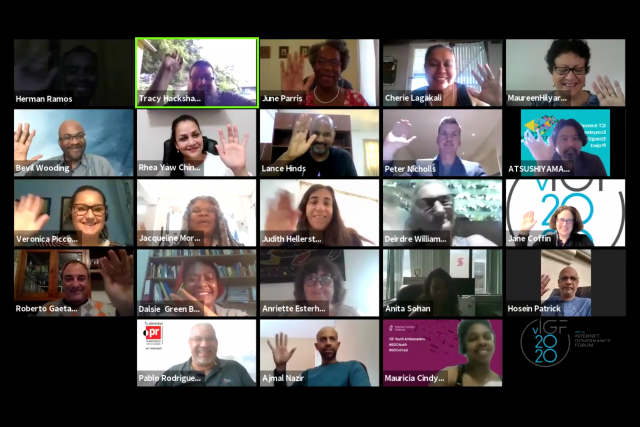
Digital Divide
- There was broad agreement that the COVID-19 pandemic has deepened existing inequalities and divides.
Education
- There was agreement that Internet governance capacity building is becoming increasingly relevant worldwide as a consequence of the COVID-19 pandemic. Education on Internet Governance must become widespread.
- There was agreement that education and youth as a whole were harmed by national political crisis originating from mismanaged responses to the COVID-19 pandemic.
Fundamental rights
- There was agreement that online accessibility benefits far more than just persons with disabilities. Live transcripts were provided as an accessibility measure originally targeted at people with hearing impairments, but now a vital resource for data mining after events for people both with and without disabilities.
- The need for fundamental rights online was linked to the issue of education: without access to connectivity, freedom of speech, and basic human rights, education opportunities, particularly during the time of COVID-19, cannot be equally and fairly available to all.
Future of IGF
- There was strong consensus that, just as the BPFs and NRIs are already widely recognised to be, the Dynamic Coalitions are a vital component of the IGF and its intersessional processes. Support for Dynamic Coalitions, and collaboration between Dynamic Coalitions, should be strengthened as part of the IGF+ model and the DCs can, in turn, contribute to developing the IGF+ model.
- It was reported that at the Parliamentarians Roundtable (10 November), parliamentarians expressed interest in engaging with the Dynamic Coalitions intersessionally. Dynamic Coalitions were encouraged to make use of this opportunity, to advocate on issues that Dynamic Coalitions are working on directly with lawmakers.
- It was noted that it is essential to have representation of youth in IGF intersessional activities as youth should be involved in decisions affecting their future and active youth involvement helps to avoid tokenism in multistakeholder discussions.
- COVID-19 has exacerbated underlying inequalities and problems. Lack of meaningful, equitable access to online resources during the pandemic have affected education, people with disabilities to access online shopping services and led to increased online gender-based violence.
- As so much moved online during the COVID-10 pandemic, it has demonstrated how important it is to provide the necessary capacity building and education needed to ensure everyone has the skills and knowledge to have meaningful access to Internet-based services and information.
- Access to information is a fundamental human right, for people of all ages, including children. There has been an increased demand for information and resources from libraries and from the media during the pandemic, but these sources of information are under pressure from both the erosion of journalism through reduction in revenues, and restrictions placed on digital information sources available from libraries, such as the number of simultaneous users able to access a resource.
- Capacity building and support programs are needed to enable greater visibility and direct participation of underrepresented groups, including youth and persons with disabilities, in discussions that are shaping the future of Internet governance.
Partnership for Public Access – 2020 Declaration and accompanying Pledge
https://p4pa.net/2020-declaration/ - This is a pledge and call on decision-makers to mobilise existing community anchor institutions and support them to establish at least one public point for meaningful and free internet access in every community.
Moderators:
- Tatiana Tropina
- Hanane Boujemi
Speakers
- John Carr (DC COS)
- Olivier Crepin-Leblond (DC-CIV)
- Valensiya Dresvyannikova (DC-PAL)
- Gerry Ellis (DCAD)
- Stuart Hamilton (DC-PAL)
- Michael J. Oghia (DC-Sustainability)
- Gustavo Paiva (YCIG)
- June Parris (IPRPC)
- Muhammad Shabbir (DCAD)
- Smita Vanniyar (DC Gender)
- Christopher Yoo (DC-Connecting the Unconnected)
- Eileen Cejas (YCIG)
Gender issues were discussed in the session. Online gender-based violence as well as the role that gender-related inequalities have played in increasing inequalities and access to online services during the COVID-19 pandemic. It was also noted that gender divides are not binary (male/female), but discussions to close gender divides need to consider the wide spectrum of gender identities and the inequalities and exclusions they face.
Affordability in the context of Asia Pacific region, need to take into account 3 elements:
- Natural disaster that are common in this region, so the cost for preventing and recovery have impact with Affordability
- Complies to regulatory requirements, particularly regarding online safety and recovery
- Build local capacity to plan, deploy and maintain infrastructure
There are different realities in different regions, inside regiones, and also inside countries, regarding connectivity
For Internet to be useful, content and service need to be relevant. Local content is usually a problem in developing countries.
Another important key aspect besides connectivity is power. As an example, in Africa, citizens suffer from frequent power cuts. Besided, the majority of operators are nonAfrican operators, and most of the time have been guided by the return of investment rather than looking at the ICT as mean of developing of the continent.
GSMA mention three reasons why most African countries are suffering this situation: 1. Affordability (cost of devices, energy), 2. Lack of digital skills and literacy, 3. Lack of content in local language, particularly outside US, Europe and China.
Internet Connectivity has never been more important than this COVID time, in order to satisfy basic needs. Social relationships, economic activities.
Affordable and meaningful access means that “everyone has access to Internet every day, with enough (ideally unlimited) data, with a fast connection (at least 4G equivalent) and with appropriate device.
The current business model is encouraging the service providers to improve the access whenever people is connected with more speed and newer technologies and not as much in reaching those areas where people are not yet connected.
We need to provide low band frequency to increase coverage.
We have to work with governments and companies to reduce the price of smartphones
We need to think in the investment that is required, and also policy and regulatory frameworks, as the supporter environment where affordable and meaningful connectivity is reality and responds to these needs.
One of the things we need to do, especially to welcome new business models, is “fixing bugs” in policy and regulatory frameworks that prevent complementary providers to be welcome members of the ecosystem.
One of those bugs is having more collaboration between power and telecomm sectors, fostering more coordination regarding infrastructure planning and sharing. And all the savings coming from this coordination have to be transferred to users with lower cost on services.
And the other aspect is new innovative ways of thinking of spectrum policy, where unlicensed spectrum should be by default a norm, and not an exception. Portions of the spectrum should be allocated to the public interest for WiFi connections and others.
We have to enable those unconnected places to build their networks so they are able to reach connected places and deploy their own affordable access to Internet. In order to do that, we have to create an enabling environment. So we need to adapt the regulatory frameworks for those places, regarding affordability, power, infrastructure, or any other aspect that is needed.
We need to be open to new approaches and changes and doing things differently. We need to involve as many people (stakeholders) as possible.
We have to identify and remove barriers to deploy infrastructure (authorizations, rights, permissions)
Regarding Telecommunication Operators, Community Networks shouldn´t be considered as a competing solution but a complementary solution.
We have more than 84% of the global territory covered by mobile broadband Internet provider, but we have less that half of the population connected.
Recommendation 1.
We need to a get a minimum of 4G connection for everyone everywhere, with affordable prices
Issue 2.
Lack of access, is not only about Internet connection, but also energy provision, devices availability, security etc. It is also, a matter of integral planning, in order to make smart and efficient investments, particularly in expensive components such as infrastructure.
Recommendation 2.
We need to include in solutions all or at least most of the other factors like electric supply and devices provision, safety, stability, and other issues, in an holistic way. The same applies to the planning stage, and all savings that this approach may allow, should be transferred to the users, with more affordable services.
Issue 3.
About current regulations, everything is prepared for big companies, and mainly for urban areas, preventing new complementary providers and also new business models to take place.
Recommendation 3.
Regulations need to be adjusted, aiming to enable other none traditional complementary operators to also be involved in the solutions.
Issue 4.
In particular regions, countries do not have all the knowledge to deploy inclusion projects, or the skills to face security threats.
Recommendation 4.
We nee to invest in local technical capacity building.
Issue 5.
Complementary providers usually need to beg to governments and regulators for small portions of bandwidth of the spectrum.
Recommendation 5.
Larger license-free portions of the spectrum must be a common allocation and not the exception. This way spectrum is allocated for the public interest, as it should be.
Issue 6.
Most of the regulatory framework in Africa, and perhaps in all global south, had been cycled and recycled over and over, without taking into consideration local realities such as geographical extension, economic situation, level of literacy, etc. And those regulations did not consider creative experiences in policy and programs development in other countries or regions, such as US Government, with different affordability programs.
Recommendation 6.
It is important to rethink current policies and regulations (fix the bugs) to overcome different restrictions to new complementary providers, and also to deal with traditional operators.
We all need to fight to get that connection. We need investments from private sector, but also intelligent investments from public sector.
Actors for Recommendation 2.
Policy makers, and everyone involved in inclusion projects.
Actors for Recommendation 3.
Everyone, particularly the beneficiaries.
Actors for Recommendation 4.
Different actors, but mainly universities and governments, but also private sector should be involved.
Actors for Recommendation 5.
Policy makers, regulators, complementary service providers.
Actors for Recommendation 6.
Policy makers, regulators, and other stakeholders.
Other actions
Governments should provide incentives or directly invest in telecommunications infrastructure, via subsidies or special funds.
Policy makers need to have clear universal access goals and objectives and mesurable targets.
Sylvia Cadena, Head of Programs / ISIF Asia coordinator, APNIC Foundation
Vint Cerf, Vicepresident & Internet Evangelist, Google
Sonia Jorge, Executive Director, Alliance for Affordable Internet
Mongi Marzoug, Senior VP Internet and Sustainable Energy Governance, Orange
Christian O'Flaherty, Regional Vice President - Latin America and The Caribbean, Internet Society
Moctar Yedaly, Head Information Society Division, African Union Commission
Panel Moderator: Roberto Zambrana Flores, Bolivia IGF Coordinator, MAG Member
Online (Remote) Moderator: Karim Attoumani Mohamed, Telecom Comores SA, MAG Member
As closing remarks Sonia Jorge mentioned: "We really have to think more seriously about all different issues, and bring a very strong, not just gender perspective to the concerns, but also a perspective of rural communities. There is a need for clear targets and clear universal access goals by governments, in a way that are measurable, making all of us accountable and policy makers accountable. Target that are for the total population, for the women and girls population, so gender targets, and also very clear targets to address the need of rural communities."
- Instead of solely focusing on the idea of sovereignty itself, the discussion can be moved to enabling social development and enabling economic development because data can be a shared resource in a way that physical assets cannot be.
- Data localization is being used by governments that are concerned about controlling data, very often for political ends, however there is also a legitimate rational for data localization or at least data control in order to develop economies.
- In Asia and the Pacific, people are starting to realize the importance of the data that they generate. There is an increasing awareness but no broad-based discussion,, because in Asia-Pacific, not all countries are fully equipped (infrastructure/regulatory schemes) to engage in the International discussion.
- In terms of controlling content and diversity of views, global cooperation is needed to manage these processes; particularly because the manifestation might be in the content but a lot of the manipulation might be happening at the data level and the data governance level.
- The way that the Internet was designed was explicitly to encourage global interconnectivity and to be oblivious to International borders. One of the core goals was to get as many people, devices and networks as possible on a global scale. This continues to be the objective when we are designing and evolving the technologies at the core of the Internet.
- Digital policies should respect the technical architecture of the Internet, 76% of audience poll respondents answered to the affirmative (Strongly agree, or Agree). There is a small set of core infrastructure that maintains the global unity of the Internet – IP protocol, IP address spaces and DNS, harmonization on the IP layer is needed to allow data and connectivity to be seamless around the world.
Moderator: Bertrand de La Chappelle, Internet & Jurisdiction Policy Network
Speakers:
Rudolf Gridl - Head of Unit, Federal Ministry for Economic Affairs and Energy (BMWi), Germany
Alissa Cooper - IETF Chair, Internet Engineering Task Force
Paul Mitchell - Senior Director, Technology Policy, Microsoft
Atsuko Okuda - Regional Director, ITU Regional Office for Asia and the Pacific
Jun Murai - Founder and Board member, WIDE Project
Alison Gillwald - Executive Director, Research ICT Africa
Discussant: Aleksey Goreslavskiy, Journalist, Head of NGO "Dialogue"
Gender issues were not specifically discussed during the Trust Main Session.
, Do employers and employees have conditions and skills to adjust to these?
, What are the existing good practices? Learning from experiences of the IGFs in Cameroon, Colombia, Haiti, Italy, Nigeria, Panama, and South Sudan?
TBC
This session offered a diversified view of the main topic, since the speakers were from different countries and sectors. Despite the linguistic, social and cultural differences between all of them, there had been consensus regarding how challenging is the future of job, considering the gaps related to digital skills, connectivity, infrastructure, etc, but mainly for the uncertainty people are actually experiencing. During the session, the speakers mostly explained their local or national situations, adding some good practices implemented or needs faced because of the pandemic. Italy IGF gave two strong examples of good practices, one of them was the use of Open Source with 3d printers to build respirators during pandemic. in any case, they regret more than the 40% of young people between 16 and 17 in Europe has no basic digital skills.
The session ended with some voluntary committments, like Haiti IGF that strongly believes in the participation of women in discussions, and Panama IGF that encourages a gender focused regulation for telecommuting and teleworking. Also, Colombia IGF gave an interesting example of a law they are discussing to regulate the right of employees to have their own private sphere protected.
- Haiti IGF: Mr. Sindy Obed
- Nigeria IGF: Ms. Onwuamaegbu-Ugwu Edufun
- Italy IGF: Mr. Mattia Fantinati, Member of the Italian Parliament
- Cameroon IGF: Mr. Eric Stephane SIDEU
- Colombia IGF: Dr. Julio Cesar Gaitan Bohorquez
- Panama IGF: Mr. Abdias Zambrano
- South Sudan IGF: Mr. Kennedy Bullen
TBC
TBC
TBC
TBC
The session discussed the overall landscape of cybersecurity issues within the context of National and Regional IGF initiaves and their communities. Central aspects discussed included the mechanisms and frameworks put in place in each country as means to organize cybersecurity, as well as cooperation mechanisms and efforts in local, regional and global levels. There was broad agreement on the need for improving capacity building, education and training, as well as create a culture of cybersecurity in Countries and communities. Participants were mindful of diverse initiatives addressing definitions and basic concepts for cybersecurity, as well as the involvement of international organizations in capacity building programs. There was also a call for action in cooperation in all levels.
- Participants manifested broad consensus on the need for creating a culture of cybersecurity within countries and communities
- There were several reports on cooperation between regions and countries, as well as cooperation between local and international organizations
- Initiatives such as the Christchurch call or even the IGF BPFs were mentioned as important initiatives for strengthening cooperation and available knowledge about the discussed issues
- Education, capacity building and training were also key terms mentioned by participants as crucial for moving forward and advancing cybersecurity and national cyber defence policies and mechanisms
IGF BPFs were mentioned as an important space for cooperation
https://www.intgovforum.org/multilingual/content/best-practice-forums-bpfs
Christchurch call was also raised as an important effort of cooperation between countries
https://www.christchurchcall.com/
1. Albania IGF: Mrs. Vilma Tomco, General Director at NAECCS
2. Brazil IGF: Ms. Cristine Hoepers, CERT.br
3. Chad IGF: Mr. Bakhit Amine, Academia Teacher at National School of ICT (ENASTIC)
4. France IGF: Mr. Lucien Castex
5. North Macedonia IGF: Mr. Predrag Tasevski
Gender issues were not addressed in this session.
No explicit outputs were referred, except for the improving of networks between participants and NRIs, and possible future collaboration.
In the very ending of the session, participants in general reinforced their commitments with creating a culture of cybersecurity, and seeking to improve initiatives for awareness raising, education, and training.
TBC
TBC
TBC
.
TBC
TBC
TBC
, Do employers and employees have conditions and skills to adjust to these?
, What are the existing good practices? Learning from experiences of the IGFs in Cameroon, Colombia, Haiti, Italy, Nigeria, Panama, and South Sudan?
TBC
This session offered a diversified view of the main topic, since the speakers were from different countries and sectors. Despite the linguistic, social and cultural differences between all of them, there had been consensus regarding how challenging is the future of job, considering the gaps related to digital skills, connectivity, infrastructure, etc, but mainly for the uncertainty people are actually experiencing. During the session, the speakers mostly explained their local or national situations, adding some good practices implemented or needs faced because of the pandemic. Italy IGF gave two strong examples of good practices, one of them was the use of Open Source with 3d printers to build respirators during pandemic. in any case, they regret more than the 40% of young people between 16 and 17 in Europe has no basic digital skills.
The session ended with some voluntary committments, like Haiti IGF that strongly believes in the participation of women in discussions, and Panama IGF that encourages a gender focused regulation for telecommuting and teleworking. Also, Colombia IGF gave an interesting example of a law they are discussing to regulate the right of employees to have their own private sphere protected.
- Haiti IGF: Mr. Sindy Obed
- Nigeria IGF: Ms. Onwuamaegbu-Ugwu Edufun
- Italy IGF: Mr. Mattia Fantinati, Member of the Italian Parliament
- Cameroon IGF: Mr. Eric Stephane SIDEU
- Colombia IGF: Dr. Julio Cesar Gaitan Bohorquez
- Panama IGF: Mr. Abdias Zambrano
- South Sudan IGF: Mr. Kennedy Bullen
TBC
TBC
TBC
The panelists share a common view regarding content moderation that is the big issues around disinformation and fake news online and the problems to deal with it. There are some initiatives having place in different spheres, but also a lot of challenges, basically among technical and ethical issues regarding the use of technological and legal tools, and the borders between private and public sector. Nevertheless all the countries agree that the debate and good initiatives to tackle with this problem couldn't be postponed. It is worth pointing the experiences that use multistakeholder solutions.
Development of machine learning tools to recognize hate speech
Strengthen the debate to raise awareness
Mr. Lucien Castex, Mr. Diogo Cortiz, Ceweb.br/PUC-SP, Ms. Melinda Clem, Mr. Anastas Mishev and Mr. Boro Jakimovski
TBC
TBC
Experts and scholars from China, the United States, Russia, Germany, the Republic of Korea, the United Kingdom, Brazil, Malaysia, and Syria had in-depth exchanges on the impact of the epidemic on cyberspace, the role of Internet technology in the fight against the epidemic, and the trust building mechanism in cyberspace. To begin with, the Internet has enhanced mankind's ability to fight the epidemic, and technologies such as artificial intelligence, cloud computing and big data are playing a key role in epidemic prevention and control. Besides, the wide application of information technology also raises the concern on its security and personal data protection, with the trust deficit in cyberspace continuously increasing. What's more, as the epidemic continues to spread, all parties in the international community should give full play to the value of the internet, enhance the capacity of digital technology to fight against the epidemic, and build a trust mechanism based on the principles of responsibility, transparency, respect, understanding, openness and cooperation.
Against the backdrop of the epidemic, the Internet has become an integral part of economic and social development. The international community should fully unleash the potential of digital technology to fight the epidemic and boost economic and social development. In response to the issues exposed by the epidemic, such as cyber security, the spread of false information and the lack of protection on personal information, the international community should work together to strengthen governance and promote the establishment of a trust mechanism in cyberspace.
All the actors in cyberspace should strengthen communication and cooperation , jointly explore ways to build and realize a trust mechanism in cyberspace, ensure the credible use of ecological governance and emerging technologies in cyberspace, improve legislation on the protection of personal information, and jointly respond to various global risks and challenges.
1.We should further leverage the role of the Internet and digital technology in fighting the epidemic. At the technical level, secure and trusted infrastructure and network applications should be ensured. User experience should be improved. Data should be further mined, and the role of AI, big data and other technologies in the fight against COVID-19 should be enhanced through statistics and other interdisciplinary studies. At the governance level, governments should strengthen personal data protection, balance the relationship between public interests and privacy, and build a sense of security and trust for the public.
2.All parties in the international community should find an effective way to build a trust mechanism in cyberspace. For example, try our best to bring into full play of the role of digital technology in fighting the epidemic, work together to amplify the effects of the digital economy so as to promote economic recovery. Promote dialogue and cooperation in a coordinated way to maintain cyber security; Deepen multilateral participation in a coordinated way to improve governance; bridge the digital divide and achieve inclusiveness for all. The trust mechanism in cyberspace shall focus on building a community with a shared future in cyberspace. This mechanism shall be established based on responsibility, transparency, respect, understanding (mutual consultation and mutual understanding), and open cooperation, with parties including governments, international organizations, enterprises, technical communities, scientific research institutions and individuals as the main actors, using means (tools) such as laws and regulations, IT capabilities, social responsibility, ethics, supervision and self-discipline, as well as norms and standards in a route covering technologies, applications, and legal and social matters.
3.Governments, international organizations, Internet companies, technical communities, social organizations, individuals and other entities in cyberspace shall play their respective roles, giving full play to the important role of governments, and working together to strengthen governance in cyberspace.
Ms. Qi Xiaoxia, Director General, Bureau of International Cooperation, Cyberspace Administration of China
Prof. Werner Zorn, Father of the German Internet, Inductee of the Internet Hall of Fame
Mr. Paul Wilson, Director General, Asia Pacific Network Information Center (APNIC)
Prof. Zhou Xiaohua, Fellow of the American Statistical Association and the American Association for the Advancement of Science, Peking University Chair Professor
Prof. David Robertson, Vice Principal and Head of College of Science and Engineering, University of Edinburgh
Prof. Dr. Dr. Ayad Al-Ani, Associated Member, Einstein Center Digital Future
Prof. Kilnam Chon, Father of the Korean Internet, Inductee of the Internet Hall of Fame
Ms. Li Qian, Executive Expert of Legal and Policy Research Department, Alibaba Group
Mr. Koh King Kee, President of Centre for New Inclusive Asia
Dr. Jiang Yang, Director of the Institute of International Governance, Chinese Academy of Cyberspace Studies
Prof. Luca Belli, Professor of Internet Governance and Regulation, Getúlio Vargas Foundation (FGV)
Mr. Karim Alwadi, Research Fellow, Renmin University of China
Mr. Oleg Abdurashitov, Head of CEO Office, Kaspersky
not discussed in the forum
The COVID-19 outbreak, an international public health emergency, has not only caused isolation in physical space, but also intensified fragmentation in cyberspace. Amid this global pandemic, cyber attacks, cyber frauds, online disinformation, and hate speech are spreading more widely than ever, giving rise to cross-border regulatory, legal and ethical issues and profoundly impacting the global security and trust relationship in cyberspace. Against the backdrop of existing international governance, response and coordination mechanism in cyberspace to be improved, all the actors and entities in cyberspace should enhance exchanges and cooperation, through dialogue on trust building in cyberspace and its realization approach to explore the governance of online ecosystem and trustworthy use of emerging technologies, with a view to jointly rising up to global challenges of public health emergencies, and to joining hands in building a community with a shared future in cyberspace.
During the forum, all speakers agree that internet, digital technologies and digital economy play a critical role in combating COVID-19. There is far from enough to make all use of internet especially for fighting against COVID-19 and the cybersecurity risks are growing. Speakers think trust is the basis of cooperation and trust building mechanism are very important and urgent. They share the same views that trust building mechanism are very important. Dr. Jangyang propose a path for trust building mechanism focusing on building a community with a shared future in cyberspace.
Nowadays, with the increase usage of internet technology, the cybersecurity risk is growing and private data is leaking, Some of the experts suggest countries should establish and improve privacy data protection laws, the cooperate should offer trusted data service system based on blockchain technology and smart contract technology.
The Marrakesh Treaty to Facilitate Access to Published Works for Persons Who Are Blind, Visually Impaired, or Otherwise Print Disabled’ was signed on the 27th of June of 2013 and in few years made it possible to exchange accessible books among member countries. It represents one of the best examples of an ambitious, pragmatic and impactful multilateral treaty that the international community was able to agree upon in recent years.
The Accessible Books Consortium (ABC), is a public-private partnership led by WIPO. The platform brings together all key players to implement the objectives of the Treaty. ABC offers three services which are; ABC Global Book Service, Capacity Building ad Inclusive Publishing.
it was also explained that there’s no one way to be deaf, so people use different modalities to communicate depending on their conditions and concrete situation. There are many different ways to access content and many software tools which don’t support all formats. Often publishers don’t invest in alternate formats
The WIPO Marrakesh Treaty (2012) has already reached 75 contracting parties covering 101 countries and it is having major impact allowing free cross-border exchange of books for the benefit of blind or people with visually impairement.
People with disabilities (other than visual) do not have a similar instrument, however technological development offer some promising responses.
Mr. Scott Labarre, World Blind Union - “The Marrakesh Treaty and its impact on inclusion”
Ms. Monica Halil, WIPO - "the Accessible Books Consortium (ABC)"
Ms. Aria Indrawati, Mitra Netra Foundation - “WIPO ABC Capacity building programs: the experience of Indonesia”
Mr. Rafael Ferraz, WIPO - "SCCR Study on Access to Copyright Protected Works by Persons with Disabilities"
Dr. Christian Vogler, Gallaudet University - “People with disabilities and access to content: challenges and solutions”
Moderator: Paolo Lanteri
The session discussed the ‘attention economy’ business model in the context of the digital age. Embracing massive data collection and various uses of algorithmic systems and processes to manage attention of individuals and groups in the pursuit of economic/other interests, this business approach produces profound multi-layered impacts on freedom of expression and on information environment.
Such use of digital technologies impacts freedom of expression at several levels. At the individual level, behaviours and communication patterns are increasingly facilitated, structured and shaped by online platforms and social media. In the context of newsrooms and media outlets, the emergence/empowerment of digital platforms has reversed the flow of advertising revenues, prompting a structural shift within media markets and putting into question the sustainability of traditional media, also undermining conditions for quality journalism. At the broader societal level, algorithmic systems and data-based micro-targeting tools shape social, economic and political lives, contribute to information disorder and erode trust in the media and in democratic institutions.
The overall impact on information ecosystem remains largely underestimated. While regulatory efforts are directed at the consequences, causes remain largely unaddressed. Reliance on self-regulation by business platforms allows the latter to only introduce measures that leave the model intact, while focus on the speed of deletion of harmful online content translates into real risks to human rights.
With growing demand for digital services respectful of human rights among wider audiences, we witness the emergence of business initiatives that commit to transparency and data/privacy protection. With forces unequal, compared to major digital platforms, such initiatives have however proved economic viability.
Larger awareness about the root causes of critical shifts in the media and information environment is crucial. Further discussion on the ways to ensue digital platforms’ accountability is needed. Journalism must reinvent and reassert itself, both in equipment and relevance
Major digital companies’ ‘attention economy’ business model, fuelled by massive data collection and various uses of algorithmic systems and processes to manage attention of individuals and groups in the pursuit of economic/other interests, has profound and multi-layered impacts on freedom of expression.
Rooted in data exploitation and opaque algorithmic processing of data, attention economy lies at the source of a wide range of issues arising in the media and information environment (disinformation, hate speech and other problematic content online; disruptions in the media ecosystem leading to fragmentation and monopolisation of the media sector; challenges to quality journalism), ultimately carrying important risks to human rights and to democracy itself.
Regulatory efforts directed at content moderation therefore only address the consequences, while the underlying causes remain largely unattended. Reliance on self-regulation by digital platforms allows these latter to only introduce measures that leave the profitable business model intact, irrespective of its actual negative impacts.
A wider awareness of the false dichotomy between the amount of collected data and economic viability of digital platforms, as well as awareness about actual root causes of disruptions in the media and information environment should be promoted.
To address these root causes, steps should be taken to ensure digital platforms’ accountability for the business model they employ. Co-regulatory approaches should be promoted (see Council of Europe Committee of Ministers Recommendation (2018)2 on the roles and responsibilities of internet intermediaries) and further complemented by oversight mechanisms and indicators (see Ranking Digital Rights’ Corporate Accountability Index), to ensure due transparency. Careful and frequently reviewed regulation of content curation/moderation is needed.
For the media ecosystem to recover, media need to reassert control over technology, create their own distribution platforms, regain attention relying on quality content and established relationship with audiences. Indicators for quality journalism are needed to boost trust.
Careful and frequently reviewed regulation of content curation/moderation is needed see the ongoing work of the Council of Europe Committee of Experts on Freedom of Expression and Digital Technologies).
Indicators for quality journalism are needed to boost trust (see draft Recommendation on promoting a favourable environment for quality journalism in the digital age, prepared by the Council of Europe Committee of experts on quality journalism in the digital age).
See also Council of Europe adopted standards: Committee of Ministers Recommendation (2020)1 on the human rights impacts of algorithmic systems; Committee of Ministers Recommendation (2018)2 on the roles and responsibilities of internet intermediaries; Committee of Ministers Declaration on the manipulative capabilities of algorithmic processes : https://www.coe.int/en/web/freedom-expression/committee-of-ministers-adopted-texts
See also Ranking Digital Rights’ Corporate Accountability Index and indicators evaluating company disclosure of policies and practices affecting freedom of expression and privacy : https://rankingdigitalrights.org/2020-indicators/
Moderator:
Mr Patrick Penninckx, Head of Information Society Department, Council of Europe
Panellists:
Ms Amy Brouillette, Research Director, Ranking Digital Rights (RDR)
Mr Joe McNamee, Independent Consultant, Council of Europe Expert Committee on Freedom of Expression and Digital Technologies:
Prof. Dr. Alexandra Borchardt, Media Adviser and Journalist, Journalism Professor, Universität der Künste, Berlin/ Head of Digital Journalism Fellowship, Hamburg Media School:
Mr Aurélien Maehl, Senior Public Policy Manager, Europe, DuckDuckGo
Due attention was paid to gender balance in the composition of the panel.
The ‘attention economy’ phenomenon is not new in itself. However, with the invasion of digital technologies into the media and information environment, this business model has benefited from the possibilities for covert large-scale data collection and algorithmic processing, expanding still further the possibilities for profiling and micro-targeting. Embracing various uses of algorithmic systems and processes to manage and retain the attention of individuals and groups in the pursuit of economic or other interests, it now produces critical and multi-layered impacts on freedom of expression and on information environment.
Such use of digital technologies impacts freedom of expression at several levels.
At the individual level, behaviours and communication patterns are increasingly facilitated, structured and shaped by online platforms and social media. Digital platforms and social media absorb much of the audiences’ attention that the media used to have. Their emphasis on speed and quantity has changed news consumption behaviours of individuals, leading to the shortening of attention span, erosion of trust in the news brands and growing news avoidance.
In the context of newsrooms and media outlets, micro-targeting techniques have revolutionised the news ecosystem, leading to the emergence and empowerment of new actors, including social media platforms, and to the prevalence of a business model that prioritises “clicks” over readers’ trust. This has reversed the flow of revenues, and advertising revenues in particular, prompting a structural shift within media markets and putting into question the sustainability of traditional media, also undermining conditions and incentives for quality journalism. News outlets are compelled to keep up with the speed of digital platforms’ content production, which drains quality from news, leads to the loss of control over curation and news choice and takes away energy for fact-checking and debunking mis- and disinformation.
At the broader societal level, including in political communication, algorithmic systems and data-based micro-targeting tools shape our social, economic and political lives, affect our governance and influence the distribution of resources. They amplify viral and disputable content, more easily shared, and generate more revenues for data-hungry business models. Faced with unprecedented volumes of content, it is increasingly difficult for individuals to discern what is true and whom to believe. This causes confusion, contributes to information disorder and impacts negatively on society’s trust in the media and in democratic institutions more broadly.
The overall impact on the information ecosystem remains largely underestimated. While regulatory efforts are directed at the consequences (disinformation, hate speech, and other problematic content online), causes (amplification of data exploitation and flourishing of business models based on opaque algorithmic processing of data) remain largely unaddressed. Reliance on, often badly defined and badly designed, self-regulation by business platforms that make vast profits out of this model creates conditions for these actors actors to only introduce measures that leave the business model intact, irrespective of its actual negative impacts. Alongside this, focus on the speed of deletion of possibly illegal or harmful online content translates into real risks to human rights, freedom of expression being the first on the list.
With growing awareness among wider audiences, we witness the emergence of business initiatives that respond to the demand for digital services respectful of human rights and allowing internet users to take control over their personal data (DuckDuckGo , for instance, offers a search engine that doesn’t track users, as well as privacy tools that block third-party trackers and force encryption when browsing). Renouncing data exploitation, such services invest in transparency to gain customers’ trust and rely on alternative sources of revenues (e.g., contextual ads). With forces unequal as they are, compared to major digital platforms, such initiatives have nevertheless proved their economic viability and public demand.
To make the way forward, a wider awareness of the false dichotomy between the amount of collected data and economic viability of digital platforms, as well as awareness about actual root causes of disruptions in the media and information environment should be promoted.
To address these root causes, steps should be taken to ensure digital platforms’ accountability for the business model they employ. Co-regulatory approaches should be promoted (see Council of Europe Committee of Ministers Recommendation (2018)2 on the roles and responsibilities of internet intermediaries) and further complemented by oversight mechanisms and indicators (see Ranking Digital Rights’ Corporate Accountability Index and indicators evaluating company disclosure of policies and practices affecting freedom of expression and privacy; see also Council of Europe Committee of Ministers Recommendation (2020)1 on the human rights impacts of algorithmic systems), to ensure due transparency. Careful and frequently reviewed regulation of content curation/moderation is needed (see the ongoing work of the Council of Europe Committee of Experts on Freedom of Expression and Digital Technologies).
For the media ecosystem to recover, media outlets need [market and regulatory environment which permits them] to reassert control over technology and create their own distribution platforms, regain attention relying on quality content and established relationship with audiences. Journalism should [be given the preconditions permitting it to] reinvent and reassert itself, both in terms of being fully equipped to keep up with professional standards in the digital age and in terms of relevance, topicality and capability to elicit interest and engagement from the audiences. Indicators for quality journalism are needed to boost quality and trust (see draft Recommendation on promoting a favourable environment for quality journalism in the digital age, prepared by the Council of Europe Committee of experts on quality journalism in the digital age).
UK Digital Envoy Kevin Cunnington joined a panel of experts from industry, academia and the UK communications regulator to discuss the emerging ‘online safety technology’ sector in the UK and opportunities for a growing international market.
The panel discussed how the regulatory framework proposed in the UK’s Online Harms White Paper had made space for a serious dialogue on online safety, and created an ecosystem for the safety tech sector to thrive. The panel discussed how safety tech can tackle a spectrum of harms and invited a global dialogue on standardised performance indicators, stretch goals for technology and encouraged international information sharing to benchmark high regulatory expectations on the technology available now and in the future.
- “Cyber security focuses on protecting data and information from cyber attacks - safety tech focuses on protecting people from the psychological risks, harms, and criminal dangers online - everything from mis- or disinformation, to online abuse or harassment” - Professor Mary Aiken, Cyber Psychologist
- “It's great for us to see the emergence of a market of independent safety technology providers - and equally of platforms that are prepared to make available their technology to other platforms to help to raise the potential of the industry as a whole… We need to play our part more actively, along with government and industry counterparts, in actually enabling and encouraging innovation in this sector.” - Professor Simon Saunders, Ofcom
- “The conversations about online safety are characterized by those who want the world to be better, and those who are telling us why it's impractical, too difficult, or too expensive to actually achieve that. I think that technology can bridge that gap.” Ian Stevenson, Chair, OSTIA
- “Our motto as a safety tech industry needs to acknowledge the rapid effects of online harms. If I were to suggest one, it would be, ‘We have to do better, and we can only do that together’.” Roni Gur, L1ght
- “The UK was the first market where we got attention and traction. There has been a conversation in that market which we missed everywhere else. So I’m testimony to the thought leadership that comes from the UK.” Deepak Tewari, Private.ly
domestic and international debates by demonstrating what can be done to tackle the large
and complex challenge of online safety.
The UK Online Safety Tech Industry Association (OSTIA) invites both UK and international
businesses to get in touch and get involved in order to build a wider international community contributing to global conversations on online safety technology.
https://ostia.org.uk/
The group will: discuss and develop a set of pathways that could support international
growth of the Safety Tech sector, considering the role that might be played by
the UN, G7, EU and other international fora; include public sector and industry representatives based in the UK and
overseas; and, convene four times over for six months,with DCMS providing a secretariat.
Chair
- Kevin Cunnington, Digital Envoy for the UK
Panellists
-
Professor Mary Aiken, CyberPsychologist and INTERPOL advisor (Ireland)
-
Professor Simon Saunders, Director of Emerging and Online Technology, Ofcom (UK)
-
Ian Stevenson, Chair of UK Online Safety Tech Industry Association (UK)
-
Roni Gur, VP Marketing, L1ght (US and Israel)
-
Deepak Tewari, CEO, Private.ly (Switzerland)

Panelists made a number of voluntary commitments to support growth of the UK and
International Safety Tech Sector.
● Digital Envoy Kevin Cunnington committed to ensure that the use of technology to facilitate safer online experiences remains a top five priority for the European Digital Envoys.
● Chair of UK Online Safety Tech Industry Association Ian Stevenson committed to make industry a constructive partner in discussion and debates internationally, sharing their expertise.
● UK Communications Regulator OFCOM committed to listen and to join the dialogue on safety technology. Simon Saunders invited companies and organisations to show off their technology and how it has made a difference to people’s lives to inform upcoming regulatory developments in the UK to tackle online harms.
● Professor Mary Aiken committed as a cyber behavioral scientist to creating a better and more secure cyberspace.
● Deepak Tewari committed to ensuring that Private.ly measures and demonstrates the positive impact that use of safety technology has on the well-being of children.
● Roni Gur committed that L1ght will support the growth of an open community around safety tech, contributing technologies, resources and ideas where appropriate.
The FOC is developing a Joint Statement on Spread of Online Disinformation. This discussion focused on disinformation around elections and content moderation efforts by governments and private sector alike. Speakers included representatives from the governments of Finland and the UK and a representative from Facebook. All speakers agreed that multistakeholder approach is needed to battle disinformation in a way that is in line with the international human rights law.
The governments of the FOC, working closely with the multistakeholder FOC Advisory Network, will publish the Joint Statement on Spread of Online Disinformation in the coming weeks. The statement will include a call to action to governments, civil society, private sector and other stakeholders. The FOC has identified disinformation as one of the priority policy issues in 2021 and will continue to work on the topic in relevant international processes and forums.
■Opening Remarks
Mr. Shintani Masayoshi, State Minister for Internal Affairs and Communications, the Government of Japan
■Keynote speaker
Dr. Vint Cerf, Vice President and Chief Internet Evangelist, Google
■Panelist
- Prof. Jun Murai, Keio University
- Mr. Lacina Koné, Director-General, Smart Africa
- Ms. Rinalia Abdul Rahim, Senior Vice President, Strategy, Communications and Engagement, Internet Society
- Dr. Rudolf Gridl, Head of Division VIA5, Internet Governance and International Digital Dialogue, Federal Ministry for Economic Affairs and Energy, the Government of Germany (the host country of IGF2019)
- Ms. Timea SUTO, ICC Business Action to Support the Information Society (BASIS)
, With the foregoing in mind, Switzerland is in the process of developing an approach which aims at allowing citizens, businesses and public bodies to actively participate in the development of the digital transformation: citizens should move away from passive users to self-determined, participants of digital reality, who can create and shape their own digital-environment. In order for citizens to intentionally take control of their data and benefit from data and its added value, new structures and trustworthy data spaces are needed to enable this effective participation. This includes – amongst others – a shift in perception of self-determination as a defensive property right towards a right to choose and participate.
Digital self-determination is a human-centered and rule-based concept that aims to encourage citizens to become active as co-creators of their digital environment. One of the issues discussed was the relation between digital self-determination and digital sovereignty. While digital self-determination concerns the actor (individual, company, public cooperation), digital sovereignty relates to the question of infrastructure. Access to the digital infrastructure (clouds, hardware, etc.) on a national or international level is a prerequisite for the exercise of digital self-determination. Therefore, it is of utmost importance that suitable and high quality infrastructures and platforms are established, which are widely accessible, not only in highly developed industrial states, but also in developing countries.
Another issue discussed was the relation between regulation and innovation and the right balance thereof. It was stated that too much regulation eliminates the competition that is essential for the development of high quality products (infrastructures) as mentioned above. However, the aspect of social inequality and structural discrimination was also emphasized. It is important to design data rooms in an inclusive and fair manner in order to allow equal participation and access.
The discussion then lead to the question of which data can be seen as resources (“data as the new oil” vs. “data as the new air”). Data can be seen as a resource of its own kind: their existence is global, they are of a high instrumental value and they can be used in various manners. For the view of data being a resource sui generis speaks the fact that they cannot be consumed. On the contrary: the value of data increases the more it is shared. In this context, the great value of data sharing was pointed out.
Finally, the aspect of digital self-determination in developing countries was mentioned, where the perspective is a different one, but where strengthening local and regional initiatives is even more important. It was emphasized that the further development of digital self-determination must be considered in the context of human rights.
The concept of digital self-determination has multiple dimensions:
Ø Digital self-determination as a defensive property right and as a right to choose in the digital space
Ø Digital self-determination as an individual as well as a collective right
Ø Digital self-determination between human empowerment (“digital citizenship” and questions about infrastructure
Ø Digital self-determination between control over data and self-determined data sharing
Ø Digital self-determination concerning personal data and/or data in general
The area of health is considered an important field for use of AI, but has also stirred many human rights debates. Medical data and online apps can support improved health outcomes. But they might also exacerbate inequalities and erode privacy. Such concerns became even more visible amidst discussions around the use of online data to combat the COVID-19 pandemic.
Session report:
This session addressed the questions of how AI can be best utilised in the area of health and how governments should respond to the challenges linked to human rights.
Speakers highlighted that the use of AI can bring benefits, but that it also has risks, so that risks and benefits need to be balanced. Speakers raised particular challenges in the area, including inter alia data security and privacy concerns, potential inequality faced by middle and low income countries, bias and non-discriminatory use of AI as well as the lack of an existing binding legal framework.
The speakers agreed that there is a strong need to protect health data given their sensitive nature since for example genetic data can reveal very personal information about people.
Moreover, it was pointed out that the use of AI in middle and low income countries entails particular challenges that need to be addressed and resolved, including: the lack or low quality of data, which cannot or should not be used for developing AI applications; the use of data for commercial purposes without any human rights protection or prior informed consent (‘data colonialism’); and that AI technologies may be designed for particular global north addressees and not for lower income countries, which would make discrimination a significant concern. Efforts needed to improve data should not take away any resources needed for daily care of patients.
Bias and discrimination was also considered a major issue, which cannot be easily addressed, partly because of the lack of information about protected attributes. The absence of data on protected attributes (e.g. data on gender or ethnic origin) does not prevent a non-discriminatory use of AI due to possible other data highly correlated with protected attributes (i.e. proxy data). However, it was raised that AI built on data from one area in the world might not necessarily be usable in other areas of the world, which, again, can lead to discriminatory outcomes.
Considering the impacts of AI use, speakers of the session further emphasized that ethics cannot be sufficient and that, on EU level, a binding legal regulation can help addressing human rights challenges beyond the existing data protection and privacy framework. While existing laws in Europe would already protect against some of the potential misuses of AI in the area (e.g. Article 22 of the GDPR on automated decision making), other issues, such as AI not including personal data or not making decisions on individuals, might not be well covered by existing laws. Understanding the way AI systems work is considered a crucial aspect for making them compliant with human rights.
Recommendations and potential solutions:
As human rights standards already mark red lines for the use of AI. Existing data protection standards and the Oviedo Convention of the Council of Europe, enshrining principles that apply to the use of AI in the area of health, already help addressing the above-mentioned challenges of AI use.
Several recommendations came up in the presentations and discussions, including
• more effective data protection and security; mandatory human rights impact assessments;
• an extension of and a living up to the standards of the GDPR in and by other parts of the world;
• avoidance of the use of discriminatory and ineffective AI tools;
• having ethical audits;
• considering independent enforcement and monitoring systems; as well as
• the adoption of a binding legal framework guided by the principle “the greater the impact and harm to be expected, the greater the regulation”.
Speakers highlighted that there is no easy solution with regard to bias and discrimination of AI tools since the challenges depend on the context of use.
According to some speakers, ethical considerations should be considered during the development of AI tools.
The need for explainability and interpretability of AI tools was highlighted, as they should not be used without fully understanding and proving that they do not violate human rights, such as dignity and non-discrimination.
Broad areas of agreement:
- Tech companies, governments and civil society must work together through multi stakeholder initiatives to tackle online gender based violence
- Responses to OGBV must consider local context
- Responses to OGBV must consider how women with multiple and intersecting identities experience online violence
- Online and offline violence are connected
- OGBV is not an individual issue, but one of structural power
- OGBV leads to violations of women’s rights online including the right to freedom of expression, association and assembly
Areas needing further discussion:
-
The role of machine learning in tackling OGBV
- Machine learning can allow for quick removal of harmful content, and can get better and better as more people report abusive content. Those reports contribute to the ML training set
- Machine learning can risk amplifying or reinforcing bias, and lacks contextual understandings. It must be used in conjunction with other forms of moderation, and maintain a human-centered approach.
- The intersection of legal interventions and OGBV
- Many legal frameworks have gaps on issues of online abuse; laws either do not mention it at all, or fail to adequately extend existing related offline legislation to online cases
This Open Forum served as a dialogue for shared reflection between tech companies and civil society organisations on creating multi-stakeholder approaches to counter online gender-based violence, accounting for its diverse forms and manifestations across contexts. During the panel, we gathered specific evidence and insights from women’s rights and digital rights organisations, as well as tech companies and IGOs on their approaches to tackling online gender-based violence.
What emerged across many panellists’ remarks was the importance of collaborative product and policy development between the tech companies, CSOs and governments. In particular, the need for tech companies and governments to learn from grassroot CSOs in order to build concrete solutions to online abuse was highlighted. This can help build more localised, effective models of content moderation and reporting flows.
While collaborative processes between CSOs, technology companies and IGOs do exist including through the Generation Equality Action Coalition on Innovation and Technology for Gender Equality and the Web Foundation’s consultation and policy design workshop series -- there is a need for more initiatives that work across sectors.
As one panellist pointed out, there is no silver bullet to develop technology that is safe for everyone, everywhere. But co-creation and co-design between different stakeholders will help bring gender considerations into the innovation cycle.
Web Foundation
https://webfoundation.org/2020/08/activists-and-tech-companies-met-to-talk-about-online-violence-against-women-here-are-the-takeaways/
Generation Equality Action Coalitions / UN Women
https://forum.generationequality.org/
- Chenai Chair, Web Foundation (Moderator)
- Marwa Azelmat, APC
- Cindy Southworth, Facebook
- Bhavna Jha, IT for Change
- Helene Molinier, UN Women
- Mariana Valente, InternetLab
Gender, and in particular online gender-based violence, formed the central theme of this open forum. During the session, our panellists discussed how online gender-based violence – including doxxing, surveillance, stalking and abuse – creates hostile spaces online for women and girls. Critically, the session focused on building policy interventions for those who experience intersectional gender discrimination due to their race, ethnicity, caste, sexual orientation, or other identities.
Following from the session, the Web Foundation hosted its third consultation on cnline gender-based violence and abuse. Drawing on insights from the panel, the session brought together tech companies, civil scoiety organisations and owmen in public life to tackle the issue. A writeup of key takeways can be found here.
The Web Foundation commits to pursuing our work convening civil society organisations and tech companies to co-create solutions to OGBV. In addition we commit to support the documentation of experiences of challenges to online safety through our research and share the findings with the IGF community.
Early on in the European Commission’s (EC) response to this emergency outbreak, it adopted a Recommendation to support Member States in exiting the COVID-19 crisis and supported European Member States in preparing and implementing a common European Toolbox for the use of mobile applications for contact tracing and warning. The discussion at the IGF open session focussed on guiding principles, including that apps should be voluntarily installed and that the information provided voluntarily; they should be effective, without tracking people’s movements; data should not be stored longer than 14 days, a retention period which corresponds to the contagion period. Discussion of principles also covered the preservation of privacy of the users and interoperability, which is important as the disease does not know national boundaries.
Developing a trust framework is essential for the uptake of digital technologies, in particular when they are meant to be used in areas like healthcare. Form the recent experience, providing solutions that increase transparency is important. For example the Tech Review Facility, launched by the EC with some members of the Next Generation Internet (NGI) community, provides independent security and privacy analysis of COVID-19 related technology. The team performs testing and provides advice on the development of contact tracing apps based on security, privacy, accessibility and compliance with legal requirements. Through the platform there is also a drive to stimulate use of open source and gather feedback from the community of experts.
In the Netherlands, tracing app ‘CoronaMelder’ has been installed by nearly 5 million people. Through public surveys, it was found that people trust the app because of the open-source and transparent development. Due to public concern around privacy, the app had to be built in with a ‘privacy by design’ concept with a decentralised and collaborative approach, design is now available for further applications.
Not all countries are conducting an open and inclusive approach to app development. Trust is essential for the adoption of contact tracing apps, or people will not opt in. Transparency is critical to show how the technology is made, but it is important this information is publicly available for non-experts.
It is important for everyone to access Covid-19 contact tracing apps, thus accessibility and inclusiveness must be addressed as well.
One of the preliminary conclusions from this experience is that trust is essential for citizens to adopt and use the contact tracing apps and in general digital technologies. To create a trust framework, the design and development of The EU approach to digital technologies needs to be is founded on key EU values of privacy and accessibility. In the EU, for example, European Data Protection Rules, in particular the General Data Protection Regulation (GDPR), should continue need to be at the centre of any development, including when new laws are passed.
There is also a need to explore open source solutions, which allow gathering feedback from the community of experts. Transparency, including on the data model, is key in any proper technological solution. If citizens do not trust private sector solutions, new innovative forms of development and procurement should be explored.
Digital health must address the needs of all people and be accessible to all. Engaging developers into developing accessible tools is a challenge which is currently not being met – both the developers community and the public sector must take action to make technological solutions truly inclusive.
- Mrs Gemma Carolillo, Deputy Head of the Next Generation Internet Unit at the European Commission
- Mr Dirk-Willem van Gulik, Consulting Expert at the Dutch Ministry of Health, Welfare and Sport on the corona crisis response
- Mrs Jelena Malinina, Digital Health Policy Officer at the European Consumer Organisation
- Dr Yen-Nun Huang, Director for Research Center for Information Technology Innovation (CITI), Academia Sinica, Taiwan, and Mr Hong-wei Jyan, Director General of Department of Cyber Security, Executive Yuan. Taiwan
- MODERATOR: Dr Giovanni Rimassa, Chief Innovation Officer, Martel Innovate
Digital health must address the needs of all people and be accessible to all. For certain national contact tracing apps, testing was performed with people with different skills and ability. Jelena Malinina, Policy Officer The European Consumer Organisation said: “There is no such thing as an average person. We are a society and there are different citizens and consumers with very different needs, capacity, values and goals when it comes to use of any kind of digital health tools. We insist that digital health solutions including COVID-19 contact tracing apps must correspond to a variety of user preferences.”
- NGI supported applications for human centric tech in times of crisis: https:/www.ngi.eu/blog/2020/04/03/next-generation-internet-human-centric-tech-in-times-of-crisis/
- EC Tech Review Facility: https://www.ngi.eu/news/2020/07/21/introducing-reviewfacilityeu/
- The Netherlands national Covid-19 tracing app ‘CoronaMelder’, which has been installed by nearly 5 million people https://coronamelder.nl/en/
- Being a relatively small island, Taiwan has focused on tracing potential cases at the border and gathering grass-roots participation from citizens. For border control, there is collaboration with the Telecommunications industry and several state institutions to monitor quarantines. The information is not stored after the end of the person’s quarantine period. The central command centre has a visualisation of the isolation types as well as any travelers who avoid quarantine. This is visible only to the centre and the police and is not publicly available. The system has high security standards. Although a contact-tracing app has been developed ouside the Google/Apple system, it is not in use as cases are very low. However, if the Covid-19 situation persists, it may be deployed at the end of the year.
- EXSCALATE is operational at the Italian Supercomputer in CINECA, analysing COVID-19 proteins based on data available from the scientific community in order to accelerate the search of an effective therapy against the pandemic virus: https://www.cineca.it/en/hot-topics/supercomputer-vs-coronavirus
There was unanimous agreement that the COVID-19 pandemic has acted as a catalyst tor the digital transformation. All the participants also recognised that the crisis has starkly revealed existing and increasing digital divides that build on existing socio-economic and geographic divides.
The panellists stressed that while the crisis has accelerated the transformation (“two years of progress were achieved in two months”), the journey through the digital transformation is only at the beginning. The forthcoming OECD Digital Economy Outlook 2020 shows that despite the progress, there are divides still to be bridged in connectivity and effective use of the Internet, that digital security and privacy risks are increasing and that policy action is needed to shape an inclusive digital transformation.
Participants discussed how the COVID-19 pandemic and the increased online activities resulting from lockdowns and social distancing have put an unprecedented pressure on the networks. They also reported on the increased digital security risks, on the raised level of awareness of personal data protection among the population and on the use of Artifical Intelligence in healthcare. Participants reported on the government responses and on industry initiatives to meet the increasing connectivity demand, to raise awareness and preparedness for digital risks, and to adress the skills gaps. Civil society also reported on the need to balance emergency measures with respect of human rights and democratic values, and to design the right system of checks when deploying technologies to monitor and contain the spread of the virus.
Although the COVID-19 pandemic has acted as a catalyst, we are still at the beginning of our journey towards the digital transformation.
A holistic regulatory approach such as the Going Digital Integrated Policy framework is needed to accompany and shape the digital transformation.Policy makers need to identify, measure and adress the different digital divides linked to the use of digital technologies.
The COVID-19 crisis provides an urgent but real world context for many of the digital policy initiatives underway at the OECD, such as connectivity, digital security, privacy and data protection, artificial Intelligence and responsible data sharing.
Moderator: Mr Yoichi Iida, Chair of the OECD Committee on Digital Economy Policy (CDEP), Japanese Ministry of Internal affairs and Communication
Speakers:
- Ms Audrey Plonk, Head of Digital Economy Policy Division, OECD
- Ms Carolina Botero, Representative of the Civil Society Information Society Advisory Council (CSISAC) to the OECD
- Mr Bengt Molleryd, Swedish Post and Telecom Authority (PTS) and Chair of OECD’s working Party on Communication Infrastructure and Services Policy
- Ms Carolyn Nguyen, Director of Technology Policy, Microsoft
- Ms Golestan (Sally) Radwan, Minister Advisor for Artificial Intelligence, Ministry of Communications & Information Technology of Egypt
- Mr Mark Uhrbach, Chief of Digital Economy Metrics at Statistics Canada and Chair of the OECD’s Working Party on Measurement and Analysis of the Digital Economy
- Mr Yves Verhoeven, Deputy Director of Strategy at the National Cybersecurity Agency of France (ANSSI) and Chair of the OECD’s Working Party on Security in the Digital Economy
Gender issues were reflected in the discussion by the points made on the emerging digival divides that are affecting some specific groups and that are building on existing divides. There was a call to ensure that those divides are adequately measured and addressed by policy makers.
, Do you see any changes that are needed in how we fundamentally approach technology development and think about solving problems?, What do you view as an important technology or development that you think will impact (and enable) personal sovereignty and our online / offline experiences?
Panelists agreed about:
- Data is a commodity and is generated and, therefore, owned by us, the individual. As such, we have to demand our rights. Trust has to be earned.
- Enforceable laws are needed, and the general public has to think about how it will give its data to companies. People need to know what is happening to their data, and governments need to protect the people.
- The need for collective effort on the part of governments, the private sector, civil society, and the technical community to [achieve] personal sovereignty.
- Data must be seen and owned by us and used with our permission, supported by enforceable laws to help us.
- Standards can play a critical role in scaling solutions; including in empowering people, in helping to create digital literacy frameworks, which help empower people with the necessary skills.
- Human dignity needs to be at the core of our thinking whereby the technology should serve people's needs and their communities.
- It is possible for companies to build customer trust within a model of data sovereignty.
- Consumer data use that leaves out individuals who do not fit into set profiles is a concern.
- IEEE and IGF are excellent fora in which to discuss the topic of child online protection.
- All actors, including governments, the private sector, the technical community, and civil society, must work together collaboratively to create tools for citizens, such as data governance frameworks and machine readable privacy terms for all, to place citizens at the center of their data and to empower them to advocate for their personal sovereignty.
- AI is being used to measure trends for business, but analysis of trends in health or trends in humanitarian issues will not happen unless driven by citizens. One such issue is child online protection, and the panelists agreed that IEEE and the IGF are excellent fora in which to discuss the topic.
- IEEE helps to educate about the crucial role of standards in helping to create these ecosystems and tools for citizens: Standards are building blocks that can make best practices more accessible to all actors in society.
- Currently available technologies, along with related IEEE communities and standards, can be used to empower Personal Sovereignty to become ubiquitous in the age of the algorithm.
https://standards.ieee.org/industry-connections/diita/index.html
Driving innovation by identifying technology solutions that enable all to participate online without barriers and building consensus in the market
The IEEE Global Initiative on Artificial and Intelligent Systems: https://standards.ieee.org/industry-connections/ec/autonomous-systems.html
Its mission is to ensure every stakeholder involved in the design and development of autonomous and intelligent systems is educated, trained, and empowered to prioritize ethical considerations so that these technologies are advanced for the benefit of humanity.
IEEE Standards Association Statement of Intention:
https://standards.ieee.org/content/dam/ieee-standards/standards/web/documents/other/ethical-considerations-ai-as-29mar2018.pdf
IEEE’s Role in Addressing Ethical Considerations of Autonomous and Intelligent Systems (A/IS)
The Open Community for Ethics in Autonomous and Intelligent Systems (OCEANIS):
https://ethicsstandards.org
A Global Forum for discussion, debate and collaboration for organizations interested in the development and use of standards to further the development of autonomous and intelligent systems.
The Ethics Certification Program for Autonomous and Intelligent Systems (ECPAIS):
https://standards.ieee.org/industry-connections/ecpais.html
Developing metrics and processes towards the implementation of a certification methodology
addressing transparency, accountability, and algorithmic bias.
- John C. Havens, IEEE
- Dr. Salma Abbasi, eWorldwide Group
- Moira Patterson, IEEE
The IEEE Open Forum “Personal Sovereignty: Digital Trust in the Algorithmic Age” (#42) did not discuss gender issues as the focus was on digital trust and personal sovereignty.
- Webpage: https://standards.ieee.org/events/2020/igf-2020.html
- Blog: https://docs.google.com/document/d/1xPKQhUwpfy-15xrXlkAcK8Tklh4K20GlBKpaOgCx-20/edit#
- IGF Report: Internal link: https://docs.google.com/document/d/1eBRROlCRNTbLxOqzYdsud7-ilLn7jssJkECdJ8e38TQ/edit?ts=5fada779
- This IGF Session Report
This tragedy affected more than 2 million m2 of native vegetation along 300km of the Paraopeba river basin. Smallholders farmers were affected by the loss of cattle, poetry and agricultural areas. In addition to that, 272 people died, destroying hundreds of families.
The main recommendation to tackle the different issues due the Brumadinho dam disaster is the multistakeholder approach, where many different actors (civil society, government, academia, NGO’s, etc.) work together in order to identify problems emerged due the tragedy, and raise solutions with local population to identify local needs, not only on the short term, but also in the mid and long term and build, in a collective effort, solutions to these situations. This was achieved in the Move on the Web project - formally named "Entrepreneurism with Web Technologies for Brumadinho" - through presencial meetings held in 2019 second half, with the local population.
In the case of Move on the Web project, the initiative is the result of a joint effort between Brazilian Internet Steering Committee (CGI.br, acronym in Portuguese) and the Brazilian Ministry of Science, Technology, Innovations, and Communications (MCTIC, acronym in Portuguese) working together not only college students but also the inhabitants of Brumadinho (main city affected by the dam tragedy) fostering the culture of entrepreneurship.
Following Vagner, Marcos Cesar de Oliveira Pinto (MCTIC) agreed with the former, and added the important role of government in such a situation. Not only the role to prevent future events, give an appropriate response to the survivors and community that faces such a hard challenge. Besides that, Marcos Pinto affirmed that the Ministry believes that innovation can be a key driver for economic and human developments, such in this case.
In the sequence, the main presenter Jefferson Silva brought specific details about the Move on the Web project and exposes one of the most important aspects about its construction regarding the actors that should be involved in this process. In order to raise innovative ideas that could lead to the creation of economically viable products and solutions to mitigate social problems of the city, the project should consider the contributions of Brumadinho inhabitants, who have been facing the day-to-day problems since the tragedy. So, one of the main actors that should be involved to frame the issue in question is the group that is directly affected by it.
One of the participants, Horst Kremers, commented that, in order to achieve a large scale implementation of these initiatives, you need that federal ministries
work together with other public level, such as municipal. Vagner Diniz agreed and also said that this is one of the examples of a multi stakeholder approach to build solutions.
Five initiatives are addressed in this project and were presented in the session:
1) Brumadinho Open Data Lake & Analytics. The goal of this project is to create a technological framework that collects data from different authoritative sources such as the ones from Brazilian government agencies, gathers them in a single repository, and makes them publicly available for analysis. The solution architecture is based on the Live Exploration and Mining Of Non-trivial Amount of Data from Everywhere (LEMONADE) technology.
2) BrumadinhoCoin: An Environmental Supportive Coin. The goal of this project is to develop a virtual coin, employing Blockchain infrastructure, and an interactive app so that the population can collaborate with the monitoring of Brumadinho ecosystems.
3) The SuperAÇÃO Coletiva platform. This project's goal is to collect innovative project ideas from the women of Brumadinho, easing the fundraising process for executing such ideas. The platform should be shared among multiple stakeholders, including universities, public and private companies, and NFOs.
4) Alerta Brumadinho. A Technological Complaints Solution Against Environmental Crimes. This project's goal is to strengthen the local environmental monitoring communities. For this, a platform will be developed for environmental crime complaints. Its users will be able to file complaints, monitor them, and receive feedback.
5) Real-time Monitoring Systems of River's Water Quality. The goal of this project is to develop a low-cost prototype of a water quality monitoring station using Arduino/ESP. The station will monitor rivers' water quality and send the collected data through HTTP or MQTT for a geographical information system for analysis.
- Technical Internet Governance is focused on how the Internet operates, involving more than the technical competences relevant to ICANN.
- A common goal of the technical community is to ensure that the Internet is singular, unified, interoperable as the next billion comes online, and to support and preserve continued innovation through the international multistakeholder model
- No stakeholder can run the Internet alone, community participation in ICANN discussions and policy-making processes is key.
- ICANN is technology-neutral and supports the bottom-up multistakeholder process informed by objective and unbiased data-driven analyses.
- ICANN monitors proposed and new technologies, and how they would have an impact on the DNS and ICANN’s mission.
- ICANN’s role is to clarify and position itself as a technical non-profit organisation and help legislators, policy makers and regulators understand how the Internet functions to ensure that the Internet continues to develop safely, securely and in a stable manner..
- As discussions are taking place in new places and by actors previously not involved in ICANN, ICANN has broaden its engagement and helps decision-makers on all levels avoid triggering unanticipated consequences: in International Governmental Organization initiatives, Standardization bodies and regulatory initiatives at regional and nation levels.
- Governments have already recognized the importance of the DNS and ICANN’s role through their active participation in the Government Advisory Committee (GAC) within ICANN. ICANN’s mission should be discussed there rather than in a UN setting.
- Standardization of the Internet has to stay in the existing ecosystem based on a multistakeholder model, such as IETF.
- ICANN has undertaken a key initiative this year, the DNS Security Facilitation Initiative Study Group. Its aim is to provide recommendations to the ICANN CEO and is made up of a number of cross-functional participants with technical expertise.
- DNS stability and security involves a lot of cooperation, with a clear cross-functional multi-community participation.
In 300 words or less, what do you want high-level policy decision makers to know about what your session reached consensus on? Did you define a previously nebulous problem? Were your participants able to agree on a problem statement about a new issue? Did you agree on a way forward for the issue? Did you identify particular stakeholder groups that are affected by the issue or who should take the lead on the issue?
Technical Internet Governance is focused on how the Internet operates with the common goal of ensuring that the Internet remains singular, unified, interoperable, secure and resilient. Discussions and policy-making processes based on a multistakeholder model such as practiced within ICANN have allowed the Internet to evolve in an innovative manner. Legislators, regulators and policy-makers might not fully comprehend the implications of proposed legislations or of new standards, and new legislations or policies might have a negative impact on the technical functioning of the Internet. ICANN, a technical non-profit organization, aims to help and inform legislators, regulators, policy makers and others understand how the Internet functions while staying technologically neutral.
ICANN supports the bottom-up approach of the multistakeholder model that allows participation cross-functionally and multi-community participation, including that of governments through the Governmental Advisory Committee. Discussions on governments’ public interest should continue taking place within the GAC, a recognized Advisory Body within the ICANN multistakeholder ecosystem. The DNS Security Facilitation Initiative Study Group also reflects this cross-functional approach to technical expertise intended to establish and promote best practices and facilitate communication between ecosystem participants.
• Standardization work for the Internet should stay in existing multi-stakeholder ecosystem, such as the IETF
• ICANN initiative on the DNS Security Facilitation Initiative Study Group exemplifies how a cross-functional multi-community approach can make use of the technical expertise of multiple perspectives to address a specific technical issue
• Within the multistakeholder model, governments have been able to successfully participate in the ICANN policy-development processes through the Governmental Advisory Committee (GAC)
• Introduction of new legislations, standards or policies might negatively impact the interoperability, safety and resiliency of the Internet, and policy-makers should be aware of the technical implications of their decisions.
• ICANN has broadened its engagement to new actors in the Internet ecosystem to avoid unintended consequences of proposed legislation, regulation or standards and help by providing unbiased data-driven analyses to decision makers.
Hide row weights
DNS Security
- The Initiative/Process/Organization addressing the issue
ICANN - DNS Security Facilitation Initiative Study Group
- Details of the initiative (including URLs) or anything else you think is relevant
https://community.icann.org/pages/viewpage.action?pageId=132941525
Engaging with governments
- The Initiative/Process/Organization addressing the issue
ICANN org
Government Engagement Publications
- Details of the initiative (including URLs) or anything else you think is relevant
https://www.icann.org/resources/pages/government-engagement-publications-2020-03-02-en
Supporting Technical Engagement
- The Initiative/Process/Organization addressing the issue
ICANN org
Office of the CTO Publications
- Details of the initiative (including URLs) or anything else you think is relevant
https://www.icann.org/news/blog/icann-octo-publications-supporting-technical-engagement
DNS-Abuse
- The Initiative/Process/Organization addressing the issue
ICANN org
Domain Abuse Activity Reporting (DAAR),
- Details of the initiative (including URLs) or anything else you think is relevant
DAAR https://www.icann.org/octo-ssr/daar
Internet standards
- The Initiative/Process/Organization addressing the issue
IETF
- Details of the initiative (including URLs) or anything else you think is relevant
https://ietf.org/standards/
- Maarten Botterman, ICANN Chairman of the Board of Directors
- Göran Marby, ICANN CEO and President
- Merike Käo, SSAC Liaison to the ICANN Board of Directors
- David Conrad, SVP and Chief Technology Officer
- Kathryn (Mandy) Carver, SVP Government and IGO Engagement
Gender-related issues were not addressed during this session.
The takeaways from this session from the questions submitted, the comments in the chat and the follow up feedback through the IGF Website will assist ICANN in the refinement of our message about technical Internet governance. The feedback to the session will inform an ongoing dialog with the Internet ecosystem community about maintaining the interoperability of the global Internet
The keynotes speech by Mrs Mariam Barata, stresses the importance of the Internet in Indonesia; Moreover, ICT Infrastructure development should benefit the Science, Technology, and Industries in the country as well as the Digital economy.
The first speaker, Mr. Arthit Suriyawongkul, emphasized an interesting borrowed term of Four Freedoms from the European Single Market. Free movement of goods, capital, services, and person. We note how the pandemic from COVID19 influences the change of control over the parcel, payment, work/study from home, and the traveling/social life. We observe the transactions of personal data over these changes. They also influence the privacy of each person since the limit between work life and personal life is blurred.
These transactions also caused an increase in the number of borders for more control. Therefore, cross-border implications exist due to data-driven discriminations. It is worth noting that these implications cause consequences including privacy. The ultimate catch is how the existing data protection mechanism evolves to catch up with the new reality.
Further, Mr. Edmon Chung, the second speaker, added more to Arthit's presentation, regarding our online ID. User's own digital private spaces belong to the companies. Even personal data are distributed to advertisers. There was this interesting statement from Edmon, "Customers are not the users but the companies that pay for advertisements."
Related to these issues is related to privacy in the digital domain, data sovereignty means the user owns his/her data and fully control them. The issue of personal data is just one part of the things but the bigger issue is the privately owned public spaces.
1/ ICT infrastructures dev should give benefit to the country, societies, people
2/ All countries should work together for integrated secured internet, PDP and increasing the digital economy
3/ ASEAN countries can discuss this issue further in the next ASEAN TelMin meeting for concrete actions
2/ The agreement should also arrange the cross-border data transfer among law enforcers should it is related to a criminal investigation.
3/ Interconnection between many INTRANet operators is necessary so that the world will still have One Integrated Internet
2/ The Governance of the Telecommunication sector carried out by UN ITU for example, can be used as a reference.
- Mariam Barata, Ministry of Communication and Information Technology of the Republic of Indonesia
- Edmon Chung, DotAsia, CEO
- Arthit Suriyawongkul, Thai Netizen Network, Trinity College Dublin
- Ashwin Sasongko Sastrosubroto, Telkom University and MAG ID IGF
Not discussed specifically, since Data protection and Cybersecurity should be applied to people in general, regardless of their gender.
Not available yet
No commitment
Everyone agreed that is is important to act at the global level to impulse a common dynamic and propose shared solutions, standards, tools and initiatives. However, every action should be adapted to the local level, depending on local specifities and issues.
Moreover, the speakers underlined the need for cooperation between institutions and relevant stakeholder to tackled the issue. Data collection, transparency and education are essentials elements of the solution.
Everyone is of the opinion that much remains to be done and that we must collectively ask ourselves what model to follow to meet our climate commitments.
Some speakers insisted on the need to raise consumer awareness, while others preferred not to give so much responsibility to consumers but rather to industry and to the business model of certain content providers in particular, based on abundance, in opposition to what action for the environment requires.
The interventions illustrated that a lot of work has been done but there is still much work left.
Greenpeace noted that “China’s recent pledge to become carbon neutral by 2060 is sending a strong signal to the world and to home. It’s time for IT giants such as Alibaba, Tencent, and GDS to take the cue, clean up their energy supply, and commit to 100% renewable energy,” Also, Vodafone underlined how a Gigabit Europe can be green. Telco industry committed to meet growing data demand in a way that protects the planet: by using energy efficiently and sourcing it from renewable generation. Vodafone markets in Europe will power its network by 100% renewable electricity no later than July 2021.
These are important concrete examples of actions undertaken in the field. However, a common understanding among panellists is the need of more collaboration, at institutional and governmental level, at business level, with companies sharing their experiences as much as possible at the global level, but also at the users’ level. Education and Transparency have also been pointed out as essential factors in enabling a low-carbon future: more data, researches and studies are needed in order to have a better knowledge of what can be done and to achieve the 2030 UN agenda objectives.
Moderator : Anaïs Aubert,
Speaker 1: Ruiqi Ye, Civil Society, Asia-Pacific Group
Speaker 2: Gauthier Roussilhe, Civil Society, Western European and Others Group (WEOG)
Speaker 3: Agnieszka Skorupinska, Private Sector, Eastern European Group
Speaker 4 : Paolo Gemma, Chairman of Working Party 3 “ICT and Climate Change” at the ITU.
The gender issues were not part of the discussion during the session. However, it should be noted that the panel, moderated by a woman, was composed of three woman and two men.
How can we bring capacity building tools to women and diverse gender people in order to foster their involvement in the Internet Governance?
How can we bring capacity building tools to women and diverse gender people in order to foster their involvement in the Internet Governance?
How can we bring capacity building tools to women and gender diverse people in order to foster their involvement in Internet Governance?, How can we ensure that Internet policies would take into consideration low-income populations, people with disabilities?, Which are the three main points needed to design inclusion policies in Internet Governance?
At our session there was a common agreement to address urgently the inclusion of women and gender diverse communities in Internet Governance through the implementation of several strategies: a. develop digital literacy programs, b. anti-harassment policies; which will have an impact on c. amplifying the list of topics discussed at the IGF. There was an interesting point mentioned at the session: take into consideration the inclusion of people with disabilities at the IGF especially hear impaired persons, persons with dyslexia; and keeping in mind the crossover between gender diversity and cognitive disabilities. One participant also mentioned we should work on possible solutions regarding multilingualism such as having at each session interpretation into the 5 UN official languages besides the inclusion of a sign interpreter. Another participant mentioned it is need to tackle the tokenism problem when it comes to the inclusion of youth in IG.
In relation to the digital literacy for rural, remote and indigenous areas; it was remarked there should be a joint effort to foster their inclusion as their voices are crucial in the policy making processes.
Regarding the economic aspect of inclusion, due the lack of time we could only obtained one input saying there should be some mechanisms like programs to help small businesses in making their operations online.
About measures that can be taken to ensure digital rights, there was a common agreement on: a. having an ombudsman to make sure of the accountability of principles; b. necessary and proportional intervention in accordance to International Human Rights Law; c. algorithm transparency in policies.
Finally, we discussed shortly the design of the online campaign with accessibility features, however we will publish a call for inputs on the campaign after the IGF at the Youth SIG in order to request further ideas.
High level policy makers should address inclusion from a holistic way, as in the current situation inclusion is analysed and delimited towards specific target groups (women, girls, rural) though it is not consider multicultural backgrounds and diverse perspectives of each community.
In the case of of gender diverse people, governments should design policies that creates a welcome space for them in order to participate fully in the Internet Governance ecosystem: digital literacy programs, anti harassment policies and a broad discussion of gender topics including transparency in AI programs.
Regarding accessibility, governments should support other stakeholders on the design and application of accessibility-by-default policies: there are several communities part of the persons with disabilities with different requirements that should be taken in consideration for the improvement of societies.
Participants of the session realised inclusion frame a wide range of issues, although they agreed we can start the conversation from the 5 selected topics we chose for the session: women and gender diverse; persons with disabilities; rural and urban communities; governments and human rights. The conclusion emerged from the session was the relevance of ensuring the protection of digital rights, helping people understand their digital rights and how to advocate for them.
Recommendation:
-Share awareness on what internet governance is to various gender diverse groups and their online communities.
-Create safe spaces for women to express themselves such as newcomer sessions targeted at gender groups.
-Organize LGBTQ related and led sessions to encourage more participants to be in this space and meaningfully engage.
-Avoid tokenism of groups such as women, youth and LGBTQ groups.
-Form mentoring discussions within various multi stakeholder circles to bring in more participants into the discussion.
-Lower prices of data and digital taxes levied on internet infrastructure to promote digital inclusion
-Civil society groups through advocacy for inclusion
-Private sector and tech companies that enforce affordable internet
-The IGF should work towards inclusion of gender diverse people, starting from registration forms. Also, it was mentioned the IGF should incorporate more accessibility tools for people with disabilities like a sign interpreter; colours adapted for persons within the autistic spectrum; and address the multilingual approach regarding access to the sessions and such.
UN Sendai Framework for Disaster Risk Reduction sets the broader scope for inclusion:
https://www.preventionweb.net/files/43291_sendaiframeworkfordrren.pdf#page=22
2) Gender Groups for awareness : Women Who Code, Girl Scouts
"We envision a world where women are proportionally represented as technical leaders, executives, founders, VCs, board members, and software engineers."
https://www.womenwhocode.com/
3) Digital Taxation :
Moratorium on digital taxation that stopped the levying of customs duty on items such as software.
https://www.wto.org/index.htm
Speaker 1: Mamadou Lo , Civil Society, African Group
Speaker 2: Eileen Cejas , Civil Society, Latin American and Caribbean Group (GRULAC)
Speaker 3: Meri Baghdasaryan, Civil Society, Eastern European Group
Speaker 4: Debora Barletta, Civil Society, Western European and Others Group (WEOG)
It focused on the implementation of mechanisms like: a) formation of mentoring spaces in order to bring more participants into the IG discussion. These mentoring spaces would help to encourage participation from all levels, demographics, and genders to organize gender sessions in order to display openness towards gender diverse people ; b) applying anti-harassment policies at online and onsite meetings; c) adapting the registration system at the IGF taking in consideration gender diverse people with the use of pronouns; d) keeping in mind the crossover between gender diversity and cognitive disabilities; e) avoiding tokenism of youth, women and LGBTQ groups.
Link at Geneva Internet Platform: https://dig.watch/resources/igf-2020-ws-105-designing-inclusion-policie…

Areas of agreement:
- The use of the Internet for purchase of medicine is increasing at a rapid pace, and this has been further accelerated by the COVID-19 pandemic.
- There is no global (and mostly no interregional) regulatory framework in place to ensure the safety of consumers, often leading to outright prohibition of transnational purchases.
- There is a significant number of rogue online pharmacies selling falsified or substandard medicines, and more action needs to be taken to balance their incentive.
- An important issue relating to this theme is the lack of a clearly defined role for intermediaries, such as is the case of registries and registrars, which are vital, yet lack defined procedures to deal with or identify which are legitimate or illegitimate online pharmacies.
- The existing TLD that declared it was specifically for pharmacies (“.pharmacy”) has proven to be disinterested in the issue and thus, it is insufficient to cover both existing use-cases or to address the problem of rogue actors.
- The IGF is proving to have the potential to be ‘the suitable home’ for furthering dialogue and debate in this area, serving as a neutral space where all actors can engage.
Areas of no agreement:
- As there are many different levels where action can be taken, from the local to the global, it is as yet unclear where the starting point is that will yield the most optimal outcomes.
- The DNS can be leveraged to minimize problems, but the models that need to be put in place (white/black lists, trusted notifiers, and so on) have still to be agreed upon, signaling that more studies need to be carried out.
- It is yet unclear how to address this issue from a global perspective, accounting for the significant variances in development of different nations vis-à-vis the maturity of their respective markets.
It is clear that the discussion of the access to medicines using the Internet involves issues that have an impact ON the Internet’s technical infrastructure, as well as AROUND that infrastructure. This indicates that both technical bodies and political institutions need to be engaged to achieve the best outcome possible.
A similarity that this question shares with other jurisdictional issues is the need to balance a triangle composed of: Human Rights, security, and economic concerns. These matters of jurisdiction continue to grow in importance; therefore, addressing them in a focused, systemic manner will become ever-more necessary with each passing year.
There is no silver bullet solution at the DNS level, however beginning from the DNS would be a constructive start to enable ground rules to be set, which point toward norms that can be adopted in a broader manner. Dialogue within the ICANN community would also expedite actions around both the punishments and incentives for involved actors.
There is a need for a more permanent ‘dialogue space’ in which matters that intersect medicines and the Internet can be addressed, so that discussions can advance at a pace that more closely reflects the speed in which this theme is growing in importance.
The number of stakeholders involved in the deployment and sale of any given medicine is noteworthy. Only through proper mapping and research of their operations, cooperation and collaboration will we be able to achieve the objective of establishing Internet pharmacies as trustworthy as bricks and mortar drug stores. We hold as true that the goal is achievable.
- The Brussels Principles on the Sales of Medicines Over the Internet
- https://www.brusselsprinciples.org
- Ron Andruff, ONR Consulting, Inc.
- Bertrand de La Chapelle, Civil Society, Western European and Others Group (WEOG)
- Aria Ahmad, Civil Society, Western European and Others Group (WEOG)
- Zina Hany, B.Pharm, MPH, MBA, CEPH (MENA region)
Access to medicines is a universal subject affecting all people.
Moderator Ron Andruff introduced the concept of the sale of safe and affordable medicines over the Internet, emphasizing how there is no unified framework or set of norms in place to organize this market. Rather, the marketplace ends up relying on a variety of often incompatible local regulations, resulting in the emergence of gaps that both decrease access to medicines and end up being abused by bad actors using rogue pharmacies to harm consumers the world over, while legitimate Internet pharmacies often face complex regulatory challenges. COVID-19 accelerated an already ongoing process of people needing to rely on digital technology to ensure the maintenance of their health, bringing further pressure to the theme. There is a strong Human Rights dimension to this debate, but, at the same time, there is a need to ask which are the correct policy questions?
Panelist Bertrand de la Chapelle advanced the question of how highly-regulated medicines are and, in comparison to previous debates held in IG such as multimedia and pornography, Internet pharmacies is a much more complex and nuanced matter. There is a patchwork of regulation around the world that is legitimate, dictating: Who can prescribe? Who can distribute? Who can manufacture? There is a significant similarity to other issues that transcend jurisdiction, which fall into a triangle that needs to be balanced, composed of: security, Human Rights, and economic concerns. He further brought up the point that fighting bad actors via the DNS could be effective, but is often too blunt of a tool, so very clear guidelines need to be delineated for the DNS to be an effective tool in this effort. Finally, he laid out the matter of broad use gTLDs (e.g. COM) versus industry-specific ones (such as “.PHARMACY”) and how those can play a role in these concerns.
Panelist Aria Ilyad Ahmad warned of the need to find a regulatory sweet-spot; not overly open nor overly restrictive. He laid out how COVID-19 derailed potential progress within the WHO around the normalization of some aspects of a freer flow of medicines across the world. Aria referenced his Discussion Paper, “Towards a Regulatory Framework for Internet Pharmacies”, first presented at the 2019 Berlin IGF, outlining the need for national medicine regulatory authorities to be involved for these matters to be adequately addressed, as they are actors actively seeking harmonization. He recalled an important effort in 2014, when the issue of medicine quality was a contentious matter within the World Health Organization, but lacked any international mechanisms to address it.
Panelist Zina Hany grounded the discussion in real world examples, relaying extensive data from the MENA region that showcased the rather difficult situation most developing countries find themselves in. One very important point she raised is, how due to poor reimbursement policies, a lot of patient payments end up being out-of-pocket, which incentivizes bad practices. This is further compounded by how ownership of credit cards is conditional and not widely available in some regions, making the task of importation largely impossible. Furthermore, Zina underscored that governments in the region are protective about local drug manufacturers and, therefore, are reluctant to support the idea of a cross-border online platform for medicines, for fear of negatively impacting local manufacturing businesses.
The Workshop concluded that these questions need to be further explored and better systematized, so that a real comprehension can be achieved and effective action be taken. It is proposed that some of this work is housed under a new DC entitled: Access to Medicines Using the Internet. So, our Voluntary Commitment as requested by the IGF Secretariat is being fulfilled by the group committing to advance the dialogue during the coming year to find the most beneficial approaches to resolve the safe Internet pharmacy conundrum once and for all.
The organizers are committed towards advancing the creation of a group, probably in the form of an IGF Dynamic Coalition, to carry out more conversations around this subject in which all actors get to present their points of view, concerns, and solutions. The initiative will guided by the objective of advancing and promoting evidence-based research on access to medicines using the Internet.
5G technology development will bring challenges and opportunities for energy consumption. The panelists elaborated and discussed these issues from different perspectives.
Dr Chih-lin I gave a brief overview of 5G construction of China Mobile. Although the energy consumption of 5g base station is about three or four times that of 4G base station, its actual energy efficiency is higher, that is to say, it can carry more traffic with the same power consumption.
Dr Daniel Schien introduced that the supply chain of digital services is a complex system, so it is difficult to have an accurate assessment of its energy consumption. For the green development of 5G, we hope to use as much renewable energy as possible in the cellular network. In addition, a comprehensive report on energy consumption allows operators, media, consumers and the public sector to make better decisions.
MR Moore Steven introduced that the potential development of 5G will contribute to carbon emission reduction in other industries, such as intelligent agriculture, intelligent buildings and energy sectors, which will all rely on interconnected networks to ensure intelligent manufacturing and intelligent energy management.
MR Mieczkowski Piotr mentioned that in the EU, people are discussing the EU green agreement, that is, large-scale digitization of the energy industry. Without the smart grid, the Internet of things and 5G connectivity, this agreement would not have been possible.
MR Roberto Zambrana mentioned that some countries in the southern hemisphere, such as Latin America and the Caribbean, were far behind in 5g. Multilateral agreements between governments in different regions of the global south are needed to implement a joint strategy to establish a common regulatory framework for all Internet mobile broadband services, including 5G.
5G is leading us into the era of green communication. Different countries and organizations have formulated carbon neutral plans for sustainable development. The large-scale deployment of 5G base station will bring great energy consumption challenges. The energy consumption of 5G base station is about three or four times that of 4G base station. In addition, the overall energy consumption of 5G network is many times higher than that of previous generations due to its potential higher density.
However, because 5g can carry more data and its peak data rate is 15 times higher than that of 4G, it is more efficient than 4G, 3G and 2G in terms of energy consumption per unit data transmission.
In the green development of 5G, there are mainly the following aspects: first, as much renewable energy as possible needs to be used in the cellular network. Second, energy consumption needs to be fully reported so that operators, media, consumers and the public sector can make better decisions. Third, energy consumption services need to be more intuitive and transparent. Fourth, there is more cross sectoral cooperation between infrastructure providers and media organizations.
In addition, the potential development of 5G will contribute to carbon emission reduction in other industries, such as intelligent agriculture, intelligent buildings, and energy sectors, which will all rely on interconnected networks to ensure intelligent manufacturing and intelligent energy management.
Speaker 1: Chih-Lin I, Technical Community, Asia-Pacific Group
Speaker 2: Schien Daniel, Technical Community, Western European and Others Group (WEOG)
Speaker 3: Moore Steven, Private Sector, Western European and Others Group (WEOG)
Speaker 4: Mieczkowski Piotr, Civil Society, Eastern European Group
Speaker 5: Roberto Zambrana, Technical Community, Latin American and Caribbean Group (GRULAC)
This session has invited a female speaker, Dr. Chih Lin I, the chief scientist of China Mobile Research Institute. She is one of the famous experts in the field of green mobile communication. As a female representative, she gave a lot of valuable statements and suggestions on this topic. The issue discussed in this session did not involve gender issues. She gave professional advice from the perspective of a female representative.
1. The overall energy consumption of 5G network is many times that of previous generations. However, because 5G can carry more data, it is more efficient than 4G, 3G and 2G in terms of energy consumption per unit data transmission.
2. The carbon emission of 5G network can be reduced through the following ways. First, as much renewable energy as possible needs to be used in cellular networks. Second, energy consumption needs to be fully reported so that operators, media, consumers and the public sector can make better decisions. Third, energy consumption services need to be more intuitive and transparent. Finally, there is more cross sectoral cooperation between infrastructure providers and media organizations.
3. The potential development of 5G technology will contribute to carbon emission reduction in other industries, such as intelligent agriculture, intelligent buildings, and energy sectors, which will all rely on interconnected networks to ensure intelligent manufacturing and intelligent energy management.
4. The content of the session was reported by relevant media. For example: http://en.youth.cn/RightNow/202011/t20201120_12584204.htm

At the beginning of the workshop, attendees were invited to take part in a poll seeking answers to two questions: how willing they are to share their data and what barriers prevent them from doing so. 63% of respondents indicated they are somewhat willing to share data, if there are special circumstances (such as the COVID-19 crisis). 92 % noted trust and security concerns as barriers to datasharing. The issue of trust was thus at the heart of the discussion.
During the session speakers shared various examples to illustrate the benefits of data sharing and underline the importance of trust. Many noted COVID-19 tracing apps as most visible examples, but highlighted also use cases such as:
- the Johns Hopkins University interactive dashboards on the spread of the virus that inform policy decisions and decisions on provisioning critical medical resources;
- sharing insights on mobility patterns to inform social distancing measures;
- collaborations to share data and AI tools for medical researchers; projects to provide accurate information to the public;
- extracting insights from personal datasets while protecting privacy ;
and many more.
Speakers agreed that trust is the main enabler of data sharing. At the same time, they noted that there is a lack of understanding when it comes to what data is being shared and how. Panelists suggested that efforts should be taken to improve data literacy and foster a culture of data sharing in organizations.
Panelists highlighted the role of collaboration between different stakeholders involved in data sharing. Examples of cooperation between governments, business and civil society illustrated that the multistakeholder approach is effective, especially in the face of crisis.
Speakers also underlined the need for strengthened international collaboration to ensure cross-border data free flow with trust, as introduced by the G20 Japan Osaka Track in 2019.
Responsible data sharing can provide numerous benefits to all stakeholders, especially in times of crisis. In this respect, lessons from private sector may serve as a proof. Examples provided by participants during the session showed that data sharing allows to speed up research, inform policy decisions (such as when is it safe to reopen schools) and help mobilize resources in face of a crisis. Data sharing, however, should take place in a responsible and trusted manner. In this respect, speakers suggested, efforts need to be taken to raise awareness about both technical and policy aspects of data sharing, for example where a company shares data or insights from the data.
The need to adopt a multi-stakeholder approach when it comes to data sharing was also underlined during the session. Speakers noted how public-private partnerships help mobilize vaster resources and how insights, knowledge and support from businesses, technical organizations and civil society groups help governments in providing better services to respond to the need of their citizens.
The discussion also touched upon the issue of gender divide. In this respect panelists noted how the current crisis has shed harsh light on the inequalities in access to digital technologies and the benefits they provide. They noted that bridging the digital gender divide is fundamental to build trust.
Recommendation: efforts should improved to increase awareness and build more trust in responsible data sharing.
Recommendation: All stakeholders need to join forces to create enabling policy environments to maximize the socio-economic benefits of data sharing while protecting privacy
Recommendation: stakeholders must work together to bridge the digital gender divide foster trust
This session addressed relevant issues that fall under the Thematic Track of Trust, but also touched upon Thematic Tracks “Inclusion” and “Data”. More specifically, it discussed the way social media platforms have reshaped the way we interact online, express ourselves and possibly affect others. In line with this, issues such as identity, data privacy, disinformation, freedom of expression and youth participation were discussed.
The session discussed the role of social media and the way certain individuals or groups use it to communicate and possibly shape the opinion of others and especially the one of minors. In this regard, the session once again highlight that a multi-stakeholder approach is needed to tackle issues such as disinformation and ensure a free and safe internet for all citizens. While different opinions remained on what instruments/measurements are the most appropriate to achieve this, it was agreed that early childhood education is key but also according adult education is necessary. In this regard, initiatives such as the Insafe network of European Safer Internet Centres are important sources that raise awareness but also provide services and trainings to different stakeholders in the field of online safety.
In the spirit of the workshop’s title the panel also agreed that the revolution is on going and surely social mediatized. Looking into the future, most of the panel also believes that the revolution is democratised as social media provides a platform that allows everyone to express their opinion.
Recommendations provided at the end of the session, highlighted once more that the multi-stakeholder approach is the way forward. Technology cannot be blamed alone for the concerns people have towards social media. Early childhood education is key in order for children and young people to built emphasis and critical thinking skills. Equally important is the education of adults (e.g. parents and teachers) that still need to be improved and strengthens.
The current pandemic has shown that technology and especially social media is the way forward and the online lifeline many people had during the lockdown, in order to stay connected with friends and families. However, regulation is key and a shared responsibility of different players from the public and private sector is necessary to make sure users are able to interact and communicate in a secure (online) environment.
- The Insafe Network of Safer Internet Centres: www.betterinternetforkids.eu/policy/insafe-inhope
Speaker 1: Anastasiya Dzyakava, Government, Eastern European Group
Speaker 2: Jutta Croll, Civil Society, Western European and Others Group (WEOG)
Speaker 3: David Miles, Private Sector, Western European and Others Group (WEOG)
Speaker 4: Magdalena Duszyńska , Civil Society, Eastern European Group
Speaker 5: Ricardo Campos, Government, Latin American and Caribbean Group (GRULAC)
Gender issues per not discussed per-se, but did come up during the discussion, for example in regard to the recent women strike/march in Poland. It was pointed out that social media provided a great platfrom to give visability to the events and a voice to everyone.
, 3. How has the COVID-19 pandemic affected the electoral process (for instance with the increase of mail-in-ballots voting but also digitalization with online and mobile voting) and increased the risk of disinformation during this process?
This session on ‘Elections in times of disinformation’ covered three key aspects of disinformation that pose new challenges to democracies and inclusive governance including the expanding volume of information being produced, its geographical scope and reach, and the rapidly changing information landscape. The expert speakers discussed the role of new communication strategies used by political candidates, micro-targeting political messages on mobile devices, and undermining traditional media, as some of the main factors causing electoral mistrust today.
In terms of good practices and recommendations to fight the spread of disinformation, the session underscored the importance of agile channels of coordination and communication across all media and electoral stakeholders, especially at the national level. There is a crucial need for widespread media and information literacy to empower audiences and citizens with the accurate tools to stop the repetitive sharing of falsehoods. The speakers also cautioned against excessively restricting legitimate expression and encouraging a robust public debate through evidence-based content moderation and fact-checking.
Concluding with a discussion of the impact of the COVID-19 pandemic on elections, a key takeaway was that building trust in public institutions such as electoral commissions is a major factor that determines the credibility of elections. Most countries are continuing to host elections with precautionary health measures in place. Therefore, information about essential sanitary measures and health information must be communicated accurately and in a timely manner, to conduct elections smoothly.
This session presented the current trends and aspects of disinformation and their effect on elections and recommended a set of good practices to tackle the spread of disinformation in electoral periods, particularly in the context of the global COVID-19 pandemic. The exchanges highlighted the essential role of journalists and electoral stakeholders in ensuring trust during the election process.
Drawing a contrast with traditional media, the panelists identified three key aspects that pose new challenges to democracies and inclusive governance:
- The unprecedented increase in information sharing and a significant shift in the way people are exchanging information and engaging with others;
- Its geographical scope and reach; and
- The rapidly changing information landscape with information related to elections flowing faster and easier than ever.
The panel of experts underlined the need for agile means of communication, coordination, and collaboration across multiple stakeholders of the media and electoral processes, accompanied by a framework of accountability, notably for social media companies. The speakers also cautioned against excessively restricting legitimate expression and encouraging a robust public debate through evidence-based content moderation.
In light of the COVID-19 pandemic, elections have adapted to new restrictions and nationally issued health guidelines. Consequently, trust in public electoral bodies, and quality journalism emerged as key factors to deter the viral spread of disinformation. The discussion also emphasized the role of media literacy for audiences and encouraged improved research and the development of new technologies to respond rapidly to the spread of disinformation.
- Laura Zommer, Executive and Editor-in-Chief at Chequeado, the first initiative of fact-checking and verification of public discourse in Latin America
- Mathilde Vougny, Programme Specialist, Elections, EC-UNDP Joint Task Force on Electoral Assistance
- Souhaib Khayati, Director of the North African Bureau, Reporters without Borders
- William Bird, Director of Media Monitoring Africa.
The session discussed several types of disinformation, and its impact on internet users and audiences, which has an important implication on issues of gender. Disinformation is not always in the form of data, but it can also be a picture taken out of context to incite people. False facts and distorted images can also be used to harass and humiliate women, including female politicians, public personalities, and journalists. The speakers explored content moderation and fact-checking as ways to tackle such forms of disinformation online.
1. Enhancing the participation of electoral management bodies, audiovisual regulatory bodies, Internet platforms, electoral observers (from CSOs and from IGOs), and journalists in the Internet governance debate.
2. Awareness raised by the aforementioned stakeholders and the public on freedom of expression standards, strategies to address the disinformation phenomenon and good practices in times of elections.
3. Fostering cooperation among existing networks of electoral management bodies, political leaders, Internet platforms, electoral observers (from CSOs and from IGOs) and journalists on Internet governance issues.
refugees and ethnic minorities?
There was broad support for the view that online education is a huge opportunity for development. There is a need to invest in capacity – infrastructure, human resources, policies, guidelines. There is a need to adopt new pedagogical models and develop new curricula. It is important to find inclusive solutions for fair online education, especially at the time of COVID-19 pandemics. Panellists also agreed that due to the rapid growth of pandemic cases in this emergency, many people have to study from home over information networks. Especially, challenges of fair online education are well identified. Moreover, they agreed that poor internet connection, lack of Technological resources (e.g., laptops), noisy environment and human capital, vulnerable groups could cause inequalities in education, which require more efficient and inclusive solutions to reduce when facing these kinds of accidents. Further discussions are needed on the detailed description for the implementation of fair online education at the operational level.
This session reached a consensus that quality education sits in the front and centre of economic opportunities, technological innovation, social progress, and sustainable developments. Fair online education provides great benefits for the equality of education, especially for vulnerable groups and the people who lack educational resources.
The key takeaways are as follow:
1 Reach common understanding on the ways to improve the connectivity to unconnected people through more efficient and reasonable network resource deployment schemes, such as improving network coverage, and technological resources, and the quality of human capital.
2. Present key solutions to leverage on the opportunities and needs of building different capacities and on the existing technologies and tools, such as adopting new pedagogical resources, and promoting forum discussions and other activities encouraging peer-to-peer learning.
3. Define a follow-up action plan and come out with a principle and guideline of inclusive solutions to reduce the inequities in online education.
Even after the end of COVID-19, the proportion of online education in education will be greater than ever before. How can online education coexist with offline education? And how to promote the cooperation between online and offline education?
- The Initiative/Process/Organization addressing the issue:
We are making early attempts to improve the quality and reduce inequalities of online education but the question is how to put this into operational practice. For example, how to handle gaps between countries, and how to reduce human capital deficits and readiness gap in society? This is a complex work and cannot be done by small projects, so we have to take initiative for international cooperation, and to see more research and development on the national and international level that try to join forces and finding right resources of doing all these detailed works.
Online education a huge opportunity for developing fair education. COVID-19 forced rapid changes, in which digitalizing current teaching methods is not enough and quite different from online education. We need to leverage on what we achieved due to the circumstances and on the opportunities, while being aware and managing the threats, aiming at inclusive education.
Speaker 1: Yang Yang, Technical Community, Asia-Pacific Group
Speaker 2: Mikhail Komarov, Civil Society, Eastern European Group
Speaker 3: Elsa Estevez, Civil Society, Latin American and Caribbean Group (GRULAC)
Speaker 4: Xiaohu Ge,Technical Community, Asia-Pacific Group
The issues discussed in this workshop are concerning everyone involved in online education, including students and their parents, teachers, government employees, school staffs and so on. The discussion did not directly address issues related to gender equality and/or women’s empowerment. Recommendations were put forward on how to find effective methods to handle possible gaps caused by disabilities, gender, and inequality in online education, as well as how to make online education inclusion and equality.

Prof. Yang Yang will work together with other partners such as civil society organizations, government agencies in China, to create more awareness in all communities about fair online education.
Mr Thierry talked about how the private sector also promotes open access policies, complementing the social purpose of the companies with its aim. The sharing of data between the public and private sectors has always been done, approaching some government initiatives that facilitate this sharing. In pandemic times, while it’s possible to go after more profits, it seems wiser to private sectors agents to try to be more flexible to make it easier to fight pandemic-related issues.
Ms Mariana Valente talked about the importance of opening academic databases to civil society. She talked about how digital technologies created the possibility of sharing knowledge and works, but this didn’t come with the legal possibility of sharing, because copyright law posed some barriers. She mentioned that open licenses are not enough, and the academic ecosystem needs to have an active role to stimulate open access, recognizing and promoting these type of initiatives.
Mr Elnur pointed out how the theme of the session is especially relevant to the youth. He remembered how youth starting to research have great barriers in getting access to protected academic texts, mostly because they do not have the same level of access or the same financial resources as older researchers have.
Ms Vivian Moya presented how the government can help to develop access and mediating the involved interests. She started with a brief introduction about how copyright works (and what are its aims) around the world, with higher or lower levels of copyright protection depending on national legislation.
The session reached a consensus on the need for providing tools to facilitate open access and open knowledge.
The private sectors shouldn't seem like the enemy here, since there are also many initiatives in this sector to reinforce open access to academic databases. Governments also have a role in diminishing costs and expenses to commercial companies that work with these types of databases.
Academia has a particularity, which is that authors and readers are commonly part of the same group because one needs to research from other works to produce their own. There's less interest from authors in financial returns, and more interest in being recognized by others. The pandemic showed us the importance of open science and how it can be effectively used to fight against pressing issues, and how actors from different sectors can work together to achieve a similar objective.
1. Thierry Nathaniel Kopia (Burkino Faso)
2. Mariana Valente (Brazil)
3. Dr Vivian Moya (The Philippines)
4. Elnur Karimov (Azerbaijan)
The session did not focus on the gender aspects of access to academic databases specifically. However, the session addressed the difficulties of different marginalized communities' access to academic databases, especially during the pandemic. Only one example of these communities under the umbrella of the youth has been thoroughly discussed as youth is the most active users and beneficiaries of databases.
N/A
N/A
- The “tech for good” debate is dominated by assumptions, which include activists as women who aren’t tech-savvy and lack safe spaces to learn about tech; and tech experts as men who lack the capacity to translate their knowledge to the world outside of their bubble. Encouraging safe communications between developers and users ensures bridging the gaps between both worlds. Listening more than talking is an effective way to ensure that activist and community’s needs are taken into consideration by tech providers.
- Inclusivity is key to enable young women and men to fully participate in social, economic and political life and bridge the digital gender gap. Inclusive online platforms can be a catalyst to fulfil this potential; combined with offline work to reach those not connected online.
- Inclusive teams (from all relevant socio-economic groups and genders in society) ensure that media coverage is inclusive;
- Inclusive content ensures a diversity of women’s voices are heard and gender norms are challenged, and men and boys are engaged to effectuate inclusive change;
- Inclusive media ensures low literate audiences are reached by making content as visual as possible (through videos, vlogs, podcasts);
- Inclusive tech makes sure platform users spend a minimum of data for maximum result, as data is a luxury in many countries;
- Inclusive partnerships with organizations who work offline ensures reaching women who are not connected online.
- SMART targeting can be a tool for gender inclusiveness. By making sure content is aimed specifically at women and reaches them first allows them to start the conversation and provides a safe space to do so, this can increase women’s engagement on online platforms significantly. These strategies can be used to include women, but also a range of intersectionalities such as race, ethnicity, socio-economic background etc.
-
Strategies need to be tailored to the communities to encourage people, and women in particular, to peak in a male dominated world, which the online world is.
-
Online and offline activities should be combined to build bridges between women and online communities.
-
Women should be content creators to ensure more inclusive content.
-
We need to put women at the centre to ensure digital inclusion programmes actually respond to their needs.
Speaker 1: Anna Kuliberda - Senior Advisor TechSoup
Speaker 2: Reema Hamidan - Project Coordinator Huna Libya
Speaker 3: Jahou Nyan - Programme Specialist RNW Media
- The bridge between male tech experts and female activists: Women are often assumed not to be tech-savvy and men would lack the capacity to translate their tech knowledge to the outside world.
- The bridge between women and economic and political participation: To bridge the digital gender gap, inclusive online platforms can be used to fulfil the potential of participation in social, economic and political life.
- The bridge between online content and women: SMART targeting can be used to make sure content is aimed specifically at women and reaches them first allows them to start the conversation online.
-
This session has demonstrated different approaches to addressing the digital gender divide. It has clearly addressed the importance of a differentiated approach to engaging and encouraging young women to stay online.
-
The different speakers have outlined some best practices to build the knowledge of internet governance thinkers and practitioners on the best strategies for engaging more young women in digital communities
Reema Hamidan (Huna Libya): “Engaging more women in content creation on our platforms to increase gender inclusiveness for these spaces.”
Jahou Nyan (RNW Media): “I am going to work hard to make sure by December 2021 we will improve the digital literacy skills of at least 100 young women between 15 and 30 years old who live and work in Sub-Saharan"
Anna Kuliberda (TechSoup): “Digging deeper into understanding the community-oriented innovation culture and adjusting technology and innovation, so it can be more sustainable, and more people will be able to take advantage of the innovation.”
The workshop focused on the human-media practices and analysed what steps must be taken to build good digital citizenship. It tackled various aspects of culture processes that exist and develop within the global network with the special focus on the individuals facing the digitalisation of the everyday life. The discussion was also devoted to the identification and description of diverse systems of using digital technology in the context of media-related practices and their correlation with various aspects of family life.
The two approaches to the virtual space were discussed: one that compares the old days of centralized media with new media that wants to see in digital technology the source of equitable access to knowledge and equalization of social opportunities, and the second that sees the recipient of the network locked in an information bubble. These contradictory theories were an important part of the discussion especially, taking into consideration the time of pandemic, that for one would be seen as the conviction of individuals on profiled internet and for others would focus on access to knowledge, friends, culture, information.
Another issue raised was the problem of sustainable development in the context of digital technology related to access to devices and media competence in using the network. It was discussed how to secure common access to technology and digital skills to make societies equal as internet users and enabling them effective participation in the changing world.
The panelists also discussed new opportunities that may be associated with the post pandemic situation and the possible ways on how to use this newly created potential.
During the workshop a discussion with the audience was also facilitated and activated by kahoot quizzes prepared by speakers. Questions referred to the digital citizenship education of children and the prevention digital gap in the time of COVID-19.
- Keeping balance between online and offline activities and parents’ involvement: the digital technology had become an integral part of our daily life, we are overloaded by technologies and are constantly online therefore the ability to effective and safe internet management at home reached a great importance. It is a challenge to be up-to-date with innovation and simultaneously to keep the online-offline balance. It is very important to draw parents' attention to care for their children internet detox and keeping the relevant balance between online and offline activities. Also it is important to identify main factors to support parents to prepare children to use internet more effective and responsible. Parents really need to reflect deeply on how and for what purposes their children are using the internet.
- The profiling has replaced pluralism: the companies are shaping what we and our children are doing online and what we think. Companies commodify our communications and it is done for the price of our privacy. Digital space is now less about empowerment of users and more about our data and how we exploit the internet. Therefore, we need a new media deal and also the political pressure for redesigning the usage of the Internet to empower it’s users rather than exploit them.
- Facilitating the effective participation in the digital network: it is understood as an access to devices, developing media competence but also being resilient to online threats especially for the youngest users. Education system and also the business has to be actively involved in this process.
- The new opportunities that may be associated with the post pandemic situation: new content and functionality that may improve the existence of the society have to be further discussed by different relevant players (governmental bodies, education system, NGOs, within the families).
- building effective participation of citizens in the digital space that is secured by both common access to the technology and digital skills;
- building a good digital citizenship and teaching and empowering children to become a digital citizens;
- supporting citizens to manage the internet and govern the digital revolution in their everyday lives;
- making a good and an effective use of the lessons learned from the COVID-19 pandemic and also best benefiting from the newly created potential.
The Council of Europe in the set of main competences, that guarantee a culture of democracy, indicates four main sections: 1. values, 2. attitudes, 3. skills, and 4. knowledge and critical understanding. The necessary knowledge and ability to critically adopt online content are extremely important in the context of effective functioning in a global network. A "digital citizen" is a person who masters competences in the field of democratic culture in order to be able to competently and positively engage in developing digital technologies and the digital citizenship education means empowering people of all ages by educating or acquiring competences to learn and actively participate in the digital society. Diverse processes of functioning with digital technology, complex issues of network management at the level of the individual, social groups and institutions guaranteeing effective and safe use of the network together with ensuring well-being of especially young internet users, constituted the main thematic scope of the workshop, in line with the assumptions of the Internet Governance Forum, which, among other, is to promote and stimulate wide discussion on the place of technology in society. Internet management is key on the part of the individual user, on the part of parents and carers, and on the part of companies and institutions introducing digital solutions to everyday processes. Great responsibility also belongs to the education sector, which recently had to face, during the COVID 19 pandemic, the challenge of mass remote education and with difficulty as it is at the time of the lack of equally disseminated knowledge and infrastructure. These challenges would bring together representatives of all sectors and development branches.
The experts' goal was to reflect on good practices supporting parents in building a conscious and committed model of intercourse with the internet within their families and how to do it wisely to avoid the paradigm of threats. Low or medium digital competences increase vulnerability to online threats, but attempting to eliminate problems by the temptation to disconnect children from the Internet, and not by balanced education in the field of dangers, and opportunities, is particularly harmful because it does not allow for qualitative learning and purposeful participation in the digital space. According to the Recommendation (Recommendation CM / Rec (2019) 10 of the Committee of Ministers to member States on developing and promoting digital citizenship education), the digital environment provides an unprecedented means for people to express themselves, to assemble and participate, and opens new opportunities to improve access and inclusion. This will only happen if we ensure that digital citizenship education is carried out with the support of competent guides, implemented with the wise assistance of parents and supported by institutional system programs.
- Business (companies and institutions introducing digital solutions);
- Schools and teachers training centres;
- Parents and carers;
- NGOs.
- Digital Citizenship Education: overview and new perspectives: https://www.researchgate.net/publication/337812656_Digital_Citizenship_Education_overview_and_new_perspectives
- The Better Internet for Kids portal: https://www.betterinternetforkids.eu/ and Better Internet for Kids Policy Map: https://www.betterinternetforkids.eu/documents/167024/2637346/BIK+Map+report+-+Final+-+March+2018/a858ae53-971f-4dce-829c-5a02af9287f7
- Guidelines to respect, protect and fulfil the rights of the child in the digital environment - Recommendation CM/Rec(2018)7 of the Committee of Ministers (2018): https://edoc.coe.int/en/children-and-the-internet/7921-guidelines-to-respect-protect-and-fulfil-the-rights-of-the-child-in-the-digital-environment-recommendation-cmrec20187-of-the-committee-of-ministers.html
- European Safer Internet Centre resources in response to COVID-19
https://www.betterinternetforkids.eu/web/portal/practice/awareness/detail?articleId=5882569
- International Telecommunication Union’s four sets of the 2020 Child Online Protection (COP) Guidelines: https://www.itu-cop-guidelines.com/
Organizer 1: Anna Rywczyńska, NASK - National Research Institute
Organizer 3: David Wright, Director UK Safer Internet Centre at SWGfL
Organizer 3: Julia Piechna, NASK
Organizer 4: Andrzej Rylski, NASK - National Research Institute
Speaker 1: Philippine Balmadier, 15-year-old Philippine is enrolled in a prestigious bilingual program in Paris where she will sit the OIB exam in 2023 to complete dual degrees in French and English (Civil Society, Western European and Others Group WEOG)
Speaker 2: prof. dr hab Miroslaw Filiciak, the Dean of the Faculty of Arts and Social Sciences and the Director of the Institute of Humanities at SWPS University (Warsaw, Poland) (Private Sector, Eastern European Group)
Speaker 3: Anna Kalinowska, Phd, Cultural studies expert, a graduate of bachelor, master and PhD of the University SWPS in the process of defending her thesis (Civil Society, Eastern European Group)
Speaker 4: Janice Richardson, Project innovator, educational expert and author (Civil Society, Western European and Others Group WEOG)
Speaker 5: Anna Rywczyńska, Co-developer and Coordinator of the Polish Safer Internet Centre and the Manager of the NASK (National Research Institute’s) Digital Education Departament (Technical Community, Eastern European Group)
In families there is still a disproportion in decision-making regarding the purchase of digital tools and their use (based on Polish research on the “digital family”). Mostly men point themselves as those who deal with technology at home. Women often define their competences as lower than their partners. There is an uneven development of the relationships supported by technology - greater synergy can be seen in the father-son relationship (eg. computer games), smaller with the daughter. Mothers are those who are involved in the school and social life of children, they learn about the potential internet-related threats in children's lives.
Prof. dr hab Mirosław Filiciak – the digital opportunities and possible ways of using tools in the process of education will be more discussing with students at the university.
Anna Rywczyńska – at NASK there will be further continued and undertaken the activities to raise awareness about internet-related risk for children and also to protect the minors online.
Janice Richardson – remote learning will be further promoted but in the much exciting way and also as an learning process in each children’s own pace; teachers’ role in this process will be much way empower.
Anna Kalinowska, Phd - ????
Philippine Balmadier – as an class representative she will be more engaged in promoting the usage of technologies in more effective way and in supporting pupils and teachers in this issue.
Low-literacy issue - The practitioners should adopt practical, hands-on training for an extended period of time for rural communities for high uptake.
Sustainability issue - The practitioners should work with public and private sector to identify sustainable mechanisms.
, b. What strategies and policies need to be articulated and implemented to proactively prepare DLDC in the case of a similar recurrence and how do we mitigate the adverse effects through a more resilient supply chain in a digital economy? How can the Developing & LDC evolve digital cooperation initiatives that encompass the industry 4 technologies and related methods such as smart manufacturing, Internet of Things and environmental sustainability for the benefit of our citizens in the area of job creation and economic survivability?
1. Access should be provided for all people to benefit from all sectors
2. Lack of technology skills & access is a big challenge. Creating an International Day of Coding is recommended and IBM is ready to partner to provide content, speakers and platforms
3. Flexible regulatory framework is essential for connectivity. Innovative use of TV White Space spectrum.
4. COVID holds us accountable for what we could not do. Innovation would get us to do things better including financial inclusion, life-long education.
5. SME should be financed and USPF fund locked up should b released to address social dynamics
6. Geographic Information Systems optimized to serve the people through a web-based application promote efficiency and sustained revenue in millions of dollars and it should be tapped.
7. North-South and South-South Peer review and cooperation should be encouraged
8. Leverage the African Union Digital Transformation and the 2063 Agenda.
9. Business Bureau should provide clarity on how to do business and publicize same.
10. There should be a central website for all to access.
11. In view of the importance of cybersecurity, all concerned are encouraged to join the global collation on Encryption.
12. There is an urgent need to prepare for Transformational programmed in view of Industry 4.0.
13. Implementation of eGovernment Plans should be of top priority to promote transparency and accountability in governance.
14. Efforts should be made for stakeholders to come together at every opportunity possible for greater societal good.
Areas of broad support:
- Ensuring security and trust in global supply chains for ICT products and services is essential for the digital transformation, however, sophisticated, targeted cyberattacks can undermine this process and pose a serious threat.
- Governments, particularly those in the Global South, and SMEs often lack the capacity and resources to manage ICT supply chain risk effectively.
- Transparency about ICT security and related processes, including how security vulnerabilities are handled, is extremely important.
- Certification for modern ICT products and services is one of the solutions to enhance ICT security and, therefore, a buyer’s confidence in digital products.
- Building trusted multi-stakeholder ecosystems/partnerships are important for capacity building, awareness-raising, and, therefore, effective mitigation of ICT supply chain risks.
Areas needing further discussion and development:
- Enforcing good security practices and responsible behavior requires effective accountability measures across the ICT ecosystem. Further discussion is needed regarding the design, implementation, and enforcement of accountability measures. Establishing universal criteria for assessing security and trustworthiness for ICT and vendors can provide practical guidance for government and SME ICT buyers. These risk-informed criteria help buyers to select trustworthy technology.
- TechNationalism and the increasing politicization of global ICT supply chains have led to calls for economic and technological decoupling, which poses a host of challenges, including the fragmentation of the Internet. Further discussion is needed to define effective, widely accepted ICT supply chain risk approaches and measures that take national security concerns into account while balancing commercial interest and innovation.
- It is an open question if the ICT security certification is sufficient for building confidence and trust in technology. There were also different views if the certification and ICT supply chain security overall should be voluntary and based on voluntary industry commitments or required by law.
- Capacity building is critical, especially for developing regions and countries in the Global South and SMEs, which often lack the capacity, training, and resources to manage ICT supply chain risk effectively.
- Building trusted multi-stakeholder ecosystems and partnerships are important for global capacity building, awareness-raising, and education to effectively mitigate ICT supply chain risks.
- Transparency about ICT security and ICT security processes, including how security vulnerabilities are handled, is extremely important.
- Guidelines for determining trustworthy ICT and technology vendors, based on international standards and risk management should be developed.
- ICT security certification is one of the approaches that has received renewed attention, particularly in the EU and the US. However, implementing and scaling ICT certification across entire ICT supply chains are in an early stage.
- Negotiations at the UN are important for developing and implementing norms of responsible behavior that address global ICT supply chain security. Coordination prevents fragmented approaches for tackling ICT supply chain risk and security.
Speaker 1: Anastasiya Kazakova, Private Sector, Eastern European Group
Speaker 2: Katherine Getao, Government, African Group
Speaker 3: Salah Baina, Civil Society, African Group
Speaker 4: Dr Amirudin Abdul Wahab, Government, Asia-Pacific Group
Speaker 5: Philipp Amann, Intergovernmental Organization, Intergovernmental Organization
Moderator: Andreas Kuehn, EastWest Institute
The discussion did not focus on gender-related issues in addressing the ICT supply chain security.
- Ensuring security and trust in global supply chains for ICT products and services is essential for the digital transformation, however, sophisticated, targeted cyberattacks undermine this process and pose serious threats to cyberspace security and stability.
- Governments around the world and particularly those in the Global South and SMEs often lack the capacity and resources to manage ICT supply chain risk effectively. However, more efforts are currently taken to increase awareness and enhance education and skills in the community. Livres blanc by AUSIM, Morocco http://www.ausimaroc.com/livre-blanc-la-transformation-digitale-au-maroc/ and CyberGuru courses from CyberSecurity Malaysia https://www.cyberguru.my/ have been mentioned as examples.
- Transparency about how the technology works as well as how ICT security vulnerabilities are handled is extremely important. Kaspersky’s Global Transparency Initiative is one of the examples that aims at increasing transparency about the firm’s engineering and data management practices to strengthen trust in technology. https://www.kaspersky.com/transparency-center
- Geopolitical tensions between governments and fragmentation in managing ICT supply chain risks pose an increasing challenge for the ICT ecosystem and ICT security. The issue of Technology Nationalism and its implications on supply chain securtiy has been thoroughly studied by the EastWest Institute’s report 'Weathering TechNationalism: A Security and Trustworthiness Framework to Manage Cyber Supply Chain Risk', https://www.eastwest.ngo/technationalism
- Enhancing product security is important. To that end, security baseline requirements must be developed and implemented. The Geneva Dialogue – an international conversation led by the Swiss Federal Department of Foreign Affairs and the Diplo Foundation – has been identified as an effort that promotes baseline security requirements. https://genevadialogue.ch/
- Certification and labels for modern software products and services are one of the working solutions to enhance product security and, therefore, people’s confidence in digital products. The example of currently developing cybersecurity certification schemes in the EU has been mentioned. https://ec.europa.eu/digital-single-market/en/eu-cybersecurity-certification-framework
- Building trusted multi-stakeholder ecosystems and partnerships are important for capacity building, awareness-raising, and, therefore, effective mitigation of ICT supply chain risks. NoMoreRansom has been cited as one of the successful examples of public-private partnerships. https://www.nomoreransom.org/
- Kaspersky commits to invest into enhancing cyber-resilience of the ICT ecosystem through its Cyber Capacity Building Program – dedicated training on product security evaluations for governments, academia, and companies.
- The EastWest Institute commits to assemble and maintain a set of essential ICT supply chains security resources to support global cyber capacity building efforts for ICT and supply chain security, in collaboration with its global network of partners in governments, industry, academia, and civil society.
Areas of broad support/agreement:
1) Uncertain and discredited information and news undermined the public trust
2) Media and social media played a major role in helping people stay in touch, mobilised resources, and helped migrants, economically impacted people, and displaced people. And social media became the major resource for COVID-19 information, thus increasing social media activity multifold. social media platforms can empower the credibility of the media if using properly.
3) To build trust online, there is a need to connect everyone meaningfully, and focus on media literacy and governance. Businesses need to be more transparent about their initiatives,and social media platforms need to be more transparent on their takedown policies. It is not enough only to be aware about data protection and privacy , there are well-recognised limits and public health emergencies are one of them. The public needs to understand the broader online ecosystem and how the social media platforms work and how they are funded.
- Areas of no agreement/areas needing further discussion and development
Whether social media platform should be treated as media and subject to similar or different regulations like other media organizations ?
Credible information is crucial amid the Covid-19 Pandemic crisis, and social media platform plays a major role in helping the public stay in touch, mobiles resources and as major resource for keeping the public informed even empowering the credibility of the traditional media. Therefore, whether social media platforms should be treated as media and subject to similar or different regulations like other media organizations is a pressing issue needed to be discussed widely, immediately and immensely.
To build trust online, the public need to be connected meaningfully, and policy makers need to focus on media literacy and governance. Businesses and digital platforms need to be more transparent about their initiatives and takedown policies. The public needs to understand the broader online ecosystem and how the social media platforms work and how they are funded. In dispelling COVID-19 myths and misinformation, a hybrid model of combining online and offline campaigns worked well in both India and China.
We need to look at innovative approaches to rebuild trust on the Internet and it has to be a concerted effort amongst stakeholders and nations so that we can address the gap.
2) To find innovative approaches to rebuild trust on the Internet, which needs to build up on concerted effort amongst stakeholders and nations.
3) To establish effective procedures or standards to help identify the accuracy and credibility of user generated content during the health crisis period .
- During the outbreak, most people worked at home, people had more free time , and social media became major sources for the corona virus information. Users read 12 billion a day.Most media accounts stayed responsive 24-7,and covered any update in no time. During that 4 months, media accounts in total have posted 2.3 million related posts. From their coverage , people can learn about a more real China.
Weibo opens the "last mile" of media coverage of epidemic situation. The “last mile” means that, the media can not only provide valuable information, but also meet the real needs of users .For example, the official account of People’s Daily partnered with Weibo and set up a special Topic product called # patients seek help #. Hospitals or patients could post weibo and seek help in this Topic product. Once was confirmed, the message would be passed on to local government and available hospitals. Over 140 thousand people have received help within one month. Many people share their experiences of getting help on Weibo, and some stories are impressive.
To identify the close contacts of the infected is very important. On Weibo, all regional media offered a “Search Notice” special column, publicized the travel records and transportation information of the confirmed cases , therefore, a close contact might identify their potential risks of infection , and sign up a medical test through the fast channel.
Another role of the media was “the Rumor Buster ”. Rumors come out from the fear for the unknown. Beating a rumor is of the same importance with beating the virus. Credible Medias were granted a special privilege by Weibo to label rumors , therefore, the public could know about the truth in time. During the epidemic, 740 thousand posts to dispel rumors were published by credible medias , and in total with over 6 million forwards. Also, Weibo increased the number of staff processing rumor complaints by 6 times. An exclusive rumor library was established and updated daily. In addition, For each week, the team collected the most influential messages of refuting rumors , and then make another round of disapproval. For messages that could not be testified in a short time, Weibo gathered together different opinions, to help users to make their own judgement. any account that tried to spread rumors , or to take advantage of the epidemic to increase sales, were banned as a punishment.
- Professor Yun Long: Director of Digital Ethics Institute, Communication University of China; Chair of the Digital Communication Ethics Division, Chinese Society for Science and Technology Journalism
- Ms. Amrita Choudhury: Director of CCAOI, President Internet Society Delhi Chapter, Vice Chair Asia Pacific Internet Governance Forum, and the Nominating Commitee 2021 Member at ICANN
- Mr. Shu Wang: Deputy Chief Editor, Sina Weibo, China
- Dr Elinor Carmi: Postdoc Research Associate - Digital Media & Society, Department of Communication and Media, Liverpool University, UK.
- Professor Ang Peng Hwa: Wee Kim Wee School of Communication and Information, Nanyang Technological University, Singapore
- Dr Ansgar Koene: Senior Research Fellow at the Horizon Digital Economy Research institute (University of Nottingham) and Global AI Ethics an Regulatory Leader at EY
During the session it was briefly highlighted how misinformation, lack of access during Covid 19 was harming women, LGBTQI communities and minorities. There is a need for policy makers to ensure policies drafted are inclusive of the needs of all communities
A following up panel entitled "reflection on technology literature and ethcs during the covid-19 reporting" will be held in the communication University of China in Beijing on 6th December. Professor Yun Long and Dr. Yik Chan Chin of this session will be particpating in the panel. Further collaboration between speakers and their insittuions are also under discussions.
An interview about the session is given by the session organisor Dr. Yik Chan Chin to the Univresity of Xi'an Jiaotong-liverpool Univiersty to disseminate the session outputs to academic community.
An report of this session is proudced by the Geneve Internet Platform: https://dig.watch/resources/igf-2020-ws-180-trust-media-ethics-governance-during-covid-19-crisis
, (2) How effective existing policy measures, international organisations, data protection authorities are to ensure that public health objectives and individual privacy rights are duly taken into account?
, (3) Share thoughts on the relationship between public interests and individual rights under major public health emergencies, especially how to use personal data/information in pandemic prevention and control while respecting individual rights.
(4) What are the boundaries and exceptions to the collection and use of personal data / information? Which guidance are available from data protection authorities globally?
(1) Most speakers agreed on positive sides in using ICT for pandemic prevention and control, and socioeconomic recovery. Some emphasized that ICT use should fit in a broader and comprehensive public health strategy. It is necessary to strictly follow data protection rules and principles to prevent overuse or excessive collection. Data protection is not a "yes" or "no" but a "how-to" exercise even in crises. Some said their countries recognized efficiency using ICT, but new controversies appear. Some underlined available non-digital tools could be preferred in given contexts.
(2) Experts focused on relationship between public interests and privacy protection. Some thought we should incorporate in public interests all rules and conditions for privacy and personal data protection. All agreed the priority of all nations is to overcome the pandemic. No public safety, no personal interests, and vice versa. Personal data/information and privacy is a universal fundamental right enshrined in art 12 of UDHR and other important international instruments. There are privacy-friendly solutions to strengthen efforts today in avoiding chilling effect on rights to privacy tomorrow.
(3) Some thought we should respect different national conditions in different countries and regions. We are facing digital and privacy protection gaps to be tackled and preferably closed. Therefore, we should understand each other deeper.
(4) Some emphasized exceptional measures by governments must be provided by law, respect the essence of fundamental rights and freedom, and be necessary and proportionate in democratic societies. Manners addressing health crisis would test resilience of data protection principles as key components of effective functioning of democracies. One speaker underlined that the future lies in our capacity to react promptly to new challenges without undermining our core values and putting societies at greater risks. Another speaker from developing country emphasized policy making should be based on national facts.
(1) The use of ICT in fighting against COVID-19 and in socioeconomic recovery should be promoted, just as the underlying privacy and personal data/information protection of individuals.
(2) We should put emphasis on principles of reasonableness, proportionality, data security, transparency and accountability in order to uphold individual rights as many experts pointed out during the meeting. Trust is important in this process. It includes the trust between countries, between individual and government authority, and between businesses. It also includes individual trust on new technology and applications.
(3) Personal data/information and privacy protection is a global issue, there is no country that can stay aloof from the affair. We should initiate international cooperation on the basis of deepened mutual trust, promoting international regulations in data protection. The Council of Europe put an emphasis on that many counties, regions to accede to Convention 108, which is an international public law document on data protection at global level, containing data protection rules and principles which are already adopted by a lot of countries and regions. With 55 states parties, the Convention is at present the only legally binding international treaty worldwide. China has always paid a lot of attention to privacy and personal data/information protection and proposed Global Initiative on Data Security this year, calling on states, ICT enterprises and international society to support and participate, hoping to make contributions to the global society.
(2) During the process of personal data/information and privacy protection, we should give a full play to the roles of stakeholders including government, businesses, technical communities, civil societies and individual citizens, to promote personal data/information protection together.
(3) We should continue to deepen international cooperation and dialogue, using IGF, APEC, CoE, OECD, BRICS, ASEAN, G20, WIC and other dialogue mechanisms and platforms to start communication and cooperation, and therefore to discuss and implement international standard globally in the area of privacy, personal data/information protection, and free data flow.
(4) We should study deeply and apply basic principles and framework for personal data/information protection under public crisis. Just as visionary data protection leader, Giovanni Buttarelli said that, “technologies are designed to serve humankind.”
Convention for the Protection of Individuals with regard to Automatic Processing of Personal Data as amended by the Protocol CETS 223
- The Organization addressing the issue: Council of Europe
- Details of the Initiative: https://search.coe.int/cm/Pages/result_details.aspx?ObjectId=09000016807c65bf
- The Initiative addressing this issue: Global Initiative on Data Security proposed by China
- Details of the Initiative: http://www.china-embassy.org/eng/zgyw/t1812951.htm
Moderators:
Prof.Li Yuxiao, Secretary-General of CyberSecurity Association of China
Ms.Tamar Kaldani, First Vice-Chair of the Committee of Convention 108
Speakers:
Mr.Liang Hao, Deputy Director-General of Bureau of International Cooperation, Cyberspace Administration of China
Mr. Jan Kleijssen, Director of Information Society and Action against Crime, Council of Europe
Mr. Peng Feng, Deputy Secretary-General of China Internet Development Foundation
Ms. Dr. Stephanie Perrin, President of Digital Discretion, Canada, Chair of the Non-Commercial Stakeholder Group
Mr. Luigi Gambardella, President of ChinaEU
Mr.Ricky Rakesh, Faculty and Researcher on Data Privacy and Protection, India
Mr.Fang Yu, Director of Cyberlaw Research Center, China Academy of Information and Communications Technology
Ms.Francesca Musiani, Researcher at CNRS, France
Mr. Wang Lei, Senior Counsel of Sina Group
Mr.T. George-Maria Tyendezwa, Head of Cybercrime Prosecution Unit, Nigeria
Ms. Wang Li, Researcher at Information Security Law Institute, Xi'An Jiaotong University Suzhou Academy, China
Mr. Eduardo Bertoni, President of the Argentinian DPA
This workshop maintained a balance regarding gender of speakers and audience. In addition, we’ve brought youth to our meeting by inviting students from Research Base for Internet Governance of Beijing University of Post and Telecommunications.
Majority from the workshop reached the agreement that ICT has played and is currently playing a critical role in the prevention and control of COVID-19 as well as the economic recovery worldwide. It was also underlined that the protection of privacy, personal data/information is facing challenges globally, considering the the complexity of measures and the underlying technology. There is an urgent need to figure out how to incorporate rules and principles pertaining to the protection of privacy and personal data/information into actions carried out for public interests during the pandemic. It is necessary to strictly follow data protection rules and principles to prevent overuse or excessive collection. It was highlighted that the different national conditions in different countries and regions must be respected. There is therefore a high need for a better mutual understanding and for building a global community with a shared future, in order to tackle or preferably close gaps.
In terms of specific measures and policy recommendations, emphasis should be put on principles of reasonableness, proportionality, data security, transparency and accountability in order to uphold individual rights as many experts pointed out during the meeting. Many speakers underscored how trust is important in this process. It should expand to building trust between countries, between individuals and government authorities, between businesses and civil society as well as other stakeholders. It should also include individual trust in new technology and applications which also necessitates a range of measures such as transparency, explainability, algorithmic vigilance, privacy impact assessments and oversight. Furthermore, practical cases discussed during the workshop that have positive results in the protection privacy and personal data/information during epidemic prevention and control as well as during socioeconomic recovery should also be used as a reference globally.
2.What are the challenges being faced by the Persons with Disabilities?
3.What is the role of Civil Society Organizations and governments in ensuring women and PWDs access open data?
Open data policies should be able to provide frameworks for opening up access to government data and provide governance mechanisms. Policies from governments should always highlight the requirements for the successful implementation of open data for all people including Women and Persons with disabilities. These policies must aim at making all public sector data open by default with exception to personal identifiable information and data with security or commercial or intellectual property rights or environmental restrictions. Women and Persons with Disabilities lack enough representation when it comes to data policy formulation and implementation with the perception that they cannot use technology due to varied reasons of the society. This therefore means Women and Persons with disabilities must have ICT tools and Infrastructure to be able to access the Open Data on Government platforms.
In recent years there has been an increasing interest in Open Data, leading to the implementation of many initiatives and platforms to publish open datasets and build capacity around data use and help improve decision and policy making across the different sectors in the region.
Open data movement in the area of access to public and other information is a relatively new but very significant in the east African region states namely (Uganda, Kenya, Tanzania, Rwanda, Burundi and south Sudan). Open data is data which is made accessible and available in a standardized machine-readable format and under a license that allows it to be re-used and re-shared. In several African countries, there appears to be genuine political will to open up government-based datasets, not only for increased transparency but also to achieve economic impacts, social equity and stimulate innovation. Therefore Open data in Africa esp. the East African region needs a vibrant, dynamic, open and multi-tier data ecosystem if the datasets are to make a real impact.
The Initiatives in the East Africa Region
• In Uganda, there are a number of open data initiatives being implemented by both the public and private sector. There has been significant progress for example; the online publication of the national budget allocations, releases and other statistical bulletins by the ministry of finance, planning and economic development.
• In Kenya, the open data initiative has made government datasets available to the public in easy reusable formats with data from the different categories across all sectors of the economy.
• In Tanzania, an open data movement was initiated through the dLab project in order to realize the benefits of open data. So Tanzania has got a basic statistics portal that provides open data in a machine-readable format to be used and re-used by anybody. The data produced is prioritized for education, water and health sectors only.
• The government of Rwanda recognizes that creating value from open data requires actual data from the government. Thus, the government issued a directive to all its departments to publicly avail all data for-public-consumption online and without charge.
• In Burundi, an IWACU open data was initiated and developed by iWACU press, with an aim to provide an open and reutilizable database about burundi and to centralize all valid data about Burundi.
Challenges being faced by the Persons with Disabilities in relation to access to Open data include;
Access and affordability to ICT tools and devices necessary to encourage access to open data is expensive.
Contradiction between Access to Information Act & Uganda constitution leave room for misinterpretation by providers of open data.
Persons with Disabilities in Uganda are denied access to information held by the state due to the State’s lack of resources to make it available in disability accessible formats.
eGovernment websites are not compliant with accessibility norms so that text-to-speech tools become useless, and oftentimes accessibility options are few and ill-locatable on government service web portals.
Most ICT devices imported in Uganda and other countries in the region are not disability friendly. They lack text-to-speech software for people with visual impairments.
Language used on most open data provisions like the National budget, and national statistics to mention but a few is too technical for the layperson with a disability to understand
Speaker 1: Joan Katambi, Intergovernmental Organization, African Group
Speaker 2: Rebecca Ryakitimbo, Civil Society, African Group
Speaker 3: Peace Oliver Amuge, Civil Society, African Group
Speaker 4: Eileen Kwiponya, Civil Society, African Group
Speaker 5: Innocent Adriko, Civil Society, African Group
Speaker 5: Shamim Nampijja, Civil Society, African Group
Given the worth and value of open data, it is important that government data is accessible to everyone including women and Persons with disabilities. It is evident that most of the women in East Africa live in rural areas where digital inclusion has remained a challenge, with the high cost of the Internet in East Africa and connectivity challenges in many parts of the region, promoting open data has proved to be a nightmare. Whereas a percentage of the women access the Internet, it has continued a treat to the majority of the women especially in rural communities.
- Out lined strategies to ensure Women and Women and Persons with disabilities access Open Data.
- Awareness on Open Data policies across East Africa.
- The need to have standard formats for publishing data that women and Women and Persons with disabilities can interpret
- The need to have platforms that provide open data.
- The need to have the right datasets and data dictionaries
- Establishment of collaborations and movements with the agenda to enhance access to Open Data by Women and Persons with disabilities plus other vulnerable groups.
I will use my organization Digital Literacy Initiative together with other partners such as civil society organizations, government agencies and academia among others to create more awareness in all communities about Open Data and access.
The panellists highlighted that a fair distribution of benefits from digitalisation is intrinsically linked to optimal cross border data flows. Cross border data flows open economic opportunities, enhance trade and employment for people leading to achievement of SDGs of inclusivity and economic growth. This is specifically relevant for developing countries in Asia and Africa, which need to develop their innovation and competition capacities to become part of global value chains opened up by data flows. Furthermore, as we move towards industrial revolution 4.0, there is also a need to develop standards for data management which reflects the development agenda of various countries.
It was suggested that innovative mechanisms need to be designed which can balance privacy concerns and beneficial sharing of data. These mechanisms should be based on the concepts of multilateralism, trust, inclusivity and common ethical grounds keeping in mind national and institutional capacities.
Speakers covered:
• Experience of international law enforcement in terms of child sexual abuse and exploitation during the global COVID19 response, in particular ‘lockdown’ – summarizing findings from the INTERPOL’s September report.
• Frontline experience from Sawa, the Palestinian child helpline, which supported an increased number of children contacting them during lockdown about physical and sexual abuse at home, anxiety about economic fallout issues (not enough money for food, unable to afford connectivity to continue lessons), and suicidal ideation.
• Research findings on children’s experience of COVID, including access to education and social groups; reflections on some of the issues facing these and the fact that in our rush to respond to a crisis, children’s views on how their online spaces has, again, been overlooked.
• Experience of a young leader and UNICEF volunteer from South Africa, who explained how young people who have connectivity have been able to continue to enjoy many of their fundamental rights by moving them into the digital world (for example, online learning, virtual workshops, and mentoring taking place via WhatsApp) – but underscored that the less privileged young people, without connectivity, missed out and became further disadvantaged.
• Younger children’s online lives: Children are increasingly online – and younger children who were not previously connected came online during lockdown, and are now likely to remain connected, even if prior to the pandemic they would perhaps not have been allowed so young – Uri Sadeh.
There was very broad alignment and consensus that the question of ‘protection or participation’ should not be treated as a choice but as an important balance to be struck – with responsibilities for all actors, including industry, policymakers, parents or caregivers, and educators.
Where access to connectivity was available, there was the option to provide continuity – of support services, of education, of school workshops (via zoom) and youth mentoring programmes (via WhatsApp) – showing the potential connectivity to support children’s fundamental participation rights.
The critical importance of closing digital divides also emerged as one area of consensus. The perspectives and arguments shared on this topic include:
- Observations that throughout the pandemic, technology has provided many children with a vital point of continuity and connection. Of course, this is not true for all children: we urgently need mechanisms for addressing the digital inclusion of those children without regular and reliable access to technology and the internet. But for those with access, technology has been key to their wellbeing, and this is reflected in sharp increases in their use of technology – Amanda Third
- Pandemic has also taught us how unequal society is. Kids from disadvantaged backgrounds could not continue with e-learning – speaks to need for partnerships with private sector and governments to ensure all kids have access to the same opportunities, no matter their background – Bongani Dlamini
- Children need to continue with their learning – in response to the pandemic, Sawa staff set up a system for people to donate old mobiles then they distributed them to families. In families with shared devices, not all children could get online to learn – and girls were most likely to suffer from this – Ohaila Shomar
Right to be heard: Both Amanda Third and Bongani Dlamini highlighted the need for better inclusion of young people’s voices when decisions are being taken about matters which will directly affect them. (We must keep children’s concerns front and center, which also means that we need good ways to listen to what children need and want – Amanda Third; Need for meaningful engagement of young people in decision-making processes – Bongani Dlamini)
Issue and Recommendation [2]
Uri Sadeh and Ohaila Shomar both pointed to the need for support services to be kept open and available, using technology to shore up protections and keep services running; they both also spoke to the need for planning – some things stopped working effectively during lockdown, we need to learn from this and have funding and plans in place so that support mechanisms for children are resilient in emergency situations:
• Hotlines must remain open – serve for reporting material and actual cases; tech solutions can be put in place (online reporting mechanisms for children to put reports in – toll free texting, gaming, messaging etc – online environment should be put in service); social and medical services must be designated as essential and kept open – Uri Sadeh
• Sawa stayed open 24/7 during the pandemic, but it took the country’s protection system a couple of months to adapt and get running again – whilst calls increased significantly to the helpline. This confirmed the big need for helplines to run, allowing children to raise their voices and give them space to talk about issues they’re facing.
Issue and Recommendation [3]
We need to support parents better – helping them with providing connectivity for the whole family, but also guiding them on digital literacy. There is scope to think creatively - children have a tendency to explore – should we be exploring the opportunity to view children as educators within their own families?
- Natasha Jackson, GSMA
- Uri Sadeh, INTERPOL
- Bongani Dlamini, Civil Society, African Group
- Amanda Third, Technical Community, Asia-Pacific Group
- Ohaila Shomar, SAWA
- Josianne Galea Baron, UNICEF
- https://www.interpol.int/en/News-and-Events/News/2020/INTERPOL-report-highlights-impact-of-COVID-19-on-child-sexual-abuse
- https://www.unicef.org/csr/css/Digital_CRB_and_COVID-19_-_10_Core_Messages.pdf
- https://westernsydney.edu.au/young-and-resilient
- https://www.unicef-irc.org/publications/1060-growing-up-in-a-connected-world.html
- https://www.unicef-irc.org/publications/1098-digital-contact-tracing-surveillance-covid-19-response-child-specific-issues-irb.html
- Ohaila Shomar – voluntary community initiative to improve access to learning.
- Uri Sadeh – commit to continuing daily struggle to meet the protection needs through the continuous work of Interpol’s crimes against children unit.
- Amanda Third – explore the question of how to realize children’s participation rights under the conditions of physical distancing.
- Natasha Jackson – to listen to youth voices within GSMA, encouraging our leaders to get young voices on the agenda at our events and encourage business leaders to hear directly from young voices.
- Bongani Dlamini – 1) continue to share and create stories to raise awareness online; 2) continue having more roadshows around the country to promote safe use of the internet directly with children; 3) volunteer my time to organizations like GSMA and UNICEF to share young people’s experiences.
PwD and especially older people have been affected discrimination in digital access to a greater extend during the pandemic. It has highlighted the tremendous deficiencies and exposed gaps in the accessibility of strategic services in education, government and health services infrastructure and content.There is a delay in adopting and implementing WCAG, signifying that web accessibility is not a priority. Lack of accessible information creates a risk to managing the pandemic and a risk to people’s health, wellbeing and the saving of lives. There is lack of education of IT people, policy makers etc. on how to make accessible digital contents and services. The need of direct involvement of PwD in the design of products and services, policy development, standardization etc. (Nothing about us without us) as it enables to get the benefits of Artificial Inteligence (AI) and don't have inaccessible technologies that that we have to chase behind and retro-fit and make accessible again. There is a need to include people who understand about disability, social issues, the limitations, rights. In some health hazards, risk and emergency situations it is not acceptable that there’s a limited access to full and accurate information - to have the best results it’s worth supporting a combination of technology providing captions and the work of captioners. AI is a game-changer but it's not 100% accurate. To have an effective design of technologies we have a very good balance between all of these interests and needs. Opportunities offered by Video Relay Interpretation ( VRI) have been presented and how they can support inclusion of persons wish sensory issues, deafness and vision loss. Digital Accessibility Rights Evaluation Index (DARE) was presented by G3ict representative showing slow progress but some areas of optimism that we are moving in the right direction.
Accessibility has to be part of mainstream education and digital qualification, as stipulated by the UN CRPD from the beginning as the developers, IT support and policy makers need to better understand the issues of not only accessibility but also the digital world.
Digital technology is no longer a luxury or a convenience, it is an absolute necessity so there is a need to look at the accessibility more strategically - to have a structure that would prevent PwD from being excluded. The advocation, including accessibility throughout education and particularly IT to make sure that people are aware of accessibility and know how to address it in all these capacities.
Much of accessibility is feasible and standards and technologies and solutions exist already. Legislations just needs to be implemented. The need of laws and regulations in effect that help regulators or other people to guarantee certain rights.
To make sure momentum in ICT accessibility supporting legislation continues to be a positive trend and that digital accessibility solution standards and guidelines exist. They must be made available to build an exclusive, accessible and sustainable digital world so there is a need to continue to advocate that. Getting countries to adopt these standards and really promoting them, making sure they know how to do it from the implementation standpoint (training and certification). The involvement of people with disabilities in these actions is important.
Choice is important for people with hearing loss because they interact in a specific way with other people and technology based on the level of their ability to hear. It is very important to look at how people choose to interact with the Internet and with all the different services and provide the range of ways to contacted.
Investment programs are needed in the development of of speech synthesis and speech recognition for under-represented languages, which will aid further development of automated captioning and professional captioning services. Standards in defining quality and key performance indicators are needed.
Need to improve the education of the technical people that are behind technical solutions, but also policy makers that need to better understand the issues of not just accessibility, but of the digital world.
Ensuring rights of People with Disabilities ( PwD) such as right to communication access including access to sign language interpretation, real time captioning and other necessary forms of support which are legally binding.
Telecommunication and audiovisual media regulators alongside relevant Ministers and their departments.
Advisory Committees ( if not set up yet) to develop further recommendations and implementation of standards.
Joint initiatives between ITU, G3ict, W3C and organisations of PwD to provide leadership and strategic guidance.
Andrea Saks - ITU JCA-AHF - Opening remarks
Lidia Best – National Association of Deafened People
Fernando Botelho – f123.org
Shadi Abou Zahra – W3C
Masahito Kawamori – Keio University
Christopher Lee – G3ict
Q&A session
Andrea Saks - Closing remarks
The session pannelist representation followed gender distribution as much as possible. There were no specific discussions touching on gender issues in respect to accessibility issues since both genders are affected.
1. G3ict Digital Accessibility Rights Evaluation-DARE Index https://g3ict.org/publication/dare-index-2020-global-progress-by-crpd-states-parties
2. Web Content Accessibility Guidelines ( WCAG) https://www.w3.org/WAI/standards-guidelines/wcag/ https://www.w3.org/WAI/standards-guidelines/wcag/
3. Training in accesible digital content and accessibility https://digital-accessibility.eu/?fbclid=IwAR1ObR-1oGNlExC9ckcGL3rtY168504qD-0t_jeFYk-rtG0rsTvt7Xa7NTo
4. ITU-T Technical Paper - Guidelines for supporting remote participation in meetings for all (2015)https://www.itu.int/dms_pub/itu-t/opb/tut/T-TUT-FSTP-2015-ACC-PDF-E.pdf
5. FSTP-ACC.WebVRI - Guideline on web-based remote sign language interpretation or video remote interpretation (VRI) system https://www.itu.int/pub/T-TUT-FSTP-2020-ACC.WEBVRI
6. NADP simple factsheets for users and organisers of online meetings https://www.nadp.org.uk/events/?fbclid=IwAR1ObR-1oGNlExC9ckcGL3rtY168504qD-0t_jeFYk-rtG0rsTvt7Xa7NTo
There was broad support for the view that the protection of users’ Internet data is not easy under multiple different jurisdictions. Several approaches were mentioned to address this issue: Most of the interventions supported the coordination of the efforts to harmonize the existing legal frameworks and try to build on the agreed on principles while some participants argued that the only way to reach real Internet data protection is to reach an international binding regulation.
- The discussion amongst policymakers, experts, and stakeholders on how to blend principles of users’ data protection is poignant in a post-CIVOD globe.
- Yet, the ability to build a global consensus and international legislative framework on users’ data protection is extremely challenging due to the vast polity economy of the internet and the diverse policy environment of states.
- Nonetheless, we need to activate a solution even though the probability of solving the problem through a global legal consensus is still doubtful. There are also existing frameworks that can be built on such as UNDHR, GDPR.
2. Further research is needed on the European experience of building a Europe-wide policy consensus on users’ data protection and its possible applicability to other regions with diverse experiences.
3. There is a need for the further involvement of existing multilateral institutions such as the UNHCR, ILO, EU to engage in extending their resources to institutionalize rights protection of global citizens to the internet ecosystem. In absence of this, there is a need for a top down consensus on privacy accompanied by stakeholder bottom up engagement to build upon national and regional experiences and policy vacuums.
4. Global citizens lack agency and engagement if they don’t have access to the Internet. Universal Internet Access should be a central principle of any dialogue or policy action regarding data security.
Badii Farzaneh, Civil Society, Asia-Pacific Group
El Bekri Mohamed, Government, African Group
Kulesza Joanna, Civil Society, Eastern European Group
Lanfranco Sam, Private Sector, Western European and Others Group (WEOG)
Sanchez Leon, Technical Community, Latin American and Caribbean Group (GRULAC)
There was overall agreement on that:
Administrative, national statistical and big data need to complementary, one will not substitute the others.
There are still significant limitations in data availabitity, particularly in the African region. In countires with low levels of digitalisation there is also scarcity of big data.
One-off initiatives are not sustainable - such as it is the case of several COVID-19-related data sharing models.
“Data sharing” does not literally mean “sharing datasets”, it might be enough to share statistics derived from those datasets.
No significan points of disagreement were identified.
Traditional data producers are still essential, but traditional methods alone may not be able to meet policy design and SDG monitoring needs in a timely and cost-effective manner.
Long term data ecosystems need to be put in place and address the issue of privacy and equal access.
There is still a long way to go in order to advance dialogue between industry and statistical offices for an effective collaboration.
- Alison Gillwald, RIA – Research ICT Africa (Civil society, Africa)
- Helani Galpaya, LIRNEASIA (Civil Society, Asia-Pacific Group)
- Daniel Ker, OECD (International Organization)
- Jaco Toit, UNESCO (Intergovernmental Organization)
- Mark Uhrbach, STATISTIC CANADA (Government, Western European and Others Group)
- Dominik Rozkrut, STATISTICS POLAND (Government, Eastern European Group)
A call for voluntary commitments was made by the session moderator, the speakers chose to express them later in the written form.
The panelists agreed that regions approach and operationalize capacity building differently in practical terms, however, it was also recognized that more cross-regional sharing would be beneficial where possible. Examples included interregional organisations (ASEAN, ECOWAS, EU) or more developed countries (Singapore) in certain regions sharing best practices and building capacities for lesser countries from the same region. Krey criteria for successful and sustainable capacity building comprise legitimacy, trust and respect, according to the panelists. Relationship building was also mentioned as an important contributing factor. However, panelists warned that one can only be as strong as the weakest link, therefore it makes sense to not only become stronger within your country, within your subregion. To really have a proper open, secure, safe system, one must really cooperate between regions. This would also help to address closing gaps between regions on CCB. Furthermore, national buy-in is essential. This would ensure reciprocity and a two-way street from with both partners benefit.
However, it was also stressed that the differences among regions are significant (geography, economics, politics & culture) and best practices are not applicable to every region. The Pacific region was named as an example where countries differ enormously and best practice sharing would not be very successful. Lastly, another important criteria constituted the involvement of multiple partners for sustainable capacity building, which is still lacking in general.
Overall, multistakeholder initatives such as the Paris Call for Trust and Stability in Cyberspace or multistakeholder organisations such as the Global Forum on Cyber Expertise were named as great platforms that could support on cyber capacity building across regions. Interregional fora such as the EU-India dialogue were cited as successful exchanges on CCB.
Trust, legitimacy and the involvement of all relevant stakeholders are the pillars for any benefitial capacity building project. The work of the GFCE was recognized as a great contribution and new partnerships with the private sector focusing on Africa seem to be promising. For the future, a focus on norms discussion amongst African states, the creation of a single universal trusted organisation on cyber capacity building and the standarised use of multistakeholder approaches were listed recommendations for the future. Furthermore, additional track 1.5-dialogues not only between countries but also regions or country and region (such as the EU) were recommended.
- Advancing South-South cooperation in the Global South;
- Mixing bilateral with cross-regional capacity building;
- Building governmental expertise.
Paris Call for Trust and Stability in Cyberspace
The Paris Call for Trust and Security in Cyberspace of 12 November 2018 is a call to come together to face the new threats endangering citizens and infrastructure. It is based around nine common principles to secure cyberspace, which act as as many areas for discussion and action.
https://pariscall.international/en/
Global Forum on Cyber Expertise (GFCE)
The GFCE is a multi-stakeholder community of more than 115 members and partners from all regions of the world, aiming to strengthen cyber capacity and expertise globally. The GFCE endeavours to be a pragmatic, action-orientated and flexible platform for international collaboration, reducing overlap and duplication of efforts in the cyber capacity building ecosystem to ensure an open, free, peaceful and secure digital world.
https://thegfce.org/
Speakers:
Folake Olagunju, GFCE Advisory Board co-Chair & Program Officer of Internet and Cybersecurity, ECOWAS
Latha Reddy, Co-Chair of the Global Commission on the Stability of Cyberspace
Bart Hogeveen, Head of Cyber Capacity Building, International Cyber Policy Centre, Australian Strategic Institute (ASPI)
Līga Raita Rozentāle, Senior Director for EU Cybersecurity and Emerging threats, Microsoft
moderated by Kerstin Vignard, Head, UNIDIR support team to General Assembly processes pursuant to resolutions 73/27 and 73/266
The session included several female speakers from four different continents, including developing regions. All speakers have represented different stakeholder groups throughout their careers in governments, think tanks, regional organizations, the private sector and civil society, so they have sat at different seats at the table. The content as such did not touch upon gender issues, however, the perspective of female professionals in this space allowed for a diverse view on the topic.
This workshop will be the first in a series of additional sessions in collaboration with the IGF.
- During the pandemic, the use of various digital tools and platforms has visibly increased. The majority of the respondents indicated that they had discovered Zoom during the Lockdown.
- Worldwide, 71% of young people between the age of 15-24 use the internet compared to 48% of the total population.
- Digital divides also mirror prevailing economic gaps, inequalities exist between developed and underdeveloped countries.
- A possible prolonged pandemic, and its multiple effects in the mental health well-being of individuals and communities.
- We need a more inclusive but also standardised approach to digital competencies for all.
- The crisis has exacerbated widespread educational inequalities due to factors relating to gender, immigration, or learning difficulties and special needs.
- National education policies should mandate ministries and schools to provide digital literacy involved in the national education system.
- Empower teachers, trainers and facilitators in the effective use of digital technologies.
- Joint efforts between the Private Sector and Private Sector plays a crucial role in identifying and implementing technology-relevant approaches to resolve these challenges ensuring appropriateness and sustainability.
- We have to train teachers in the use of digital tech not in using off suites and software, but how to use this amazing kit and resources are available on it, to empower and enable young people and also with vocational training, older people, to learn. So it's not just giving them digital skills but enabling them.
- We can be much more positive and we can rethink education for the future and use of digital technologies, and make sure that in the future, when some pandemic occurs, we can move seamlessly into new resilient education systems that use digital technology to serve the interest of everybody.
- Engaging multi-stakeholders through effective partnerships. Governments need to lead the process of systemic educational transformation.
- The private sector should be valued primarily for its understanding of the technologies, its management expertise, and its focus on sustainability, rather than merely as a vehicle for providing additional funding or technological resources for education systems.
- New public policies that can sustainably shape our world after the COVID-19 crisis.
- Enabling access: building resilient infrastructures for education during a pandemic or disaster.
- It is also necessary for both governments and businesses to work towards introducing policies to eradicate the digital divide in such a pandemic situation. They have to come up with shared principles, guidance and regulations to improve the infrastructure, content, and accessibility to every one.
- This dynamic amelioration has triggered interest in various multi-stakeholders for proactive Connectivity, Content-production, and Accessibility. The governments, the private sector significantly impact supporting their civil society to stay home with digital connectivity and accessibility.
- Governments and the private sector are undertaking many initiatives to support their nation and economies with digital inclusion addressing the digital divide, connectivity, and accessibility. Examples are,
- Indonesian government initiatives target wider broadband coverage in Indonesia to remote islands. The Ministry of Education Indonesia gave subsidies for internet package to students for online education
- Latin American governments incorporated different channels in order to facilitate teaching and learning. In Columbia, Ecuador, Peru and El Salvador governments have government programs on both television and public radio for students as well as through online platforms.
- In Dominican, the government decided to increase public Wi-Fi access as a result. More than 1000 free public Wi-Fi access points have been set up to facilitate resource distribution.
● During the pandemic, the use of various digital tools and platforms has visibly increased. The majority of the respondents indicated that they had discovered Zoom during the Lockdown.
● Worldwide, 71% of young people between the age of 15-24 use the internet compared to 48% of the total population.
● Digital divides also mirror prevailing economic gaps, inequalities exist between developed and underdeveloped countries.
● A possible prolonged pandemic, and its multiple effects on the mental health well-being of individuals and communities.
● We need a more inclusive but also standardized approach to digital competencies for all.
● The crisis has exacerbated widespread educational inequalities due to factors relating to gender, immigration, or learning difficulties and special needs.
● National education policies should mandate ministries and schools to provide digital literacy involved in the national education system.
● Empower teachers, trainers, and facilitators in the effective use of digital technologies.
● Joint efforts between the Private Sector and Private Sector plays a crucial role in identifying and implementing technology-relevant approaches to resolve these challenges ensuring appropriateness and sustainability.
Policy Recommendations or Suggestions for the Way Forward:
● Engaging multi-stakeholders through effective partnerships. Governments need to lead the process of systemic educational transformation.
● The private sector should be valued primarily for its understanding of the technologies, its management expertise, and its focus on sustainability, rather than merely as a vehicle for providing additional funding or technological resources for education systems.
● Indonesian government initiatives target wider broadband coverage in Indonesia to remote islands. The Ministry of Education Indonesia gave subsidies for internet package to students for online education
● Latin American governments incorporated different channels in order to facilitate teaching and learning. In Columbia, Ecuador, Peru and El Salvador governments have government programs on both television and public radio for students as well as through online platforms.
● The Latin American government offered hard copies for resources. For students who need to rely on their parents to collect physical copies because they don't have Internet access.
● In Dominican, the government decided to increase public Wi-Fi access as a result. More than 1000 free public Wi-Fi access points have been set up to facilitate resource distribution.
Making Progress for Tackled Issues:
● New public policies that can sustainably shape our world after the COVID-19 crisis.
● Enabling access: building resilient infrastructures for education during a pandemic or disaster.
- Tim Unwin
Organization: United Nations Educational, Scientific and Cultural Organization
Stakeholder Group: Intergovernmental Organization
Regional Group: Western European and Others Group (WEOG)
- Rilla Gusela Sumisra
Organization: PT. Netmarks Indonesia / Internet Development Institute
Stakeholder Group: Technical Community
Regional Group: Asia-Pacific Group
- Veronica Stefan
Organization: Council of Europe/ Digital Citizens Romania, Think-Tank
Stakeholder Group: Civil Society
Regional Group: Eastern European Group
- Paola Galvez
Organization: Niubox
Stakeholder Group: Private sector
Regional Group: Latin American and Caribbean Group
During the COVID-19 outbreak Issues concerned with the safety, security and privacy associated with digital technologies have surfaced throughout. There should be policy enforcement and guidance to help protect girls and women from all forms of abuse, bullying and harassment through digital technologies. Governments should ensure that girls have as equal access to digital technologies throughout the education system
The session contributed to increasing the interest of academia, along with the increasing number of studies and research in the organization of remote education which aims to learn from set-backsprevious mistakes and improve the efficiency of the e-learning system. In addition the speakers also published related materials as research publications local and global Internet Governance Organisation news and also educational sites, both in social media platforms and official websites. Some publications of speakers are listed below
- Research study “The Global Pandemic, Lockdown Measures and New Digital Behaviours” | Digital Citizens Romania
- Lockdown-Research_main_final2.pdf (digitalcitizens.net)
- Education for the most marginalised post-COVID-19: Guidance for governments in the uses of digital technologies in education
Furthermore, There will be post on the social media platforms and official websites such as Internet Development Institute (local), APAC ICT Women, ISOC Chapters and Special Interest Groups (SIG), NetMission.Asia or Youth4IG (regional), a network of Youth IGF coordinators (global).This will increase the willingness of educators to handle future possible global emergencies as well as encourage other stakeholders such as the technical community to develop better learning platforms and incentivize researchers to develop quality education and learning tools with ICT in the future. We believe that education is the premise of progress in every society.

Edmon Chung: "Talk to anyone who would listen especially schools, not forget about the zoom and the technology that you've learned and at least try to to come up with some kind of hybrid going on solution"
Paola Galvez: “I am committed to keep working hard to shape a better regulatory framework for a digital ecosystem and to put human being at the center".
Rilla Gusela Sumisra : "I hope that we can live better, keep health"
Tim Unwin: "Listen more speak less and post less on social media"
Veronica Stefan : "Engage young people in all these debates and whatever is following they are the biggest users the most affected they need the most important role at the table of the discussion"
The digital divide remains a concern for developing countries. Approximately 3.4 billion individuals live in a covered area, want to use the Internet, but cannot afford it. Currently, the number of individuals who live outside areas covered by broadband networks is just under 6 million. Those not connected are often women, who who also participate in the majority of small enterprises.
Solutions to addressing usage gaps lie in the reasons why people are not connected, even when they wish to be. These relate to the affordability of devices and connection, digital skills, safety, social norms, and economic inequalities
So far, many countries still lack comprehensive national strategies to address digital development. However, some governments have national broadband strategies in place. The strategy generally includes special initiatives for providing digital access to persons with disabilities, women, and individuals living in marginalised areas, including, fornexample, capacity building. Some initiatives also encourage local businesses, particularly in rural areas, to use ICTs. But without connectivity, no other aspect of digital development can succeed.
Government initiatives must also encompass consumer protection, cybersecurity, data governance, taxation, intellectual property, and cybercrime laws. These initiatives should be data driven - based on evidence of the type regulation needed, and what works or does not.
UNCTAD's cyberlaw tracker revealed that, in 2019, 56% of countries had consumer protection laws, while 66% of countries had some sort of privacy laws, and 79% of countries had cybercrime laws.
E-commerce regulation must aim overall at enhancing consumer trust. A lack of trust impedes digital inclusion in developing countries. For instance, in Mali, businesses could not afford to put in place digital signatures
- Participants agreed that the ICT sector can play a key enabling role in achieving environmental sustainability, including for example through next generation connectivity (5G technology, fibre networks), improve the operations of existing mobile and fixed networks, improve the energy efficiency of data centres, use of renewables in the sector. The use of data to inform sustainable policy decisions is a key aspect too.
- To boost innovation and to push digitalisation across sectors of society, it is important having the right pro-investment approach to support the private sector, for example to accelerate roll-out of 5G and fibre networks. Green financial aspects care crucial should be considered and incentivised.
- Rebound effects remain a considerable challenge, with increased energy consumption and higher demand risking to offset the gains made by more sustainable technologies
- There are already many positive initiatives in place in both the public and private sectors, and these include governance structures, data sharing mechanisms, modelling and monitoring, smart cities, voluntary labelling, digitally enabled sustainable business models, and ensuring a sustainable supply chain
- There are important common areas and fora for collaboration to achieve the aims of environmental sustainability, including digital imaging of the earth for monitoring, data sharing to enable the circular economy, accurate indicators, and the involvement of all actors in the ecosystem
- Participants also acknowledged the challenge that digital technologies can pose for the environment, including disproportionate distribution of e-waste, accentuating further the North-South divide
Above all, the ICT sector can be an enabler for achieving environmental sustainability, and it can and should work in close cooperation with all levels of government to put in place technologies and mechanisms to achieve these aims. While there remain many problems with regard to rebound effects, insufficient sharing and use of dispersed and non-uniform data, knock-on effects (e.g. social and economic) in developing countries caused by unsustainable supply chains etc., there are many solutions.
The most important take-away is the challenge that faces all actors in the ecosystem, namely how to encourage the uptake of technologies to reduce environmental impact, and how to ensure the scalability of these solutions in order to guarantee that their positive impact is felt.
Moderator: Beat Estermann, Bern University of Applied Sciences
Speaker 1: Sara Ghazanfari, Private Sector, Western European and Others Group (WEOG)
Speaker 2: Andrea Halmos, Intergovernmental Organization, Western European and Others Group (WEOG)
Speaker 3: Natasa Perucica, Civil Society, Eastern European Group
Gender issues were not the subject of this discussion, however the panel was very well gender-balanced.
The workshop identified and created an understanding of the broad range of opportunities the ICT sector can provide to reach environmental sustainability. Many of those initiatives were already in place, but panellists agreed on the need to create an ecosystem to boost those opportunities and leverage the ICT enabling potential.
The ICT sector is indeed a catalyst and sustainability enabler for reaching ambitious climate targets. However, without the right pro-investment policy framework, it will not be possible to reap the digital contribution to sustainability.
Panellists exchanged also around the need from policy makers and Governments to facilitate the interaction with the industry and increase the stakeholder engagement.
There is currently a lack of data and regulations to measure the environmental impact of the digital transition (few data are measured and/or provided).
Addictive design could stimulate a higher consumption caused by degital services and content.
Policies regulating the environmental impact of ICT should be adapted to the different countries.
First of all, the speaker Ananya Singh, an economic scientist & internet governance, detailed the role of ICT in the context of sustainable development. Then, Annie Blandin, Professor of Law, IMT Atlantique presented the roadmap of the French Digital Council on digital technologies and environment and the context of its elaboration. Esther Sandrine Ngom, Lawyer, President, Internet Society Cameroon Chapter, talked about the public policies on digital and environment in Cameroon and finally Pierre Bonis, Executive Director, AFNIC, illustrated the workshop with the concrete example of sustainability of domain name system.
For the second round table, the speakers gave their point of view on a call for voluntary actions or pledges to forward the goals of Internet Governance and the Digital Cooperation Roadmap and they discussed about commitments and recommendations to improve policies for a sustainable digital industry. More particularly Ananya Singh synthesized the subjects that policymakers must keep in mind when framing policies to promote rapid digitization without causing irreparable damage to the environment. Annie Blandin talked about the work of the French Digital Council on data of general interest and how such data could foster a sustainable digital industry. The data of general interest are defined as private data whose opening is justified by a goal of public interest, especially with regard to environmental data. Pierre Bonis presents the projects which could be elaborated on for further evaluate and improve the energy use of a DNS request. The speakers then answer the questions of the public.
Lucient Castex (Moderator)
Ananya Singh
Annie Blandin
Ether Sandrine Ngom
Pierre Bonis
, How do different stakeholders and regions approach the discourse around digital sustainability?
Advocacy: It is acknowledged that youth movements have been drivers of the environmental justice discourse, however in Internet Governance spaces, youth have not been as active in the discussion. However, the call to action can only be realised with resources for campaigns etc., so these movements often leave out marginalised groups.
Regulation: There was agreement that regulation is a key factor in fostering sustainability, so legislative bodies should be take into account scientific findings, as well as civil society advocacy. It was also agreed on that political decision makers have not yet fully formed action plans, or the ones that are put out are not ambitious enough given the urgency of environmental action.
Innovation: It was a call to the private sector to foster innovation that is environmentally friendly and fair in order to pro-actively address environmental challenges. It was also agreed on that businesses and start-ups should be active parts of policy deliberation, as they are the stakeholders to then implement measures. It was concluded that the Internet Governance approach to multi-stakeholder processes can be a model for digital sustainability.
Eurocentricity: It was brought up by the panel that, currently, the discourse around environmental justice, and digital sustainability specifically, is dominated by a euocentric focus. However, Asian and African initiatives were presented, and there was agreement that there needs to be more interregional policy dialogue in order not to reinforce inequalities.
Transfer: Overall, there was agreement that both youth movements for environmental justice, and Internet Governance fora address different stakeholders. In order to implement digital sustainability in Internet governance spaces, it requires clear advocacy, effective communication, and the inclusion of scientific stakeholders. Youth movements for sustainability, such as Fridays for Future, should be invited to participate in multistakeholder environments such as the IGF.
In this session, different stakeholders (government, technical community, civil society) deliberated on approaches and challenges in order to find lasting synergies between Internet Governance processes, and environmental movements as they intersect on the topic of digital sustainability. Youth initiatives in both policy spaces are important, but often not fully integrated in policy development.
It became clear that on a political level, there are still no clear, ambitious action plans to address urgent issues such as the emissions of data centers, destruction of habitats due to illegal online trade, and e-waste. While nationally and regionally, legislative and high-level policy processes might pave the way on some of those issues, international multi-stakeholder deliberation is missing. The Internet Governance model of multi-stakeholder engagement could be a roof under which to foster the exchange on the topic of environmental sustainability. However, this means that there have to be intersessional processes that decidedly include all stakeholder groups, as the discussions at the IGF2020 are a mere starting point.
High-level stakeholders need to commit to also consult the scientific community, as well as civil society movements on environmental justice. As these have been driven by youth in many cases, young people need to be included on eye-level, instead of a tokenistic appearance.
The digital private sector needs to also be a strong partner in the progression of the theme, as innovation and implementation for digital sustainability measures depend on digital businesses and their practices.
Civil society needs to foster the critical masses and the heightened interest for environmental sustainability, while internally diversifying and actively overcoming Eurocentric narratives.
Internet Rights and Principles Coalition
https://internetrightsandprinciples.org/
Fridays for Future
https://fridaysforfuture.org/
Youth4DigitalSustainability
https://yigf.de/
African Union 2063 Strategy
https://au.int/en/agenda2063/overview
DotAsia Organisation
https://www.dot.asia/how-i-see-it-conversation-with-edmon-chung-and-netmission-ambassador-ananya-singh-environmental-sustainability-internet-gov/
Raphael Reimann
Rasmus Andresen
Lily Edinam Botsyoe
Edmon Chung
Josaphat Tjiho
The extent of reflections regarding gender pertained to the lack of women in decision-making positions on the one hand, and their relative disadvantages in civil society initiativeses on the other. It was noted that both high-level and grassroot processes need to be diverse in order to address digital sustainability in all its aspects.
Due to unaivalabilities of speakers, the panel was not balanced in terms of gender. A fact which definitely shall be rectified in the follow-up processes.
Recording: https://www.youtube.com/watch?v=ve4j19uQs_o&ab_channel=InternetGovernanceForum%28IGF%29
Youth4DigitalSustainability Recommendations: https://yigf.de/news/12-youth-recommendations-for-a-sustainable-internet/
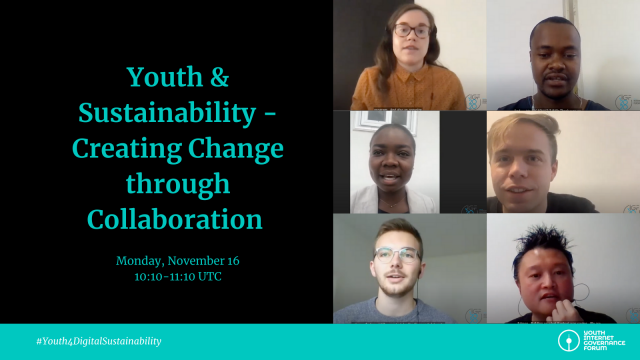
All panelists pledged to further engage their networks to foster intergenerational, transnational, and multi-stakeholder policy development regarding digital sustainability, especially in the context of Internet governance.
- Privacy laws and regulations, such as the Convention 108 of the Council of Europe, have been designed to facilitate data flows. These normative frameworks contribute to international trade by enabling companies to move data across borders.
- Although there are strong commonalities between privacy norms, there are a variety of different mechanisms in place to transfer data across borders. Work on interoperability between these data transfer models is ongoing and will further contribute to data flows and trade.
- For a data privacy law to be successful, it must provide effective protection for individuals, and, at the same time, it should provide organisations with the freedom to operate, innovate and comply in a way that makes sense for their business models.
- Moving copies of data is no longer the only way to create value from that data. Decentralized artificial intelligence permits to generate insights from different sources of data without requiring access to these data, thus guaranteeing privacy and security. Technology will increasingly provide regulatory compliant solutions to many of the issues related with data protection.
- The Internet is composed of five fundamental components, and any government measures that undermine one of these elements affects the entire Internet infrastructure. These components consist of an open and accessible global infrastructure with a common protocol; common IP identifiers; an open architecture to guarantee interoperability; a decentralized routing management allowing optimized costs; a general purpose rather than a specialized so the Internet can adapt to its evolving community of users and applications.
- Data localisation requirements, for instance, undermine the decentralized routing management of the Internet. Also, aligning routing policy with the requirements of different jurisdictions creates needless complexity and inefficiency, as routing could no longer employ the technical features that generate connectivity, resilience, and optimized flow
- Privacy laws and regulations, such as the Convention 108 of the Council of Europe, have been designed to facilitate data flows. These normative frameworks contribute to international trade by enabling companies to move data across borders.
- Although there are strong commonalities between privacy norms, there are a variety of different mechanisms in place to transfer data across borders. Work on interoperability between these data transfer models is ongoing and will further contribute to data flows and trade.
- For a data privacy law to be successful, it must provide effective protection for individuals, and, at the same time, it should provide organisations with the freedom to operate, innovate and comply in a way that makes sense for their business models.
- Moving copies of data is no longer the only way to create value from that data. Decentralized artificial intelligence permits to generate insights from different sources of data without requiring access to these data, thus guaranteeing privacy and security. Technology will increasingly provide regulatory compliant solutions to many of the issues related with data protection.
- The Internet is composed of five fundamental components, and any government measures that undermine one of these elements affects the entire Internet infrastructure. These components consist of an open and accessible global infrastructure with a common protocol; common IP identifiers; an open architecture to guarantee interoperability; a decentralized routing management allowing optimized costs; a general purpose rather than a specialized so the Internet can adapt to its evolving community of users and applications.
- Data localisation requirements, for instance, undermine the decentralized routing management of the Internet. Also, aligning routing policy with the requirements of different jurisdictions creates needless complexity and inefficiency, as routing could no longer employ the technical features that generate connectivity, resilience, and optimized flow.
- Cost of data
- Trust issues when data sharing
- Incentives to encourage data collection
- Privacy and security of data
- Roles and responsibilities of different stakeholders
- Disaggregation of data - gender
Roles and responsibilities
- Governments must choose to allocate resources to invest in data systems, choose to develop the regulatory and legal frameworks to promote the safe sharing of data and the protection of rights, and create a culture for the routine use of data in decision-making and accountability. Governments should also lead by example, making all public data open by default while respecting privacy and confidentiality conditions
- Companies have to choose to share their data in an accessible and affordable manner, and use it to make decisions that advance the SDGs.
- Civil society leaders need to amplify people’s voices in the data they collect and use for social change at a local level.
- There must be collaborating with UN agencies, NGOs, and the private sector to create a picture of progress on the SDGs.
- Academic institutions and think tanks play a role in supporting methodological testing and analysis of gender data for insight
- National statistics offices are crucial partners for improving efforts to collect and disseminate nationally representative data.
- In terms of data governance, chief statisticians should push for the UNSC to extend its role and become a more inclusive international platform for data sharing and coordination.
Incentives are necessary to catalyze multi-stakeholder collaboration. We need to create a new incentive structure and infrastructure to encourage private actors who currently monopolize digital technologies to share their information, thereby overcoming data and digital asymmetries between countries and between the private and public sectors. A key component of this incentive structure would be private company access to public data, which they could better understand new markets and opportunities, while concurrently ensuring the protection of privacy and confidentiality. One important approach is to establish good practice coalitions and platforms to make international data sources, methods, and innovations more standardized and accessible across countries
Trust issue - Data is used in ways that reduce public trust, rather than serving the public good. Big data analysis also raises challenges concerning data privacy and security, while governments and other stakeholders will need to build capacity and resources to maximize its value.
Lack of disaggregated data - gender
Anne Delaporte, Insights Manager, Connected Women Programme, GSMA
Lorrayne Porciuncula, Economist/ Policy Analyst on Communications Infrastructure and Services at the Digital Economy and Policy Division, OECD
Antonio Garcia Zaballos, Lead Specialist, Technology, Inter-American Development Bank
- Disaggregated data is important to get a sense of the specific fields that require support
- There are numerous reasons for persistent gender data gaps. These include low prioritization, low resources or capacity driving a low country coverage in gender data collection efforts; poorly developed or non-existent international standards for data used to construct indicators; the complexity of monitoring systems needed to capture desired gender data and indicators; most data collected at household rather than individual level
- Civil registration data, which includes births, death, and causes of death, marriage and divorce, are critical for a number of health and civic initiatives
- Why is data important?
- Too many people are invisible in data and therefore invisible in decision-making. Setting policies without core information or timely analysis means resources are wasted and their impact is limited.
- Lack of timely and comprehensive data also means that investors do not have all the information needed to target financial investments to promote sustainable development
- Data is critical for gathering a sense of how well we are doing in meeting certain targets fundamental in creating initiatives- cannot create functional and effective initiatives without the proper data
- A significant lack of data has corresponded to a lack of investment toward achieving the environmental dimension of the SDGs
- There are not only social and environmental benefits, but also economic benefits from well-function data systems.
- It would not only appeal to national governments and multilateral investors, but also to private and philanthropic investors looking to build systems with maximum social, environmental, and economic returns
- What are the main challenges in the production of quality, timely data, and an effective and inclusive national data system?
- Many countries do not have national systems in place for producing and monitoring data.
- Public fears, lack of regulation, and lack of leadership mean that many governments and NGOs are not applying the power of data for decision-making, data is being abused, and companies are hoarding vast data resources.
- Data is used in ways that reduce public trust, rather than serving the public good
- Big data analysis also raises challenges concerning data privacy and security, while governments and other stakeholders will need to build capacity and resources to maximize its value.
- What should be the objectives among a broad set of actors occurring across all stages of the data process in producing quality and timely data?
- Governments must choose to allocate resources to invest in data systems, choose to develop the regulatory and legal frameworks to promote the safe sharing of data and the protection of rights, and create a culture for the routine use of data in decision-making and accountability.
- Governments should also lead by example, making all public data open by default while respecting privacy and confidentiality conditions
- Companies have to choose to share their data in an accessible and affordable manner, and use it to make decisions that advance the SDGs. Data collected and reported by multilateral organizations and other international development partners must be harnessed and leveraged
- Civil society leaders need to amplify people’s voices in the data they collect and use for social change at a local level.
- There must be collaborating with UN agencies, NGOs, and the private sector to create a picture of progress on the SDGs
- Academic institutions and think tanks play a role in supporting methodological testing and analysis of gender data for insight
- National statistics offices are crucial partners for improving efforts to collect and disseminate nationally representative data. They should demonstrate the value of collecting data and improve their capacity to communicate information to program and policy decision-makers in a timely manner
- In terms of data governance, chief statisticians, in their capacity as members of the UN Statistical Commission (UNSC), should push for the UNSC to extend its role and become a more inclusive international platform for data sharing and coordination. The UNSC needs to build trust and common cause among official and unofficial data providers, specifically around data gaps and capacity challenges
- What is the role of incentives of internet stakeholders in data governance at the local and national levels?
- Incentives are necessary to catalyze multi-stakeholder collaboration.
- In particular, we need to create a new incentive structure and infrastructure to encourage private actors who currently monopolize digital technologies to share their information, thereby overcoming data and digital asymmetries between countries and between the private and public sectors
- A key component of this incentive structure would be private company access to public data, with which they could better understand new markets and opportunities, while concurrently ensuring the protection of privacy and confidentiality
- One important approach is to establish good practice coalitions and platforms to make international data sources, methods, and innovations more standardized and accessible across countries
- Another incentive is frontier technologies and their support for safer systems for data sharing
- satellite and drone data are being integrated with other sources of data to map ecosystem extent; satellite imagery and telecommunications data are being combined with census records to produce more accurate and timely population, migration, infrastructure, and housing estimates; and telecommunication and sensor data are being used to track informal commuter patterns, transport systems, and economic opportunities.
- BUT the majority of these new technologies and approaches are being used exclusively by private industries and, to a lesser extent, academic institutions, largely in the Global North
- We need to move towards a system that enables the equitable sharing and exchange of technology for the public good
- a new social contract among companies, governments, and citizens where mutual obligations and responsibilities are spelled out
- Multiple benefits and also provides a degree of incentiv
- Why is the disaggregation of data important? What are the key gender data gaps, and what actions can different stakeholders take to bridge the gender data gap?
- Disaggregated data is important to get a sense of the specific fields that require support
- There are numerous reasons for persistent gender data gaps. These include low prioritization, low resources or capacity driving a low country coverage in gender data collection efforts; poorly developed or non-existent international standards for data used to construct indicators; and challenges brought by the complexity of monitoring systems needed to capture desired gender data and indicators.
- Disaggregation remains a key challenge across sectors as most data are collected at household rather than individual level
- Civil registration data, which includes births, death, and causes of death, as well as marriage and divorce, are critical for a number of health (as well as civic) initiatives
- Women over reproductive age; our poor understanding of whether education is preparing girls with the digital literacy skills necessary for the future of work; our partial picture of women’s political engagement; and the nascent field studying the interplay of environmental issues and gender.
-
What about current connected health use-cases is encouraging and what do still needs to be addressed?
-
Whether this is a trend that should or will last beyond the public health crisis.
-
The panel agreed that the trend will last and has plenty of positives.
-
-
How much are the current AI use cases in healthcare built on "hype" and how much are real benefits to patients.
-
Panelists agreed there are many positive use-cases, but there needs to be care taken to ensure that policymakers continue to be skeptical, instead of "cheering on" AI uncritically.
-
-
The need for human intervention into AI systems.
-
The additional privacy and security threats that the provision of healthcare over the internet brings.
-
Panelists agreed on the existence of a new threat but disagreed about the solutions to mitigate them.
-
-
The inclusivity challenges that arise when healthcare is provided over the internet.
-
Panelists offered several different solutions, including broad-based technology education campaigns and universal broadband deployment.
-
The panel was able to identify and create an understanding of the spectrum of opportunities and challenges that telehealth will bring to bear on communities during and after the COVID-19 pandemic. The panel discssed how the identified opportunities and challenges may be mitigated by the socioeconomic factors of discreet communities. For example, rural patients in the global south have less opportunity to benefit from connected health interventions due to lack of access to smartphones, broadband, and health providers who are willing to adopt the technology.
Panelists reached agreement that broadband access, legacy regulatory approaches, interoperability, technological literacy issues, privacy and security risks, and immature technology (from an AI diagnostics perspective) are all challenges. However, panelists also agreed that the opportunities that connected health presents are immense: greater penetration into underserved markets, more personalized care, optimizing new and existing data flows, and allowing for greater regional resource sharing are all ways that connected health can help improve patient outcomes.
Panelists offered several different solutions to help mitigate some of the challenges, including broad-based technology education campaigns, universal broadband deployment, and bridging the divide between policymakers and technologists.
-City of Buenos Aires/WeChat Partnership (COVID symptom checking ChatBots)
-https://www.citiesforglobalhealth.org/initiative/buenos-aires-chatbot-helps-protect-citizens-against-coronavirus
-Microsoft's telemedicine IRIS Diabetic Retinopathy Diagnostic Solution
-https://appsource.microsoft.com/en-us/product/web-apps/iris-intelligentretinalimagingsystems.iris?tab=Overview
-Microsoft's Airbands/television white spaces initiative
-https://www.microsoft.com/en-us/corporate-responsibility/airband/technology
Moderator: Brian Scarpelli, ACT | The App Association
Speaker 1: Sveatoslav Vizitiu , Private Sector, Eastern European Group
Speaker 2: Jelena Malinina , Civil Society, Western European and Others Group (WEOG)
Speaker 3: Subbarao Kambhampati, Technical Community, Western European and Others Group (WEOG)
Speaker 4: Analia Baum, Government, Latin American and Caribbean Group (GRULAC)
Speaker 5: Geralyn Miller, Private Sector, Western European and Others Group (WEOG

need for governance structures - setting up an independent body or a third-party to oversee some of the moderation decisions
researchers and academics should step away from focusing on specific instances and aim to shape a broader approach to content governance
Pratik Sinha, Alt News
Marianne Diaz, Derechos Digitales
Amelie Pia Heldt, Hans Bredow Institute
Varun Reddy, Facebook-India
Tarleton Gillespie, Microsoft Research, Cornell University
Urvan Parfentyev, Russian Association of Electronic Communications
Areas of broad support/agreement:
- Designing ICT inclusively from the start following the principles of Universal Design will ultimately benefit everyone through increased usability/user-friendliness.
- Including persons with disabilities and other marginalized groups in digital development efforts is vital for reaching the SDGs.
- The COVID-19 pandemic accelerated digital exclusion and underscored the need to develop inclusive solutions.
- A lack of awareness about accessibility and its social and business benefits is regarded as a major obstacle in all stakeholder groups: governments, private actors, civil society organizations. Among persons with disabilities there is a lack of awareness about accessibility features and insufficient skills for their usage.
- A lack of disaggregated data about persons with disabilities, also with regard to ICT challenges and opportunities creates an enormous challenge for designing and implementing policies. Better data could also be an incentive for the private sector.
- Cognitive disabilities are to be treated differently with regard to accessibility. Care-givers or family members should be involved to identify their needs.
- Perspective on digtial accessibility needs to change: Shifting away from a perception of an extra effort and special intervention. Normalizing inclusive design for all should be the goal.
Areas of no agreement/areas needing further discussion and development
- What role does innovation play for digital inclusion of persons wiht disabilities? Differing perspectives: Innovation alone does not solve crucial matters of social exclusion, but can be a valuable approach for convincing the private sector.
- What means accessibility for persons with different types of disabilities?
A lack of awareness about accessibility and its social and business benefits is regarded as a major obstacle in all stakeholder groups: governments, private actors, civil society organizations. Among persons with disabilities there is a lack of awareness about accessibility features and insufficient skills for their usage. Including persons with disabilities and other marginalized groups in digital development efforts is vital for reaching the SDGs. The perception of governments, private actors and international organizations on disability in tech needs to change: designing ICT inclusively from the start following the principles of Universal Design will ultimately benefit everyone through increased usability/user-friendliness. Governments have often times committed themselves to accessibility of ICT through signing and ratifying the Convention on the Rights for Persons with Disabilities, but implementation is lacking. The COVID-19 pandemic accelerated digital exclusion and underscored the need to develop inclusive solutions.
Support implementation
When collecting data (or supporting bottom-up data collection) about persons with disabilities, questions about access and usage of digital technologies should be included. Apart from the general lack of disagreggated data, data on ICT access and usage is by large inexistent, but is very necessary.
International Organisations
Development/International cooperation stakeholders
Involving persons with disabilities in the design process improves user-friendliness and drives innovation. Persons with disabilities and/or representative organizations should be involved in the development of digital products and services.
Technical community
Hihglighting accessibility as a requirement in COVID-19 response strategy documents, involving Persons with disabilities and/or local Organizations of persons with disabilities in planing and implementing digital COVID-19 response measures to ensure accessibility.
International and development cooperation
Global Initiative for Inclusive ICTs (G3icT)
https://g3ict.org/
AT2030
https://at2030.org/
ILO Global Business and Disability Network (GBDN)
http://www.businessanddisability.org/
Digital2Equal (DG DEVCO - EU)
Moderator 1: Edith Kimani, Media & Journalist
Moderator 2: Paul Horsters, Second facilitator
Speaker 1: Wairagala Wakabi, Civil Society, African Group
Speaker 2: Tim Unwin, Intergovernmental Organization, Western European and Others Group (WEOG)
Speaker 3: Bernard Chiira, Technical Community, African Group
Speaker 4: Irene Mbari-Kirika, Civil Society, African Group
Speaker 5: Claire Sibthorpe, Private Sector, Western European and Others Group (WEOG)
Speaker 6: Dr. Bernd Schramm Head of GIZ Global Project Inclusion of Persons with Disabilities commissioned by the German Ministry for Economic Cooperation and Development (BMZ). Short welcoming speech.
3 of the 6 panelists are women. Tim Unwins engagement for changing mens perception about women in tech was mentioned, apart from this gender issues were not discussed.
Kindly find this under 2) and 3)
This session identified key barriers that businesses are facing when reopening during the COVID-19 crisis and transitioning to the digital economy. For instance, entrepreneurs and small businesses across emerging markets are struggling to participate in the digital economy due to existing challenges of accessibility and affordability of the internet as well as a lack of digital skills. At the same time, inadequate or absent policies and regulatory frameworks that facilitate competitiveness and access to global markets continue to undermine the development of an inclusive digital economy. To address these challenges, multi-stakeholder dialogues on digital transformation at the local, regional, and international levels must be a key priority to ensure inclusive digitally-enabled economic growth in the post-COVID-19 era.
The COVID-19 pandemic has underscored the importance of building enabling environments for inclusive prosperity in a technology-reliant future. Moreover, there is a broad consensus that multi-stakeholder coordination underpins the development of a digital space that advances democratic values and economic inclusion. Stakeholder groups such as civil society, international organizations, the technical community, companies, and governments should work together to support initiatives that improve digital and financial skills among local business communities. Diverse actors should also actively participate in policy fora focused on the development and implementation of legislation and frameworks that impact the digital economy.
Recommendation: Coordinated multi-stakeholder dialogue during the development and implementation of new legislation impacting the digital economy is crucial. Policymakers should encourage the participation of diverse stakeholder groups in policy dialogues focused on digital transformation.
Recommendation: Governments, civil society, the technical community, and international organizations should expand educational initiatives that seek to build digital and financial skills among local business community groups. (This issue and recommendation are cross-cutting across all policy sectors).
Moderator: Anna Kompanek, Center for International Private Enterprise
Online Moderator: Morgan Frost, Center for International Private Enterprise
Speaker 1: Rainer Heufers, Civil Society, Asia-Pacific Group
Speaker 2: Mary Rose Ofianga, Private Sector, Asia-Pacific Group
Speaker 3: Juliet Nanfuka, Civil Society, African Group
Speaker 4: Nicole Primmer, Private Sector, Western European and Others Group (WEOG)
The session explored specific barriers that women are facing when seeking to participate in the digital economy. Overall, the pandemic aggravated pre-existing gaps of the digital divide, which disproportionately affect women. The speakers agreed that since the COVID-19 pandemic, women are becoming more entrepreneurial as they transition businesses online. Yet, many women entrepreneurs still lack the digital and financial skills needed to participate fully in the digital economy. In addition, inadequate or misguided legislation on the digital economy undermines the advancement of gender inclusion in the digital space.
Approximately 35 participants attended the IGF session. The video of the session can be viewed here: https://www.youtube.com/watch?v=InepxUEFzLw
Additional announcements, resources, and reports related to this session:
• https://cipesa.org/2020/11/cipesa-to-participate-in-igf-2020-session-on-building-inclusive-digital-economies-in-emerging-markets/
• https://dig.watch/resources/igf-2020-ws-259-building-inclusive-digital-economies-emerging-markets
• https://openinternet.global/
• https://www.cipe.org/resources/digital-economy-enabling-environment-guide-key-areas-of-dialogue-for-business-and-policymakers/
During the session, panelists made voluntary commitments to continue contributing to multi-stakeholder conversations focused on building inclusive digital economies. For instance, Rainer Heufers stated that the Center for Indonesian Policy Studies (CIPS) will continue to look at issues impacting the digital economy and actively participate in policy dialogues focused on digital transformation in Indonesia. Likewise, Juliet Nanfuka from the Collaboration on International ICT Policy in East and Southern Africa (CIPESA) said that her organization will continue to encourage diverse stakeholders to participate in policy fora impacting the digital space. The recent passing of the African Continental Free Trade Agreement (AfCFTA), provides unique opportunities for diverse stakeholders to advance dialogue across Africa on how to shape and govern the digital economy in a way that promotes greater regional cohesion, development, and competitiveness. Mary Rose Ofianga Rontal mentioned that she will continue to equip local entrepreneurs in the Philippines, many of whom are women, with digital skills needed to make the digital economy inclusive. Finally, Nicole Primmer highlighted that the Business at Organisation for Economic Co-operation and Development (OECD) will continue to develop research, tools, and best practices on the digital economy that are applicable around the world as governments and other stakeholders continue to explore policy options.
The panel featured representatives from the tech sector, civil society, academia, NGOs, as well as WHO and UNESCO.
Speakers agreed that there is a crucial need to foster multi-stakeholder partnerships and cross-sectoral collaboration, to ensure that the Internet remains an open space for the exchange of reliable information.
Julie Posetti (ICFJ) summarized the types of COVID-19 disinformation and responses to the current “disinfodemic”, based on her contributions to the Broadband Commission’s report “Balancing Act” and two UNESCO policy briefs.
Tina Purnat (WHO) called for crafting a public research agenda to manage and respond to both infodemics and disinfodemics.
Beeban Kidron (5Rights Foundation) underlined the relevance of such research, arguing that disinformation types cannot be separated from one another and have an encompassing impact on a multitude of crises, including on children’s wellbeing.
Guy Berger (UNESCO) stressed the need to understand cultural aspects of information as part of a human condition which includes norms, emotion, fear, aspirations, identities, and culture. Piotr Dmochowski-Lipski (EUTELSAT IGO) stressed that national interpretations could negatively impact the efficacy of policy-making processes and international standards.
Stephen Turner (Twitter) presented Twitter’s recent content moderation decisions that were made with the intention to detect and delete harmful content concerning COVID-19, based upon the challenges such content presents, and how users interact with it. He also presented Twitter’s partnerships with international organizations such as UNESCO on issues of media and information literacy.
Cristina Tardáguila (IFCN) pointed to social media platforms developing disinformation policies only for selected countries. She advocated for more work in designing global approaches to disinformation in the online sphere, as well as a focus on information literacy.
Claire Wardle (First Draft News) advocated for more qualitative research in the field in order to strengthen the empirical foundation on which to base actions against disinformation.
The session found consensus on two main points. Firstly, it was recognized that all stakeholders have stakes and potential in shaping Internet governance. All groups represented in the panel pushed for increased cooperation on the issue of disinformation, in order to produce a holistic assessment framework.
Secondly, they agreed that communities and individuals are both essential to designing and implementing initiatives that address disinformation while strengthening media and information literacy. This is particularly relevant in the context of the COVID-19 disinfodemic, in which information has life-or-death consequences for vulnerable populations.
Overall, speakers appear to agree to a varying extent that online platforms play an essential role in the spread of both disinformation and reliable information. The academia and civil society representatives were vocal about the need for platforms to be subject to independent regulatory oversight. They also encouraged online providers to pursue transparency and accountability when conceiving and applying their content moderation and removal strategies.
More doubts were raised concerning some possibilities to empower media outlets. There was discussion of how the business model employed by online platforms puts traditional news providers at a clear disadvantage. One speaker questioned whether online platforms are “fit for purpose” as they have become predilected vehicles of disinformation. Therefore, all participating groups would benefit from continued discussion on this aspect to better define potential solutions.
Categorized as an employment issue.
https://en.unesco.org/covid19/disinfodemic/coronavirusfacts
https://www.sparkblue.org/group/112/about
https://www.who.int/teams/risk-communication/infodemic-management/3rd-virtual-global-who-infodemic-management-conference
https://www.who.int/news/item/22-10-2020-the-world-health-organization-and-wikimedia-foundation-expand-access-to-trusted-information-about-covid-19-on-wikipedia
https://en.unesco.org/news/unesco-partners-other-agencies-strengthen-work-counter-covid-19-infodemic
https://www.shareverified.com/en
https://www.edapp.com/course/disinfodemic/
Moderator: Guy Berger, UNESCO, International Organization
Presenter: Julie Posetti, International Centre for Journalists, Academia, Western European and Others Group
Speaker 1: Tina Purnat, WHO, Intergovernmental Organization
Speaker 2: Beeban Kidron, 5Rights Foundation, Civil Society, Western European and Others Group
Speaker 3: Piotr Dmochowski-Lipski, EUTELSAT IGO, Intergovernmental Organization, Eastern European Group Speaker 4: Claire Wardle, First Draft News, Civil Society, Western European and Others Group
Speaker 5: Stephen Turner, Twitter, Private Sector, Western European and Others Group
Speaker 6: Cristina Tardáguila, International Fact-Checking Network, Civil Society, Latin American and Caribbean Group
The session focused on a series of technical and partnership solutions to the issues of disinformation, including the perspective of an array of internet governance stakeholders. Therefore, gender issues were not explicitly mentioned in the debate. However, the session showcased gender balance, with five out of eight panelists being women.
Link to the session recording: https://www.youtube.com/watch?v=BQw4ztI3xnA&t=2s&ab_channel=InternetGovernanceForum%28IGF%29
UNESCO News article: https://en.unesco.org/news/unesco-workshop-internet-governance-forum-hi…;

No voluntary commitments were made during the session.
The discussion focused on the interconnections between human rights, environment and Internet connected technologies and looked into concrete steps to achieve an effective multi-stakeholder collaborative effort to ensure human rights and sustainability by design.
The speakers agreed that only concerted solutions resulting from multi-stakeholder collaboration could lead to effective change and that more needs to be done to promote dialogue and shared experiences, but that spaces, such as the annual IGF and the NRIs already exist to foster this dialogue.
The panel reflected upon the causes that are currently hindering cross sector collaboration – since the solutions and the skills for a sustainable ICT already exist, but are scattered among the different stakeholder groups – and highlighted issues of culture, values, and priorities. In particular, they highlighted the lack of accountability and the failure to take responsibility, which leads to masking problems rather than solving them. Also stressed was the scattered and unclear information on sustainability, the lack of a concerted strategy of repairability, and the reliance on a business model that promotes rampant consumption and product obsolescence, which forces consumers to waste their existing and perfectly working products by replacing them for new ones. This scenario is leading to ever growing demand of consumption and of e-waste generation and the use of precious natural resources that not only have a huge negative impact on the sustainability of the planet, but also on the full enjoyment of human rights with disastrous consequences to populations affected by the scarcity of their natural resources, affected by the hazards of e-waste, or working in degrading conditions to provide the raw materials needed for the ever growing demand of production of new technologies.
- A better governance on ICT sustainability is needed. Multi-stakeholder collaboration is vital for effective solutions, and the IGF environment is perfect to foster robust networks and to promote closer collaboration among stakeholders. Effective collaboration is key to avoid siloed decisions, to promote the development of informed policy frameworks and create a space for sharing good practices that promote rights and sustainability by design.
- Regulatory frameworks are needed to ensure sustainability, from the use of natural resources design and production to the consumption and disposal of technologies. It is vital to provide clear and accessible information to consumers of internet technologies. For example, eco-design directive already exists within the EU and a Digital Sustainability Index is in development and it will be integrated in public procurement.
- The private sector and the technical community need to lead the way by including life cycle assessment experts in all teams and ensuring and promoting human rights and sustainability by design.
- Civil society has an important role of contributing to change through education and raising awareness in their communities so that communities can find their voice and demand the change needed.
- Education is a key element in promoting sustainability and informed choices. A holistic approach that takes into account planetary boundaries and fosters life cycle perspective of rather than the existing linear perspective needs to be embedded into education and promoted by both civil societies and governments. Education should not only be provided to younger generations, but also to those in positions of power.
Weronika Koralewska, Civil Society, Poland
Alexandra Lutz, Government, European Parliament
Pia Wiche, Private Sector, EcoEd
Y. Z. Ya’u, Civil Soceity, APC / Centre for Information Technology and Development (CITAD)
Gender was not explicitly covered, but was referenced via the adverse affects of the lack of sustainability built into the design of ICTs on the environment and human rights. All speakers, minus one, were also women.

What measures would motivate the technical community to prioritize the UA support in their tools and services, given the potential socio-economic impact for the end-users?
What measures would motivate the technical community to prioritize the UA support in their tools and services, given the potential socio-economic impact for the end-users?
What measures would motivate the technical community to prioritize the UA support in their tools and services, given the potential socio-economic impact for the end-users?
What measures would motivate the technical community to prioritize the UA support in their tools and services, given the potential socio-economic impact for the end-users?, How should the public sector address its practice and policy to incorporate UA readiness in its e-government services to better serve its citizens?, How can the end-user community organize to motivate the public sector and technology developers to promote inclusion and choice by allowing UA for all domain names and email addresses?
Supply side
- The biggest expansions for creating customer choice and competition in the Domain Name Space have been the introduction of Internationalized Domain Names (IDNs) and the new gTLD program by ICANN
- Every developer should have strong understanding of UA in their skills set giving them a competitive advantage.
- There is power in standardization and interoperability for businesses who want to operate globally
- Governments could lead by example by supporting e-government services and systems in local
- The Governmental Advisory Committee (GAC) within ICANN has already made a working group on UA issues.
- Through the Universal Acceptance Steering Group (UASG) and ICANN, efforts have been made to further advance UA but it has not been enough
- The introduction of Hindi email addresses by the local government of Rajasthan, India, has led to be able to communicate directly with 7 million people who had ASCII email addresses but were unable to operate them
Demand side
- UA is a tool for end-users to enrich their online experiences
- Awareness can be raised by targeting and doing outreach towards specific groups, such as governments or local initiatives. Local and regional applications would benefit local and regional users
- Targeted capacity building could be offered on how the DNS works and operates, and why UA is relevant.
- UA could also be integrated in university courses for social sciences, internet governance, international relations and computer sciences
- Despite over 2 million registered domain names in China, most browsers, social media and messaging platforms do not support IDNs making their use not practical as potential traffic and customers might be lost
- Chinese Domain Names Initiative (CDNI) was founded in January 2020 by registries, registrars, industry associates and internet companies to promote a better understanding of UA and move froward together.
Approaches and solutions towards raising awareness of the benefits of UA are multifold. The main challenge seems to be a lack of knowledge among the technical community and end-users about the existence of UA. There is a need to change the attitude of stakeholders towards UA implementation and realization of a truly multilingual internet and invest in long-term social and economic benefits. Overall, a multistakeholder effort is needed for both the supply-side and demand-sides to work in cooperation. Keeping the internet secure, stable and interoperable should be at the forefront of every long-term decision taken by all relevant stakeholders.
From the suppliers’ perspective, developers, major internet companies and other technical actors need to understand and prioritize UA readiness. Through technical training and other awareness raising initiatives, the private sector could be made to see the long-term financial and technical benefits of UA and close the communication gap between domain name markets and popular internet applications. Furthermore, UA should in collaboration with academia and universities, be incorporated in educational degrees before workers reach the job-market.
The public sector has a major role to play in the awareness raising and adoption of UA. Leading by example, the public sector can drive UA readiness by providing internationalized domains and email addresses on their webpages to their citizens in local languages and scripts. Through procurement, the public sector can also accelerate the adoption of UA by technical partners through UA-friendly policies.
From the end-user perspective, there is a need for more education on the existence and possibilities provided by UA. Diverse approaches can be adopted in promoting different components of UA to different stakeholders and regions. End-users can actively communicate with internet companies and internet providers and demonstrate that there is a demand for UA.
- The internet is global and UA allows to reach end-users using non ASCII scripts, receive their emails and payments, and have a truly interoperable internet.
- UA would also boost the creation of local content for end-users who have access to the internet but might not be interested in using it due to lack of relevant content
- Governments would be able to communicate with their citizens who might have been deprived of it before due to their lack of knowledge of ASCII scripts.
- Initiatives such as those of the Universal Acceptance Steering Group, UA Ambassadors, and awareness raising events such as this session at the IGF could put the challenges and the benefits in spotlight from the technical communities’ perspectives.
- Integrating UA in university and academic modules would raise awareness among future technical stakeholders before they enter the job-market.
- Governments have a key role to play as they can lead by example and make policies towards UA readiness and implementation
- Initiatives such as the USGA, UA Ambassadors and the Chinese Domain Names Initiative are able to bring different stakeholders to a friendly environment and promote UA and related subjects such as ICANN’s work and new gTLDs.
Promotion and adoption of Universal Acceptance
- The Initiative/Process/Organization addressing the issue
ICANN, Universal Acceptance
- Details of the initiative (including URLs) or anything else you think is relevant
https://www.icann.org/ua
Promotion and adoption of Universal Acceptance in Rajasthan
- The Initiative/Process/Organization addressing the issue
RajMail
- Details of the initiative (including URLs) or anything else you think is relevant
https://uasg.tech/wp-content/uploads/2019/02/UASG013E-en-case-study-rajmail-government-of-rajasthan.pdf
Promotion and adoption of Universal Acceptance in China
- The Initiative/Process/Organization addressing the issue
Chinese Doman Name Initiative
Speaker 1: Ajay Data, Technical Community, Asia-Pacific Group
Speaker 2: Akinori Maemura, Technical Community, Asia-Pacific Group
Speaker 3: Kulesza Joanna, Civil Society, Eastern European Group
Speaker 4: Walter Wu, Private Sector, Asia-Pacific Group
Moderator: Maria Kolesnikova, Technical Community, Eastern European Group
Online Moderator: Dennis Tan, Private Sector, Western European and Others Group (WEOG)
Gender issues were not addressed during this workshop.
We have addressed the issues of multilingualism in the Internet from different points of view. Points of agreement include:
- translation is sometimes insufficient, in particular when dealing with interaction between "minor" languages;
- social media are targeting the broader population and therefore might even amplify the problem for minorities, but the rise of local social media could better address the development and promotion of local languages and scripts;
- favouring multilingualism on the Internet requires broad actions from different stakeholders;
- there is still a lack of understanding about the differences between languages and writing systems;
- multilingualism on the Internet cannot be achieved only with the implementation of technical solutions - although technical solutions are a prerequisite;
- developing multilingual capabilities on the Internet is a huge task and requires co-ordinated efforts by multiple stakeholders.
There have been no real disagreements, but from the debate it was clear that different speakers were attaching a different priority to different aspects.
The audience has been polled about their mother tongue and related script - or writing system - and how this relates to their Internet presence. Most people are comfortable with the current situation, but the overarching question is if the IGF participants are a representative sample of the global population.
This issue affects primarily users, who will have limitations to their user experience and ultimately their ability to produce and access local content on the Internet - they should take the lead and put pressure on the other stakeholder groups to provide the necessary solutions and collaborate in raising awareness.
The replies to the poll show that there is confusion among the participants even about languages and scripts. This suggests that much has to be done still about raising awareness of the different aspects of multilingualism and about education of the different stakeholders.
This is a complex problem and the solution depends on multiple actions by multiple stakeholder groups, including for instance governments to promote multilingualism, social media and other platforms to support local languages and scripts, civil society to raise awareness and promote local contents.
The Governments have a special role, because they can create digital policies and also promote partnerships with the private sector to address these issues.
Actors acting globally - like International Organizations - can play a key role, also providing guidelines for local Governments.
John Klensin has provided an overview of the most important issues that are barriers to entry for new people or greater use - local languages, difficulties of translation, writing systems including insufficient rendering of text, difference in culture, etc.
Abdalmonem Tharwat Galila has spoken about Universal Acceptance of Internationalized Domain Names and Internationalized Email Addresses.
Maria Kolesnikova has spoken about the user experience in different contexts, in particular in relation to her experience with the ccTLDs .ru and .рф, but also in relation to social media.
Roberto Gaetano has spoken about some initiatives to promote local languages on the Internet in Latin America and Italy.
In the discussion about the barriers to Internet access at large mention was made to social and cultural barriers which includes denial of access to women and girl child access to technology. However, this topic has not been thoroghly discussed and the team believes that it should be part of a follow-up work - maybe for the next IGF - that could also address the different use of language that women make in certain cultures, for instance when related to the social role that they have in a stratified society.
Internet still being far from being a truly Inclusive platform universally and the paucity of Multiligualism is one of the many barriers to Access to Internet for hundreds of millions of people - see also the BBC article The many languages missing from the internet https://www.bbc.com/future/article/20200414-the-many-lanuages-still-missing-from-the-internet.
Time may have come for not just adding scripts to the Unicode one after the other, but to consider the importance and relevance of a particular language/writing system in the global/regional scheme of things, so that further development of the language/writing system such as content building and usage can progress in a more meaningful way.
Multilingualism has an impact on SDG 4 - Inclusive and Equitable Quality Education - because the digital divide, especially amongst the poor, also has to do with not having access or sufficient access to educational material in mother toungue languages/writing systems.
Multilingualism has an impact on SDG 5 - Gender Equality - Besides the points made above under "Reflection to Gender Issues", increasing ability to communicate, create and get information in local language and script helps fighting imbalances in the society, including Gender Inequality.
Multilingualism has an impact on SDG 9 - Infrastructure - because the language is an impediment to some network expansion. See also the final report on IGF 2020 provided by Diplo Foundation: https://dig.watch/events/igf2020/final-report - Section Development, Internet Access.
The result of the poll conducted during the session are here: https://www.mentimeter.com/s/9d61b54e9269f3140927468b44474ebf/d9e1a5852…
To bring together the voices of the minorities whose languages are at risk of being forgotten or that cannot appropriately produce fruition of local content on the Internet not only to the global IGF, but also for the regional and national IGFs.
To work actively in the IGF as well as in the IETF pushing multilingualism issues.
To work with or without internationalization and keeping IDN working and making them better if there are technical issues.
To focus more on contents than on the technical issues.
Research suggests that current production models are seriously impacting the economy, environment, and the society at large. The digitalisation of the economy is no exception. Ms Ece Vural (International Relations Department Manager, Habitat Association) asked the session panellists five main policy questions which address how newer ways of computing and digital advances can improve the sustainability of current productions models and benefit society. First of all, it is important that we define the concept of sustainable computing and make society understand that there are ways to optimise and reduce the energy consumption of the existing computer infrastructure. Ms Jaewon Son (Committee Member, Korea Internet Governance Alliance) explained that Korea is increasing its investment in the economy, especially towards small and medium-sized enterprises (SMEs) and businesses that provide online services in response to the COVID-19 pandemic. Mr Daniel Jr Dasig (Associate Professor, De La Salle University Dasmarinas) explained that the geography of innovation continues to shift, and the sustainability of computing is an issue that affects both developed and developing countries. Mr Mohammad Atif Aleem (Regional Engagement Director for Asia Pacific Group, Youth Special Interest Group, Internet Society) clarified that sustainable consumption is about doing more and better with less. He added that information and communications technology (ICT) penetration is still a challenge in many developing countries. This is especially relevant when addressing the climate change challenge. For example, in the sub-Saharan region, there is still a lack of meteorological stations. Ms Chineyenwa Okoro Onu (Founder and Managing Director, Waste or Create Hub) stressed the importance of putting people first and equipping them with information and knowledge.
- How can SDGs 9, 12, 11 and 13 be fostered digitally and lower the impact on the environment
- Potential that digital technology offers in the field of production and consumption
- Role of quality education in enhancing sustainable initiatives
- Information on how gender equality can be promoted through digital ways, and in the associated SDGs for equitable distribution and representation
- Information on IsuComputing and digital advances to improve the sustainability
1) Ms Ece Vural (Moderator)
2) Ms Jaewon Son
3) Mr Daniel Jr Dasig
4) Mr Mohammad Atif Aleem
5) Ms Chineyenwa Okoro Onu
The session briefly discussed on how gender equality can be promoted through digital ways, and in the associated SDGs for equitable distribution and representation. The speakers stressed the importance of mainstreaming gender equality, especially regarding the inclusion of women in digital communication. (Social) media can be a powerful tool if used correctly, as statistics show that 73% of women have been exposed to or experienced violence online. Moreover, it is important that women can participate in digital businesses on an equal footing. In this regard, many corporations are launching gender-based opportunities.
To advance the work of sustainability across sectors in individual capacity.
The members of the workshop discussed the soundness of using automated tools and bots for countering disinformation. They highlighted the potential for positive uses in enabling and empowering the work of individuals dealing with disinformation campaigns. It was noted as well their social positive impact in raising awareness and serving as media literacy tools.
The discussion addressed as well the risks involved in deploying them. It was mentioned that these tools may limit speech and may interfere with other individual rights.
The debate moved on to whether there should be different technical approaches to deal with spread of misinformation (less intentional) and disinformation (with a malicious intent). The participants seemed to agree that it was less a matter of approach or technical tools and more a matter of tactics. A coordinated campaign to spread disinformation would require a higher degree of coordination from the actors trying to stop its spread or to counter its deleterious effects.
The discussion evolved to deal with the legitimacy of deployment of such tools and participants suggested that transparency and a human-centered approach were at the heart of the matter. To finish there was a discussion whether using these tools may not run counter to other rights such as a “right to be wrong” and share views that may be considered wrong.
The key takeaways from the workshop related to the soundness of deploying bots to counter desinformation, the instances where these tools can be deployed, the policies to mitigate risk and under which basis and criteria to address their efficacy and legitimacy.
The first takeaway is that bots and automated tools can play a role in fighting disinformation. They can be important innovative and compelling ways to address this multifaceted phenomenon. Their use to identify and monitor instances of disinformation tends to be the most effective way to apply them and the less prone to risk. They present an important opportunity to concentrate resources on instances where human oversight is more crucial. When used directly to moderate speech they may involve a higher risk of limiting rights such as freedom of expression access to information.
The deployment of any such tool should be accompanied by efforts of transparency. Explanation of the inner workings of the tools, the criteria they follow and their effects are of significant importance.
The legitimate use of bots may depend not only on how it is used and its objective but also on the actors that are deploying them. The public administration should be held to a higher standard, deploying them only on instances where it can be justified. Social media platforms should also be held to account when implementing such tools and processes. The imbalance of power is a significant factor and raises the social risks associated with their application
As another policy recommendation, participants noted that humans should be at center of the decision-making process. Bots and automated tools have a role to play as facilitating human action as raising levels of efficiency.
The availability of such tools present an opportunity, yet they are not capable of dealing with the whole fenomenon. Other low tech initiatives are important particularly for places with low and spotty connectivity. The different levels of technological availability and media and tech literacy should be taken into consideration when deciding to deploy such technologies.
Moving forward, best practices and common approaches to deploying bots and automated tools should be developed. Flashing out the degree of transparency and human interaction has to be at the forefront of the discussions.
Initiative: Pegabot (Bot Catcher), developed by the Institute for Technology and Society
Details: www.pegabot.com.br (also available in Spanish)
Initiative: The Sentinel Project
Details: https://thesentinelproject.org/
Initiative: Wikimedia Foundation
Details: list of bots operating on Wikimedia projects: https://www.mediawiki.org/wiki/Toolserver:List_of_Wikimedia_bots
Speaker 1: Christopher Tuckwood, Civil Society, Western European and Others Group (WEOG)
Speaker 2: Debora Albu, Civil Society, Latin American and Caribbean Group (GRULAC)
Speaker 3: Jenna Fung, Civil Society, Asia and Asia Pacific Group, Affiliation: Net Missions
Speaker 4: Jan Gerlach, Civil Society, Western European and Others Group (WEOG)
Moderator: Christian Perrone, Civil Society, Latin American and Caribbean Group (GRULAC)
Gender issues were only marginally addressed through the consideration that disinformation and hate speech affect particularly women and gender-diverse groups. Such minorities suffer from coordinated inauthentic behaviour campaigns, especially during election periods regardless of the region / country addressed.
Besides this, there are numerous examples on how the use of artificial intelligence tools and processes discriminates on the basis of gender and race, which can pose a challenge and a threat to the deployment of such initiatives when countering disinformation.
There is an agreement between the group of speakers that the use of automation, bots and artificial intelligence tools to counter disinformation has to be human-centered and supervised. Also, it should be noted that this usage concentrates on the phases of identification and filtration and not on the phase of responding to disinformation - or misinformation - campaigns.
The session covered issues around the access, agency, and autonomy of women workers in the platform economy. Around access, we discussed occupational segregation, with women concentrated in ‘feminine’ jobs and having reduced access to jobs that do not traditionally have women workers. We also discussed the impact of gender norms on access, which have no easy solutions.
In the discussion on agency, Sofia Scasserra discussed the challenges faced by women workers in representing themselves through traditional unions in Latin America, as more ‘feminised’ sectors get left behind. However, more and more women are joining trade unions, and have devised concrete strategies such as logging out, filing petitions around workers’ safety in court, and pushing for media attention to gain traction to workers’ issues. These strategies have led to some positive developments in Latin America, which can show the roadmap to other economies – in Argentina, there is a draft law formulated in consultation with trade unions which will pro-rate all benefits such as leaves, social security contributions from employers etc. This allows workers to gain benefits while retaining the flexibility of gig work. There is also a provision for algorithmic audits to determine gender biases, which protects women workers from automated discrimination.
In the section on autonomy, Fairuz Mullagee discussed the shift to non-standard forms of work through digital technology. The flexibility of the platform economy is also leading to fragmentation of work, and while people may be earning more than minimum wage, they are excluded from legal protections. She suggested digital tools as a pathway for transformation and improving collective bargaining. There also has to be increased accountability for platforms, including taking the responsibility for the replication of inequality through algorithms. Principles of fair work and counteracting monopolistic behaviour are some of the ways forward to achieve this.
During the breakout sessions, each for access, agency, and autonomy, participants shared their insights on key issues.
Laws that protect basic labour standards and access to social protection need to be extended to platform workers. However, the law is not the only way to increase platform accountability - this can also be done through algorithm checks which will solve many issues on platforms.
There was agreement on the fact that regulatory frameworks need to be implemented properly. Without proper implementation processes or enforcement, regulation and legal frameworks may not make a difference to empowering workers or improving conditions of work.
Principles for fair work based on fair pay, fair contracts, fair wages, ability to collectivise, and access to grievance redressal are a good starting point to start thinking about decent work on platforms. These principles need to be talked about in greater detail among like minded groups.
Access does not always translate to meaningful participation therefore different models of organization like self help groups should be explored.
Digital literacy and skilling remain questions that need further exploration because existing programmes and initiatives don’t seem to factor that specific challenges that women face.
The session focussed on women in the platform economy. Women tend to be overrepresented on feminised platforms like care work that tend to be less visible to both policy makers and trade unions, making them vulnerable to be left behind from unionising activities. The digital gender divide is a pressing issue and there is a risk that as work gets digitised women will continue to lose out on opportunities. We spoke about women’s access to job opportunities, inequities in working terms and wages, and the difficulty of unionising women working on platforms.
Areas of broad agreement:
The main area of agreement was that interoperability is a proven way to increase competition and lower barriers to entry in the platforms market. Not just the panelists agreed with this, but as indicated by Dr. Ian Brown’s opening statement, many judicial and civic institutions such as European Commission, US Congress members, the UK Competition and Markets Authority, as well as several lawyer and economist association, are looking into interoperability to solve issues identified with the so called gatekeeping platforms, in areas such as social media, instant messaging, search engines and beyond.
Civil society groups have also included interoperability in their policy documents for platform regulation, as it holds the potential to increase the control of citizens over the media they consume and give them real choice when it comes to for example providers with higher privacy.
Areas needing further discussion and development:
There is still a conversation needed around the pacing of the interoperability mandates, and for which solutions it is the most useful. In addition, it will be important to always discuss the topic in the context of consumer/user privacy. It was agreed that in a European context, the GDPR lays a good foundation, but if not enforced properly, interoperability will not solve the underlying privacy issues. We also didn't have enough time to dig deep into the core internet governance issues that need to be solved, if the standards on which interoperability will be based, will be successful.
Interoperability is at heart of the Internet. On the layer(s) above the internet, however, interoperability has been limited by applications that use network effects to protect their dominant position. Increasing the interoperability of these layers above the already interoperabile layer, holds the potential to spur more competition, which in turn could lead to more start-ups and SMEs to enter the market in order to deliver solutions that are more user-centric.
One of the stand-out agreements between two stakeholders was the one between the SME-representative and the consumer representative. They both argued the potential of increased interoperability for their respective stakeholder groups.
In terms of ways forward, policy, legal and technical discussions need to be continued. It was agreed that around the presentation of the coming platform regulations from the European Commission this is especially true. Making sure that interoperability mandates will open up competition in the internet platform market, as it has done in earlier networked markets, these issues will have to be addressed by several stakeholders, with a broad societal perspective.
Speakers
Vittorio Bertola, Open-Xchange
Michał Woźniak, Technical Community, Eastern European Group
Ian Brown, Civil Society, Latin American and Caribbean Group (GRULAC)
Annika Linck, Civil Society, Western European and Others Group (WEOG)
Maryant Fernandez Perez, Civil Society, Western European and Others Group (WEOG)
Gender issues were not discussed by any speaker. The stakeholder perspective that we designed the session around did not include gender.
GIP Digital Watch observatory's write-up of the session:
https://dig.watch/resources/igf-2020-ws-290-unlocking-internet-stakeholder-perspectives-interoperability
Agreement on the main needs today, order to provide journalists with digital safety: One is technology, which provides secure information and data, for example with end-to-end encryption. The second element is digital security training. There are a lot of journalists, who are aware of threats. Third, a strong framework to protect privacy, lastly regulation, and laws prepared with the consultation with the civil society.
Internet is a very important part of today's and future's democracy. We have to shape it in order to not put democracy in danger. Politicians should be talking more about their existing legislation, e.g. about the legislation in European countries, which can also be exploited by regimes. What journalists are experiencing in Hong Kong, but also in Belarus and Turkey and Russia, in Brazil can be a lesson and connecting to other politicians worldwide and exchanging views in this regard. Politicians should focus on inclusive and transparent policymaking, including other stake-holders. The policy-making processes should also be discussed in an international atmosphere, in order to create international standards, to share best practices and the knowledge that has been gained in other countries. Forums such as IGF are good opportunities to start a conversation about the challenges.
-Platform regulation and the moderation of illegal content and disinformation
1)Platform regulation must promote content moderation that safeguards the right to freedom of expression, both by obliging platforms to provide better quality content moderation, and effective appeal mechanisms as well as providing targets of digital violence, such as journalists, with effective means to notify platforms of illegal content
2)Regulation on misinformation and disinformation must contain effective safeguards against political abuse, such regulation must not be instrumentalized to curtail media freedom
3)Whenever possible, platforms and online services ought to provide local representatives to respond to notifications of online abuse and digital attacks
-Privacy and digital security online
1)Privacy and security ought to be thought of as complementary rather than opposing objectives; promoting encryption and privacy by design safeguards and promotes security and human rights. However, privacy technologies are increasingly questioned in current security policy discourse
2)Both journalists and citizens benefit from an increased awareness and better training in digital security; promote education and professional training in this area
3)Legislative processes in the area of security policy (e.g. data retention, encryption) should include all relevant actors, including civil society actors as well as stakeholders from the tech industry
4)Legislation should be tied to sunset clauses and evaluation processes
5)Legislation in the area of security policy and privacy should be specific, clear, and evidence-based
6)Protect journalists from undue state surveillance and promote effective oversight of intelligence services
7)The tech industry should develop and provide user-friendly as well as privacy-focussed services (privacy by design)
-Tech industry leaders
The main topics of the digital security training are:
-Individualized threat models for journalists
-Legal standards: what rights do journalists have against government surveillance?
-Technical background information: how does the internet work (including IP, DNS and email communication)?
-Encryption: How to get protected against surveillance?
-Anonymization
-Security on social media
-Commercial surveillance
More information on the scholarship program can be found here: https://www.reporter-ohne-grenzen.de/en/scholarships/berlin-scholarship-program
Speaker 1: Helena Bertho Dias, Civil Society, Latin America and Caribbean Group
Speaker 2: Chi Hang Chan, Civil Society, Asia-Pacific Group
Speaker 3: Lisa Dittmer, Civil Society, Western European and Others Group (WEOG)
Speaker 4: Jensen Gyde, Government, Western European and Others Group (WEOG)
Speaker 5: Andy Yen, Technical Community, Western European and Others Group (WEOG)
Gender issues were not discussed.
Youtube link can be found here: https://www.youtube.com/watch?v=SjQEyYA3OpI&t=4933s
Areas of broad agreement included:
- There is broad consensus on the importance of maintaining strong human rights due diligence practices in the midst of crises and in the build-up to crises. Participants also expressed robust support for mandatory due diligence requirements on a regional level, following regulation emerging from the European Union. Such efforts provide more tools and leverage to human rights defenders and affected rightsholders.
- When receiving excessive demands for user information or content removal, companies must not only exercise due diligence, but commit to pushing back to the maximum extent possible, guided by the principles of legality, necessity, and proportionality.
- Crises enable contagion effects: practices normalized during crisis risk spilling over into non-crisis contexts. For instance, data collection goes beyond the data minimization principle can form a precedent for similar practices once the emergency is over, and network shutdowns ostensibly carried out with the intention of countering violent protest can spill over into other situations.
- Crisis protocols should encompass a range of scenarios at all geographical levels.
Areas that require more discussion included:
- Questions remain about the best way to implement, prioritize, and report on human rights due diligence efforts in an environment disrupted by conflict and volatility, especially when the capacity to conduct due diligence is limited and there are numerous salient risks to rightsholders.
- The role of transparency reporting and access to remedy are two perennial issues. How should such reporting be conducted in light of global and local crisis? How can companies strengthen their structures to better provide remedy?
- While most participants agreed that it is important to set limits on privacy-related practices such as data collection, inference, and retention, many broader questions remain about topics such as algorithmic transparency and how to ensure it (e.g., through disclosing source codes, standalone policies, audits).
In the context of COVID-19, it is critical for companies to outline plans for how to limit their collection, inference, and retention of data outside of their usual practices to the crisis context, and precisely define the actions they will take once the crisis is over. As a general rule, companies should also commit to push back against excessive government requests - not just in isolated cases, but as a matter of policy. This should feed into their transparency reporting practices, which should observe the principle of reporting on such requests unless legally barred from doing so, and refrain from presenting data in ways that obfuscate their meaning.
Decision-makers at all levels must also understand that crisis breeds contagion. Both within and across countries, the global spread of network shutdowns was driven by governments learning from each other, adapting extreme restrictions to a plethora of circumstances in which these restrictions were a disproportionate measure. Similarly, the abrogation of the right to privacy in the context of a pandemic will likely encourage abuses in other contexts. Governments should refrain from redeploying tools that give them access to vast troves of user data in other situations. At the same time, companies should avoid becoming enablers of human rights violations and refuse to buckle when facing threats of blocking their services if they do not comply with excessive demands.
Social media companies should be particularly vigilant and introspective given that human rights harms they may cause or contribute to can be insidious and difficult to trace. For instance, their human rights impact assessment processes should explicitly encompass the interaction of their algorithms (including, but not limited to, ranking and recommendation algorithms) with the environment in which they are deployed rather than focus exclusively on the risks of the environment itself
Companies should have in place proper transparency mechanisms, including on use and functioning of algorithmic systems, effective appeals processes, and external independent oversight. They should also invest in more staff/human oversight over these discussions, and hire moderators in multiple languages.
Governments should adopt binding regulation on transparency and human rights due diligence. Regulation in both areas should be explicitly anchored in international human rights standards. Self-regulation in this area carries the risk of loose and scattered standards with weak enforcement mechanisms and no guarantee of survival.
IGF is one of the fora in which these conversations should take place, but these recommendations should come from numerous venues and stakeholder groups in parallel, including from investment groups that take an Environmental, Social, and Corporate Governance (ESG) and human rights-based approach.
- Ranking Digital Rights: 2020 RDR Index indicators
- Ranking Digital Rights: Getting to the source of infodemics: It’s the business model (report)
- OHCHR B-Tech Project: Overview and foundational papers
- Panoptykon Foundation: Technology against the coronavirus: 7 pillars of trust [PL]
- Panoptykon Foundation: Who cleans up the Internet during the pandemic? [PL]
- Paradigm Initiative: Contextualizing the use of mobile data for COVID-19 surveillance in Nigeria (report)
- EDRi: COVID-19 & Digital Rights: Document Pool
- Future of Privacy Forum: Privacy & Pandemic resources
- Privacy International: Bluetooth Tracking and COVID-19 Primer
- ARTICLE 19: Facebook: Improvements in transparency reporting more urgent amid Coronavirus pandemic
- EFF: Facebook’s Most Recent Transparency Report Demonstrates the Pitfalls of Automated Content Moderation
- Danish Institute for Human Rights: Human rights impact assessment of digital activities (November 2020)
- BSR: COVID-19: A rapid human rights due diligence tool for companies
- Global Network Initiative: Independent assessments of GNI company members 2018/19 (includes overview of due diligence and risk management in each company)
- Business & Human Rights Resource Centre: Reporting Requirements for Responsible Investment in Burma (U.S. State Department program with mandatory disclosure requirements for businesses, terminated in 2017)
- U.S. State Department Bureau of Democracy, Human Rights, and Labor: Voluntary Principles on Security and Human Rights (multi-stakeholder initiative promoting principles for oil, gas, and mining companies in light of frequently volatile operating environments)
Speaker 1: Dorota Głowacka (Panoptykon Foundation), Civil Society, Eastern European Group
Speaker 2: Isabel Ebert (OHCHR B-Tech Project), Intergovernmental Organization, Intergovernmental Organization
Speaker 3: 'Gbenga Sesan (Paradigm Initiative), Civil Society, African Group
Although the session did not directly discuss gender issues, women are disproportionately affected by many of the crises discussed. Instability in the midst of political turmoil and network disruptions erect additional barriers to access to online education and other services that have proven vital during the pandemic. Disruptions associated with these periods of crisis have a disproportionate effect on women and slow down efforts to reduce gender gaps, driving communities that are often already vulnerable into even further vulnerability. This underscores the importance of companies pushing back against deliberate disruptions to access in times of overlapping emergencies.
While it remains to be seen whether the organizers and speakers will produce joint outputs from the session, all of them will continue to publish relevant research and advocacy work. Ranking Digital Rights plans to discuss the relationship between company policies and crises in the 2020 RDR Index, to be published in February 2021. RDR’s 2019-20 methodology development process and the final methodology for the 2020 RDR Index can be found here: https://rankingdigitalrights.org/methodology-development/2020-revisions/. The Paradigm Initiative’s 2020 Digital Rights in Africa report will be released in April 2021. The Panoptykon Foundation and B-Tech Project will continue to release publications that engage with the topics discussed, ranging from privacy to access to remedy. Recent and forthcoming publications can be found on their respective websites

It is widely accepted that digital payment innovations can be a catalyst for the digital economy. Digital payment solutions help unlock economic growth, boost tax revenues, and reduce the size of the informal economy. Under conditions digital payments are a critical source of empowerment for micro and small enterprises, women entrepreneurs, and underserved populations. Digital payment solutions can also help improve public services, which answer citizen needs. Example of Cashless Poland Program introduced in Poland demonstrates that public-private collaboration, development of market-wide standards and investments in the payment infrastructure contribute to digital maturity and financial inclusion, by almost doubling the number of payment terminals used by merchants. It is desired that other countries develop market-wide standards, prepared by private companies, governments and non-governmental organisations, that will boost the development of digital infrastructure and inclusive economic growth. Cashless Poland Program is an universal concept that may be duplicated in the developing economies.
The participants of the discussion agreed that digital payments may be an efficient solution to support the development of inclusive economic growth and eradicating the informal economy. Economic theories say that the lower the transaction costs, the more economic activity is conducted, which boosts economic growth. The studies show, that 20% increase in digital payments per year for 5 consecutive years can reduce the GDP impact of the informal economy by up to 21.8%. Impact of digitisation on economic growth is the biggest for the emerging markets. According to a comprehensive research of Moody’s Analytics, conducted across 70 reviewed countries representing 95% of global GDP, every 1% increase in the usage of digital payments could result in an average annual consumption increase of $104 billion. This applies to both developed and emerging markets, with emerging markets seeing the biggest GDP gains. Importantly, the data demonstrate that with the proper financial infrastructure in place, developing markets could see boosts to GDP as card penetration increases. Shift from cash to credit, debit, and prepaid payments added US $296 billion to global GDP, raised annual household consumption of goods and services, and added the equivalent of 2.6 million new jobs on average annually. Digital payments can help SMEs grow their revenue, manage their business, and gain access to other financial services. The impact can be substantial – research has found that once businesses begin accepting digital payments, their revenues increase an average of 17%. Digital payments also facilitate the adoption of other digital solutions among the citizens. Hence, faster, easier, cheaper and more secure payments can thus contribute to lower transaction costs and boosting the economic growth. Supporting SMEs in building their presence on the Internet, encouraging them to accept digital payments and introducing market-wide initiatives is desirable in the developing countries.
Additionally, payment market regulation allowing for the development of innovation should seek a balance between security and user experience. The development of the Internet of Things and such technologies as tokenization, geolocation, biometric authentication may facilitate the achievement of this goal, therefore it is important that regulators do not introduce excessive restrictions and allow innovative companies (e.g. from the fintech sector) to test selected solutions.
Speaker 1: Konrad Ślusarczyk, Visa (https://www.intgovforum.org/users/slusarck20094)
Speaker 2: Willem Pieter de Groen, Centre for European Policy Studies (https://www.intgovforum.org/users/willempieterdegroen19982)
Speaker 3: Paweł Widawski, Cashless Poland Foundation (https://www.intgovforum.org/users/pwidawski20362)
Speaker 4: Killion Munyama, Member of Polish Parliament (https://www.intgovforum.org/users/kmunyama27457)
Moderator: Nell Przybylska, Digital Poland Foundation (https://www.intgovforum.org/users/nellprzybylska22505).
Online moderator: Katarzyna Cyrbus, Grayling Poland (https://www.intgovforum.org/users/katarzynacyrbus18874)
Panellists together with panel discussion participants agreed that the example of Cashless Poland Program could potentially be a good role model for developing countries, which can benefit the most from digital payments.
The Cashless Poland Program (https://polskabezgotowkowa.pl/en) established in 2017 by the Cashless Poland Foundation is based on an agreement between public administration (Polish Ministry of Finance) and private companies - payment organizations and banks and as such is a unique example of cooperation between a very wide group of entities, otherwise competing with each other on a daily basis. The beneficiaries of the Program include micro, small, and medium-sized enterprises and public administration units - over 225,000 entities in total.Entrepreneurs participating in the program benefit from a free installation of a payment terminal and a year of free acceptance of cashless payments. In Poland more than 300,000 terminals have been installed thanks to the Foundation's activities. This means that every second entrepreneur accepting cashless payments in Poland received a payment terminal thanks to the Program. The number of payment terminals in Poland is growing rapidly – the number of terminals in Poland has exceeded in 2020 one million. This dynamic growth is a reflection of how the payment infrastructure and digital capabilities allow businesses to grow.
The Foundation's activities have eliminated the initial costs, the main barrier preventing entrepreneurs from having a terminal - a common belief in the high cost of such a service. The program has eliminated this barrier by removing the costs of installation and lease for the first 12 months and the transaction execution costs. Entrepreneurs can therefore assess by themselves whether having a payment terminal brings benefits to them. Currently, the Foundation focuses on eliminating white spots in cashless payments on the map of Poland.
- There was a spike in registration, but most were speculative and/ or were for nonfraudulent purposes
- It is important to know which is more important: how many abuse domains are registering or how long the domains are live?
- To tack DNS-Abuse, there is a need to adopt standard definitions of abuse, determine and assigned the appropriate primary poinf for responsibility for abuse resolution and identify and deploy best practices for evidentiary standards.
- Utilize standardized escalation paths and reasonable timeframes for action on abuse report
- Borrowing from the military, the noise can be filtered from the signal through experts and machine-learning from expert efforts.
- The Framework on DNS Abuse standardizes definitions and sets expectations for actions.
- Industry can and does act when presented with actionable data and intelligence
- We need to improve understanding of the roles and capabilities of the various actors involved in combatting DNS abuse
- The limited roles of registrars, registries and ICANN must be recognized
- There was good collaboration between the stakeholders during the health crisis.
- The Domain Security Facilitation Initiative is a technical study group initiated by ICANN’s CEO prior to COVID19.
- The technical study group examines what can and should ICANN be doing to improve DNS security profile
- The study group aims to create recommendations that promote best practices, facilitate communications and strengthen collaboration to help all stakeholders mitigate and/ or respond to threats to the DNS ecosystem.
- Its focus is on the mechanisms by which attacks are carried out rather than the content
- Providing cross-functional expertise, it aims to provide recommendations on a number of issues, such as large scale DNS operations, handling emergecy response coordination and DNS operational security.
DNS-Abuse has been a subject gaining increasing attention among its stakeholders. The COVID19 pandemic has brought DNS-Abuse to light, especially DNS-abuse related to the heath crisis. A spike in registration was not unique to COVID1, a similar pattern can be detected following natural disasters, political hot topics, media frenzy topics or events such as those in Christchurch. Most of the registrations turned out to be speculative or non-fraudulent and were addressed in a timely manner within twelve to 24 hours.
The adoption of the Framework on DNS Abuse helps standardize definitions and sets expectations for actions and has now over 50 signatories. Other initiatives, such as the SSAC Report on Practical Next Steps for Tackling Abuse in the DNS and the Domain Security Faciliatation Initiative Technical Study Group also aim to address DNS-Abuse and provide recommendations
-Create mechanism for the availability of contact information for abuse mitigation, from registry operator to hosting company
-Focusing on reducing the lifecycle of a domain used for abuse
-Strategizing on early patterns of abuse detection for focused reduction
-Need to evolve as the bad actors evolve too.
- Develop ‘notifier programs’ that will expedite and make more efficient abuse handling in the ecosystem
- Facilitation of community discussions, exchange of views, research and collection of statistics
- Fill in the knowledge gaps through a multistakeholder and cross-functional expertise
Supporting Technical Engagement
- The Initiative/Process/Organization addressing the issue
ICANN org
Office of the CTO Publications
- Details of the initiative (including URLs) or anything else you think is relevant
https://www.icann.org/news/blog/icann-octo-publications-supporting-technical-engagement
DNS-Abuse Framework
- The Initiative/Process/Organization addressing the issue
Signatories
- Details of the initiative (including URLs) or anything else you think is relevant
http://dnsabuseframework.org/
DNS-Abuse
- The Initiative/Process/Organization addressing the issue
ICANN org
Domain Abuse Activity Reporting (DAAR),
- Details of the initiative (including URLs) or anything else you think is relevant
DAAR
- The Issue
Internet standards
- The Initiative/Process/Organization addressing the issue
IETF
- Details of the initiative (including URLs) or anything else you think is relevant
https://ietf.org/standards/
Speaker 1: Jeff Bedser, Technical Community, Western European and Others Group (WEOG)
Speaker 2: Ashley Heineman, Private Sector, Western European and Others Group (WEOG)
Speaker 3: John Crain, Technical Community, Western European and Others Group (WEOG)
Speaker 4: Merike Kaeo, Technical Community, Western European and Others Group (WEOG)
Moderator: Adiel Akplogan, Technical Community, Western European and Others Group (WEOG)
Gender-related issues were not addressed during this session.
Speakers agree on the following:
The importance of increasing IXPs, especially in the developing world, as the main drivers for connectivity and Internet service access. Agreement: there are more difficulties to build new IXPs in terms of equipment supply, especially in Africa. In other regions of the developing world, like Latin America, challenges come from the regulatory environment.
All competitors within the telecom market must agree to build and maintain IXPs that serve them and the population. Agreement: IXPs create resilience and are vital for connectivity, especially in crisis times like the current Covid-19 crisis.
Neutral data centers are required and that negotiation contracts should not impose extra costs for the developing world, where there are no enough IXPs or no IXPs at all
-More discussion is needed: consequences of damaging, not protecting/maintaining, and bad regulations over the IXPs. Specifically, what role they play when governments or other actors decide to act over the Internet infrastructure.
Speakers agree that the creation of IXPs leads to more connectivity, resilience, economic independence, and political autonomy. Yet, these goals don't happen automatically. IXPs can contribute to reaching these goals as long as they are built on agreements that include support, trust, knowledge, and sustainability.
Although IXPs are for the most part privately owned, big telecom corporations are not supposed to take advantage of their position in the market and avoid smaller companies or research centers to participate
During the COVID19 crisis, IXPs proved to be vital elements for the resilience of the Internet. Nevertheless, they lack legal protections from an international standpoint of view.
Oracle Internet Intelligence resilience analysis: covers issues such as connectivity statistics, traffic shifts, and security threats that affect global internet performance, national-level analyses of resilience in the face of network outages and deliberate shutdowns. https://blogs.oracle.com/internetintelligence/the-migration-of-political-internet-shutdowns.
Speaker 1: Patricia Vargas, Civil Society, Latin American and Caribbean Group (GRULAC)
Speaker 2: Jane Coffin, Technical Community, Western European and Others Group (WEOG)
Speaker 3: Che-Hoo Cheng, Technical Community, Asia-Pacific Group
Speaker 4: Moctar Yedaly, Intergovernmental Organization, African Group
Speaker 5: Ms. Nurani Nimpuno, Technical Community, Western European and Others Group (WEOG)
As Dr. Vargas observed, countries with fewer IXPs have a less resilient technical backbone, which is problematic both in normal times and times of crisis. The problems this creates are especially salient when the population is unevenly distributed across the country.
Low-resilience networks exacerbate the digital gender divide, which manifests itself differently across the world. Low-resilience infrastructures bring instability in the midst of political turmoil and network disruptions, especially when countries flip the Internet kill-switch; they also erect barriers to access to online education and other services that have proven vital during the pandemic.
One of the most reliable sources in reporting the current number and status of the IXPs at a global level is Packet Clearing House: PCH - https://www.pch.net/.
The two companies worldwide builders of IXPs are the Duetscher Commercial Internet Exchange and the LINX, the London Internet Exchange.
The Internet Society is one of the most relevant sources for constant training and discussion to build and maintain IXPs.
The security and privacy issues of IoT home devices have been discussed with the practical use cases of IoT within the home context as a starting point. Lei Geral de Proteção de Dados (LGPD), the Brazilian data protection law has been introduced and the origin of the problem and design flaws within the IoT devices which might cause security issues have been identified while touching upon privacy, and cloud interaction. The panels evaluated the sustainability of the current model and discussed the possibilities of distributed intelligence as an alternative to keep it synchronized and interoperable. The solutions to address the challenges have been reviewed including the best practices in IoT deployment with maintenance themes being emphasized. One of the challenges that has been pointed out is that the IoT technologies and security related guidelines are mainly addressed by the major firms but not government or consumers. With the multistakeholder perspective, the panel touched on the ways for diverse stakeholders to have a collective action on the issue.
Ensuring the security and privacy is essential for the IoT ecosystem to thrive while the guidelines and related decision-making process have to involve diverse stakeholders including civil society and policy makers.
This indicates the lack of knowledge about the IoT associated risks and the need of capacity building actions to present best practices and prevent threats.
IETF IoT Operations (IOTOPS) under Operations Area Working Group (OPSAWG)
https://datatracker.ietf.org/wg/iotops/about/
IGF DC-ISSS
https://www.intgovforum.org/multilingual/content/dynamic-coalition-on-internet-standards-security-and-safety-dc-isss
Moderator: Mark Datysgeld, Governance Primer
Online Moderator: LUIS GUSTAVO DE SOUZA AZEVEDO, Universidade Federal do Acre
Rapporteur: Jaewon Son, Korea Internet Governance Alliance
Speakers:
- Martha Teye, Zlitch Technologies
- Edgar Ramos, Ericson
- Sávyo Vinícius de Morais, Federal University of Rio de Janeiro
This subject affects people of all genders and identity, and should be considered a common good.
The main output provided by this session was the spread of information about the current and future security and privacy issues regarding IoT. The speakers also highligted the following recommendations for the community:
- The is need for a descentralization of the IoT applications, allowing more control of the end-users over their data and more reliability for the systems;
- The end-users still need more awareness about good security practices on deploying their applications and devices to provide a securier Internet ecosystem;
- Manufacturers must to pay more attention for the development of their devices, following the security best practices for software development, and implementing the open and available security standards;
- Support the implementation of appropriate criptography and authentication methods.

Sovereignty and the splintering internet: it was agreed that satellite internet services are not immune from the factors leading to distrust between major internet governance actors and the bifurcation of the internet between the US/Western Europe and China.
Increasing dependence on internet services: COVID-19 led us to increasingly rely on the Internet for work, education, and many other aspects of our lives. However, there are 3.8 billion people worldwide who are yet to get online. Many others are struggling to stay connected due to expensive data plans, literacy and electrification challenges, as well as intentional disruptions like internet shutdowns. We will not reach Sustainable Development Goal target 9(c) by 2020, and need innovative new ways to bridge digital divides, while also respecting human rights.
Basic economic barriers remain. Low earth orbit (LEO) satellite constellations failed in the 1990s and are still "not a slam dunk," even for billionaires like Elon Musk, who has stated his goal is "not to go bankrupt." Fixed costs are high for internet constellations. But we are fairly certain there will be variable prices, meaning different users in different countries may pay different rates to access services from the same constellation of satellites. In essence, the more affluent countries will pay more, which may tend to heal the digital divide.
Global cooperation is key. These satellites are global infrastructure. Now only a few states launch satellites but the number of governments involved will quickly grow. We need global collaboration, laws, standards and regulations.
Space can be a "freedom launcher." Existing applications of satellite connectivity for spreading access to information, including the "Knapsack" service by NetFreedom Pioneers, show the possibility of circumvention obstacles to connecting. Service providers may not want to irk national "gateway" controllers, but people may be able to directly connect in ways that route around censorship.
Surveillance comes naturally to satellite internet services, which know the location and the bandwidth usage of those transmitting from earth and back. Strong encryption, data minimization, and human rights due diligence are needed to prevent greater centralization and abuse of personal data. Without these safeguards, the largely Western and China-based service providers may end up recreating many of the inequities and risks fo social media platforms.
Regulation and global cooperation are possible and necessary. Practically, collisions could be catastrophic, and satellite constellations must coordinate their routes. There are usable corollaries in the Outer Space treaty as well as the law of the seas. As one participant said, "We pulled it off on the high seas, and should be able to pull it off here as well." Conceiving of space as a commons does not comport with the current for-profit approach. Greater UN and multi-stakeholder cooperation will be needed to navigate the many economic, environmental, political, policy, and human rights impacts and interests in play.
Moderator
--Peter Micek, Access Now, General Counsel and UN Policy Manager; Columbia Univ. School of International and Public Affairs, Adjunct Professor
Presentations by:
--Felicia Anthonio, Access Now, Campaigner and #KeepItOn Lead
--Larry Press, Professor Emeritus of Information Systems at California State University, Dominguez Hills
--Jenny Stein, US State Department, Special Advisor for Internet Freedom and Business and Human Rights in the Bureau of Democracy, Human Rights and Labor
Reply remarks from:
--Felix Blanc, Internet Sans Frontieres, Director of Public Policy and PhD in Political Science
--Ahmad Ahmadian, NetFreedom Pioneers and Knapsack, Business Development Manager
In relation to efforts to reach the SDGs, presenters noted the inequitable distribution of internet access, which disproportionately affects people in already under-served and at-risk communities, such as women and girls. The panel also discussed the particular impacts of internet shutdowns on vulnerable and marginalized communities, including women. Further, two of the panel's three main presenters identify as women.
The Geneva Internet Platform issued an immediate after-session report: https://dig.watch/resources/igf-2020-ws-326-promises-and-perils-satellite-internet
Access Now invited civil society organizations to join its global campaign against internet shutdowns, #KeepItOn. More information is at: https://www.accessnow.org/keepiton/
Panelist Jenny Stein of the US State Department invited feedback on its new guidance document on human rights due diligence in the tech sector. The "Guidance on Implementing the UN Guiding Principles for Transactions Linked to Foreign Government End-Users for Products or Services with Surveillance Capabilities" is available here: https://www.state.gov/release-of-u-s-department-of-state-guidance-on-implementing-the-un-guiding-principles-for-transactions-linked-to-foreign-government-end-users-for-products-or-services-with-surveillance-capabilities/
Larry Press drew attention to this recent publication: https://www.salon.com/2020/11/14/big-tech-is-leading-the-new-space-race-heres-why-thats-a-problem/
Larry Press offered his volunteer services to all stakeholders. All presenters agreed they look forward to continuing to advance protection for human rights and the environment, in their respective roles and responsibilities, with regard to the emerging satellite internet service sector. Should any regulators or private sector operators wish to consult, these experts offered their counsel.
All present panelists agreed that building networks is expensive. For example, according to Mr. Hogewoning, the necessity of developing a network to run both on IPv4 and IPv6 would make the whole process even more costly. However, much of that cost would be due to IPv4 high maintenance. IPv6 actually may lower this cost as the need for IPv4 becomes lower.
On the other hand, there seemed to be no consensus on how the IPv4 market and IPv6 deployment are related. According to Mr. Horward's research, both the rate of IPv4 addresses acquisition (via IPv4 market) and IPv6 addresses adoption seemed to have a linear growth and both had the same growth rate. Although these growths may indicate a perfect correlation between both IPv4 and IPv6, the panelists could not reach a consensus on what makes this correlation happen.
The main takeaway for this session is that IP addresses are needed in order to guarantee digital inclusion. Every Internet connection needs an IP address in order for it to work properly.
Currently, we are facing an IPv4 shortage due to technical limitations of the protocol. This led to many possible solutions like developing a new protocol called IPv6 or solutions focusing on better distributing IPv4 via IPv4 market.
Another takeaway all of the panelists that were present agreed on is that IPv6 could solve the main IPv4 exhaustion issue. Moreover, even though the IPv4 market is still a possible solution it should not replace IPv6 deployment.
The final takeaway is that Autonomous Systems and Internet Service Providers networks seems to be the most affected by this issue, as IP addresses are one of the core components of those networks.
Raise awareness among decision makers from different stakeholders to the importance of IPv6 deployment.
Continue the discussion after the workshop. Schedule a follow-up session within a year to analyse the future status of IPv6 deployment.
Create more IGF workshops or an IGF best practice forum in order to engage more people in the discussion of infrastructure development.
A specific body or process? Or should IGF be the main place for its discussion?
As IP allocations are traditionally made through Regional Internet Registries (RIRs), they should be the main place for discussion. Each RIR has its own discussion through email lists and conferences. There are already many discussions inside RIRs mailing lists on this issue. A possible issue is that each RIR defines its own policies according to their Autonomous Systems discussions, but there is a lack of discussion between different RIRs.
Issue: full IPv6 deployment replaces the need for IPv4 market
Organization addressing the issue: Regional Internet Registries
Details of the initiative: IPv6 protocol was developed to replace existing legacy IPv4 protocol. If every Autonomous System fully adopt IPv6, there will be no need to use IPv4 anymore, making this original IPv4 market issue irrelevant.
Lee Howard, Private Sector, Western European and Others Group (WEOG)
Antonio Marcos Moreiras, Technical Community, Latin American and Caribbean Group (GRULAC)
Marco Hogewoning, Technical Community, Western European and Others Group (WEOG)
Rajesh Chharia, Private Sector, Asia-Pacific Group
Due to the technical aspect of the discussion (IP addresses), the session did not discuss gender issues.
There was no consensus on how to tackle the main issue (IPv4 market). Further discussion is needed with more involved organizations, mainly Regional Internet Registries and Autonomous Systems.
IPv6 solves this issue by completely replacing IPv4, removing the need for IPv4 market. Unfortunately, this solution needs full commitment of Autonomous Systems on deploying IPv6 and the actual panorama indicates that only one third of the Internet is IPv6 ready.
Relevant links:
IPv4 Market and IPv6 Deployment
https://ipv4.global/ipv4-market-and-ipv6-deployment/
The RIPE NCC has run out of IPv4 Addresses
https://www.ripe.net/publications/news/about-ripe-ncc-and-ripe/the-ripe-ncc-has-run-out-of-ipv4-addresses
Number Resources
https://www.iana.org/numbers
Regional Internet Registries
https://www.nro.net/about/rirs/

The established commitment was to continue studies on this subject and to help spread knowledge about IPv6.
- During teleworking, the boundary between the personal and professional is increasingly blurred. Panelists agreed that employers ought to be resonsible for setting new norms at the "virtual" workplace to decrease instances of burnout. Gender norms are also an important part of the discussion as work enters the home -- if women, especially in the global south, are expected to retain traditional roles in the home, employers should take note of this.
- Panelists agreed that internet connectivity remains a major challenge, especially in the global south, but certainly not limited to the global south. Lack of internet connectivity can prevent some workers from gaining flexible work arrangements that can take them out of harm's way in a pandemic setting.
- The benefits of a shift to telework are not going to be shared equally. Teleworking arrangements are far more available for knowledge, creative, and otherwise digital workers compared to service sector or manual workers. While there is an element of "digital upskilling" that employers and governments ought to be responsible for in order to bring more workers into the digital economy, it is not realistic to expect this to apply broadly. Governments need to ensure that service sector employees are protected during the pandemic, even if they cannot work from home.
The panel identified a host of opportunities and challenges that the move to telework brings to society, some of which apply broadly and some of which are regionally specific.
For example, while internet connectivity is an issue that can hinder teleworking across regions, the need for broadband is much more accute in the global south, where internet connectivity rates can lag well under 50 percent.
The benefits of a shift to telework are not going to be shared equally. Teleworking arrangements are far more available for knowledge, creative, and otherwise digital workers compared to service sector or manual workers. While there is an element of "digital upskilling" that employers and governments ought to be responsible for in order to bring more workers into the digital economy, it is not realistic to expect this to apply broadly. Governments need to ensure that service sector employees are protected during the pandemic, even if they cannot work from home.
For those who are eligible and do utilize teleworking agreements, the boundary between the personal and professional is increasingly blurred and the need for auxillary forms of social cohesion are neccessary. Panelists agreed that employers ought to be resonsible for setting new norms at the "virtual" workplace to decrease instances of burnout and to replicate the social aspect of work. Gender norms are also an important part of the discussion as work enters the home -- if women, especially in the global south, are expected to retain traditional roles in the home, employers should take note of this.
-Microsoft's Airbands/Television White Spaces Initiative
-https://www.microsoft.com/en-us/corporate-responsibility/airband/technology
Moderator: Brian Scarpelli, ACT | The App Association
Speaker 1: Karen Kocher, Private Sector, Western European and Others Group (WEOG)
Speaker 2: Helani Galpaya, Civil Society, Asia-Pacific Group
Speaker 3: Becca Williams, Private Sector, Western European and Others Group (WEOG)
Speaker 4: Carmel Somers, Private Sector, Western European and Others Group (WEOG)
The panel discussed how gender norms intersect with the blurring boundary between the personal and professional as work shifts to the home environment. Helani raised that women, especially in the global south, are expected to retain traditional roles in the home, while still being expected to produce at the same levels as their male counterparts. This is a phenomenon that cuts across class and sectors of employment. The productivity expectations of employers must change if the entire workforce (male and female) is home if female workers are saddled with the same traditional responsibilities.

The session convened several stakeholders from four different continents of the world. Participants addressed a set of issues pertaining to the global Internet infrastructure, ICTs and the resilience of the global digital ecosystem. The speakers also brought to the session examples and use-cases from their local contexts, reporting on concrete situations of disasters and how their countries and stakeholders leveraged ICTs and the Internet to mitigate negative effects, such as with Japan after the 2011 Tsunami and Puerto Rico after the 2017 Hurricane Maria.
Throughout interventions, participants agreed on the importance of having resilient infrastructure for times of disaster. In these contexts, the Internet and communication services play a vital role in mitigating the effects of crises. With that, the need to make constant investments in resistant infrastructures capable of serving the population in case of disasters was mentioned, as well as the permanent search for innovation. Not only does the Internet suffer in situations like those, but also other fundamental infrastructure, such as electricity, water, roads, bridges and so on.
The various actors addressed a variety of crisis contexts, showing that the faced problems and the possible solutions vary widely according to the region and economical, social and geographical contexts. Therefore, both local and global aspects were addressed and possible measures and strategies were discussed to deal with infrastructure issues in times of crisis. There was broad consensus on the need for concrete nationwide plans for post-disaster recover of countries and regions, as well as the enhanced cooperation between actors in leveraging technologies for this purpose.
Additionally, as it would be expected, the COVID-19 pandemic was also an important topic discussed in the session, with stakeholders reporting on their local realities, gaps, main problems and measures undertaken to mitigate negative effects for the population.
Some key takeaways when dealing with infrastructure problems in disasters and emergencies in general were:
- The importance of taking into account the different contexts and possibilities of disasters;
- Importance of building infrastructure taking into account the possibility of disasters;
- How different actors must come together in responding to problems arising from times of crisis and disasters;
- Importance of preparing for disasters and having action plans for them;
- Possibility of learning from experiences in other countries;
- The need for quick responses to serve the affected population;
- Specifically in the case of the Internet, the importance of having a decentralized network infrastructure;
- Along with plans, prepare backup tools in different areas, such as communications, power supply chains, health services and so on.
- Need for reflecting upon possible measures to guarantee meaningful and effective Internet access for people
- Alison Gillwald, Executive Director of Research ICT Africa, South Africa
- Americo Muchanga, President of ARECOM, the Mozambican Communications Regulatory Authority
- Hajime Onga, Telecommunications Bureau, Ministry of Internal Affairs and Communications, Japan
- Pablo Rodriguez, Executive Vice-President at NIC.PR, Puerto Rico
- Taís Niffinegger, Head of International Affairs at the Brazilian National Telecommunications Agency (Anatel)
- Demi Getschko, CEO of NIC.br, Brazil
There was no specific mention to gender issues. There was indeed mention to inequalities in a broader sense, and also how COVID-19 deepened preexisting inequalities.
No explicit outputs were referred, except for the improving of networks between participants and other interested stakeholders, and possible future collaboration.
There was one specific voluntary commitment that was more or less agreed among speakers that was the need for investments (human and fincancial resources) on resilient infrastructure and nationwide plans to tackle disasters and all kinds of emergency situations.
potential effects posed by the massive pursuit of personal data in order to best utilize data
without harming fundamental rights as the right of privacy, How to leverage multistakeholder dialogues in order to reach possible
solutions and consensus on this issue?
. Legislation and legislators should consider that its enforcement will necessarily take place through data processing, so it should be responsible for what and how it regulates personal data protection.
. Existing legislation must be adapted to the current context and data demands. In places that do not have specific Internet personal data protection regulations, responsible parties must be careful and transparent with the adopted rules, express their rationale and the methods adopted for data management, in order to protect data and identities while manipulating public health data.
. Stimulate transparency and trust mechanisms on the Internet with a real concern to protect identities (especially minorities) avoiding the enhancement of an environment of mass surveillance and reinforcement of discrimination.
. Advance in data privacy regulation only insofar as there is a deep understanding of what the problem is for which interest group, to avoid solutions that not only do not solve the problem, but also create new ones.
. To carry out in practice what the data regulation determines, like data collection using proper tools, data processing with properly maintained databases, etc. To avoid collecting unnecessary data, avoiding for instance the use of personal data by intelligence agencies with discriminatory developments, such as the case that occurred this year in the European Union.
. People-centered approach with democratic safeguards for processing personal data to ensure public trust in the process.
. Build solutions to the problem of mass surveillance in the context of the pandemic with the participation of the affected population (at some point in the process), on a multistakeholder approach.
. Deepen the understanding about the different dynamics of power and also about the unequal distribution of resources between different interest groups in order to mitigate this issues and properly leverage a multistakeholder dialogue.
The policy questions previously addressed in this session were complex and related to a major challenge that the world has been facing for almost an year. Despite of this, consensus was reached on how to address such problems.
One of the most important topics would be the takeaways built collectively after the comments and questions posed by the attendees that technology itself is just one of the layers to overcome current data protection in pandemic context challenges. In this sense, to build solutions to address these challenges four different aspects should be taken into account: (i) legal, (ii) economics, (iii) technological, and (iv) cultural.
To this end, the use of technology and law enforcement need to be supported by dialogue with other stakeholders to maintain citizens privacy and be useful for solving problems, considering the correct measurement of data collection for the benefit of the community.
In this regard, the barriers that hinder the construction of multistakeholder solutions need to be mitigated, such as inclusion problems (Internet access, appropriate devices, financial resources to guarantee the presence in such ocasions), and also the understanding of the different power dynamics of each sector and how they influence the presence and positioning of the others. By minimizing these barriers, the multisectoral approach will move towards building effective solutions for the nowadays challenges.
Data processing and apps usage that enhance mass surveillance: build solution with society participation (multistakeholder approach).
Iniciative: Algorithm Register is an overview of the artificial intelligence systems and algorithms used by the City of Amsterdam.
Details: Through the register, you can get acquainted with the quick overviews of the city's algorithmic systems or examine their more detailed information based on your own interests. You can also give feedback and thus participate in building human-centered algorithms in Amsterdam. The register is still under development. https://algoritmeregister.amsterdam.nl/en/ai-register/
- Chenai Chair, Civil Society, Africa Group
- Ellen Strickland, Civil Society, Western European and Others Group
- Nneka Ekechukwu-Soyinka, Private Sector
- Ian Brown, Technical Community, Western European and Others Group
- Carlos Affonso de Souza, Civil Society, Latin American and Caribbean Group
- Talar Kalayciyan, Public Sector, Personal Data Commission within the Chief Information office (municipality Amsterdam), Western European and Others Group
The session did not address the gender issue directly, however it did arise (along other minorities) in the discussion of the effects of mass surveillance in the pandemic context, such as related in the second topic of this report.
- There was broad agreement that continued progress in both the UN Group of Governmantal Experts (GGE) and Open Ended Working Group (OEWG) will require greater engagement by a wide range of stakeholders, as well as the support of external forums, in order to address the scale of cybersecurity challenges facing the international system.
- States across the digital divide should take advantage of resources available to build respective capacities to engage in the dialogues on establishing rules for responsible state behavior in cyberspace.
- The UN Secretary General's Roadmap for Digital Cooperation proposed a potential "Global Statement" on digital trust and security as a political commitment to support the UN's 2030 agenda. While there is some support for the potential of such a statement as a point of high-level alignment across all member states, it remains unclear how it could move forward.
- While the multistakeholder consultation hosted by the OEWG in December 2019 was an important and groundbreaking step forward, more needs to be done to actively include the views and perspectives of the multistakeholder community in the cybersecurity dialogues at the UN.
- The multiple engagements by the chair's of the respective working groups at multistakeholder forum's around the world, seeking input and listening to outside perspectives, have been well recieved and helpful in this regard.
- The UN dialogues themselves, while open to recieving outside input, have remained outside the public eye for the most part. There is interest in seeing the dialogues made more visibile to a wider audience, given the important of the issues being discussed.
- More needs to be done in order to support the resiliency of those nations and communities across the digital divide, as well as their participation in discussions what should and should not be acceptable behaviors in cyberspace.
- Multistakeholder inclusion in support of digital trust and security for the UN's 2030 development agenda
- Roundtable dialogue on Digital Trust and Security
- https://www.un.org/en/digital-cooperation-panel/
All intended speakers attended
Speaker 1: Gerardo Isaac Morales Tenorio, Government, Latin American and Caribbean Group (GRULAC)
Speaker 2: CHRISTOPHER Painter, Civil Society, Western European and Others Group (WEOG)
Speaker 3: FABRIZIO HOCHSCHILD, Intergovernmental Organization, Intergovernmental Organization
Speaker 4: Raman Jit Singh Chima, Civil Society, Asia-Pacific Group
Speaker 5: Kaja Ciglic, Private Sector, Eastern European Group
The session discussed increasing access to technologies across digital divides in societies, which also include access based on gender.
At the conclusion of the session, those in the multistakeholder community seeking to submit contributions to the UN dialogues on responsible behavior in cyberspace were encouraged to send materials directly to UNODA to be hosted on their website, or directly to government participants in the cyber dialogues, many of which are welcoming such contributions.
, 2. How can digital rights defenders and environmental rights defenders work together towards shared priorities?
, 3. How can environmental law and governance inform governance of the internet as a global commons?
-
Environmental rights and digital rights are human rights. Governance of the internet must be rooted in respect for human rights, including the right to a healthy environment.
-
Practices and governance of indigenous movements can inspire governance of the internet that serves environmental justice, particularly: (1) consent; (2) self determination; (3) informed prior free consultation.
-
Meaningful access to the internet and digital technologies enable environmental rights, including related rights to freedom of expression, assembly, education, and participation in political and public life. Affordability and accessibility continue to be barriers to meaningful access, while communities find alternative solutions for connectivity.
-
The Durban Declaration, one of the most comprehensive multilateral instrument on issues related to racism and racial discrimination, points out the need to promote the use of ICTs, and that all states must recognise the importance of community media.
-
Environmental governance models and processes are valuable resources for governance of the internet as a global commons. Natural and social boundaries can be identified.
-
Principles of environmental law, such as the 'precautionary principle', provide a basis for governance of the internet as a global commons.
-
SDG Goal 7 emphasizes access to affordable and clean energy, and the internet and digital technologies have huge demands for energy. Individuals must be able to choose options that support affordable, clean energy.
-
Multi-stakeholder processes like the IGF are uncommon for environmental governance, and are more likely to be focused narrowly on conservation, which is not aligned with the principles of environmental justice movements.
-
While environmental and social justice movements have grown from the grassroots, digital rights movements are still quite top-down. Digital rights defenders need to work to demonstrate the relevance of internet governance to grassroots movements.
-
The internet must be governed as a global commons with natural and social boundaries.
-
Practices and governance of indigenous movements can inspire and guide processes for governance of the internet that serves environmental justice particularly: (1) consent; (2) self determination; (3) informed prior free consultation.
-
Pavel Antonov, BlueLink, – co-moderator
-
Paula Martins, APC - co-moderator
-
Iara Moura, Intervozes - co-organiser and speaker
-
Maryellen Crisóstomo, National Coordination of Articulation of Black Rural Quilombola Communities (CONAQ) - speaker
-
Yunusa Ya’u, CITAD - speaker
-
Alan Finlay, Open Research - speaker
-
Leandro Navarro, Pangea - speaker
-
Sonaksha Iyengar – graphic recorder
-
Jennifer Radloff, APC - rapporteur
-
Veronica Ferrari, APC - rapporteur
-
Shawna Finnegan, APC - rapporteur
This session discussed environmental and digital rights, including specific discussion of discrimination and exclusion based on gender, race, and socio-economic context.
A graphical recording of the session can be found here: https://share2.apc.org/index.php/s/DZswm7QZjQFcdp6
Speakers all recognized a common understanding of “deterrence” that refers to dissuading adversaries and bad actors from taking certain actions. As cyberspace has gained prominence as a domain of conflict in recent years, there is clear need to apply this same thinking to the digital domain in order to discourage attacks and encourage responsible behavior. Different approaches to deterrence that were highlighted included deterrence by punishment, deterrence by denial, and deterrence via benefits for responsible behavior.
Speakers also all recognized that underscoring any effective deterrence model needs to be a clear set of normative expectations, making ongoing international efforts to establish such expectations in cyberspace especially important – including the dialogues at the United Nations, as well as multistakeholder agreements like the Paris Call for Trust and Security in Cyberspace. The ability to credibly attribute cyberattacks was also cited as a prerequisite for effective deterrence. In addition, especially when it comes to issues of deterrence by denial – or making attacks themselves more difficult to conduct – industry, particularly the technology industry, has an important role to play in ensuring they are developing and maintaining secure products and services to reduce the overall threat surface.
While there was consensus around the need for deterrence approaches that reward responsible behaviors and improve defensive security, there was some division among speakers, as well as those attending the session, about the benefits of deterrence by punishment. Examples included sanctions against individual actors, as well as a range of credible threats of offensive actions to be taken online and off in response to discourage violations. Some worried that this model could drive an arms race and proliferation of capabilities, while others emphasized that rules do need to enforced to dissuade malicious actors.
- The escalation of conflict in cyberspace in recent years is untenable and threatens to undermine security as it becomes more prevalent. Addressing this trend requires new thinking around the traditional tools of statecraft to make them applicable in a domain that is shared simultaneously by all stakeholder groups. This includes in the application of deterrence theory in cyberspace.
- Deterrence in cyberspace, like all domains, seeks to dissuade malicious actions by making it more difficult or more costly for actors to pursue them. This means hardening security to make cyberattacks more challenging to conduct, recognizing and rewarding responsible behavior, and imposing meaningful consequences in response to cyberattacks.
- Unlike earlier deterrence models, including the Mutually Assured Destruction of nuclear security, the number of actors and the proliferation of capabilities in cyberspace requires a much more dynamic approach that includes a wider range of response options and rewards for responsible behaviors.
- Successful deterrence requires clear international norms and expectations. Governments should therefore be more engaged in establishing, strengthening and reinforcing rules of the road in cyberspace across different forums which include multistakeholder perspectives.
- Deterrence by denial in cyberspace necessitates improved security across the board, especially for critical infrastructure, and therefore a whole-of-society approach to cybersecurity. This requires close coordination with the technology industry to make sure products are being developed and maintained securely and can be further supported by governments adopting and sharing their policies on vulnerability handling.
- Cybersecurity strategy guidance for the US Government
- https://drive.google.com/file/d/1ryMCIL_dZ30QyjFqFkkf10MxIXJGT4yv/view
- US-led joint commitment to uphold international expectations in cyberspace
- https://www.state.gov/joint-statement-on-advancing-responsible-state-behavior-in-cyberspace/
- Outlines the European Union's framework for responding to malicious actors in cyberspace, including the imposition of sanctions.
- https://www.enisa.europa.eu/events/artificial-intelligence-an-opportunity-for-the-eu-cyber-crisis-management/workshop-presentations/20190603-eeas-eu-cyber-diplomacy-toolbox.pdf
Speaker 1: Douzet Douzet, Civil Society, Western European and Others Group (WEOG)
Speaker 2: Joanna Świątkowska, Private Sector, Eastern European Group
Speaker 3: Katherine Fox, Government, Western European and Others Group (WEOG)
Speaker 4: Elonnai Hickok, Civil Society, Asia-Pacific Group
Speaker 5: Chris Inglis, Private Sector, Western European and Others Group (WEOG)
There was no direct discussion of gender during the session

There was broad consensus around the multi-dimensional nature of attribution, which can have a different meaning and different objective across different communities. Communities focused on a technical attribution may be more focused on how an attack has been carried out, and from where. Meanwhile, from a legal standpoint there is obviously much more interest in knowing who the individuals were behind an attack, and political attributions would be focused on understanding whether there was an organization or state-sponsor for a particular action. All of these different types of attribution require different and overlapping types of data from various sources. What is increasingly clear is that there needs to be greater cooperation across stakeholder groups, who have access to these different forms of data, to support more robust and reliable attributions to support a rules-based order in cyberspace.
Given that attribution efforts can be resource-intensive, there is concern that the scope of cyber incidents that wind up being attributed is too narrow, and often does not capture the growing numbers of attacks which target civil society groups, journalists, political dissidents, or other vulnerable populations, resulting in limited awareness or accountability. However, with limited resources, all actors need to be judicious and intentional about where it elects to focus its attribution efforts. While there was general agreement that it would help if attributions were made with greater transparency and clarity around how an attack occurred and which laws were violated, several factors – including protecting sensitive information and the rights of the accused – are frequently limiting factors. One area needing further discussion is whether there would be value in having an independent international body, or a consortium of organizations from around the world, responsible for conducting or verifying attribution to increase confidence in the claims.
- Trust and confidence in attribution claims is essential for them to be impactful, which may require greater transparency from those making the claims.
- While governments tend to attribute high-profile attacks and those which threaten essential values and principles, and industry does so on behalf of their customers, vulnerable groups – including political dissidents, journalists and others in civil society – rarely receive this kind of attention despite escalating numbers of attacks against them.
- Attribution relies on the existence of clear rules and expectations for responsible behavior online.
- The success of an attribution efforts, especially in calling out bad actors, is often largely based on a balance between speed and robustness. A quick attribution is helpful in responding promptly to a recent incident that is still in the public consciousness, but is undermined if it is not properly substantiated or supported by other actors.
- Escalating political divides, both within and between nations, as well as increasing amounts of disinformation, have the potential to undermine confidence and trust of attribution claims.
Speaker 1: Johanna Weaver, Government, Asia-Pacific Group
Speaker 2: John Scott-Railton, Civil Society, Western European and Others Group (WEOG)
Speaker 3: Camille François, Private Sector, Western European and Others Group (WEOG)
Speaker 4: Serge Droz, Technical Community, Western European and Others Group (WEOG)
Speaker 5: Jens Monrad, Private Sector, Western European and Others Group (WEOG)
Gender was not featured prominently in the discussion

The areas of broad support and agreement were:
- There is a need for quality protection of Humans from digital technology misuses.
- The protection must take the risk of fragmentation of the internet into account.
- Aspects of a person's identity and it's digital identity are not separate from the "real world".
- Recognizing the digital integrity as an extension of bodily and mental integrity enable a novel vision on the protection of individuals.
Areas of no agreement/areas needing further discussion and development:
- Some might view the extension of such rights within Human Rights within the context of criticism of the biased nature of a Human Rights approach.
- This vision where personal data are constituting elements of the individual is contradicting regional approaches where personal data is considered as a commodity, or where personal data is considered as a common good to be managed by the authorities.
- Some fear it could lead to stricter regulation of internet businesses.
- there is a high interest in this topic
- the common understanding that stakes are high for the society
- understanding that this approach is confronting some business models based on personal data monetization.
- Promote Right to Digital integrity in national and international rights regulations related the Right to Life.
- Notion of digital integrity could be added in the SDGs:
SDG 18 - Digital integrity
18.1: Inform individuals on risks and solutions on problems linked to internet connected devices and on potential danger
18.x Set up of International exchange of practices of protection of Human Rights by Digital technologies
(other points can be added)
In addition to the IGF, this topic is appropriate for various digital and human rights groups in addition to legal groups/law societies. For example, the Electronic Frontier Foundation (EFF), Civil Liberties groups like ACLU.
OwnYourData is offering different services and products – all licensed as Open Source, according to the MyData principles, and available for free
https://www.ownyourdata.eu/en/
Own Your Data works to fill the knowledge gap, advocating for a digitally intelligent global community. We believe every person should have the ability and resources to protect themselves online.
https://ownyourdata.foundation/
It is necessary to secure the human dignity and protection of the human rights and fundamental freedoms of every individual and, given the diversification, intensification, and globalization of data processing and personal data flows, personal autonomy based on a person’s right to control of his or her personal data and the processing of such data; Recalling that the right to protection of personal data is to be considered in respect of its role in society and that it has to be reconciled with other human rights and fundamental freedoms, including freedom of expression.
The purpose of this Convention is to protect every individual, whatever his or her nationality or residence, with regard to the processing of their personal data, thereby contributing to respect for his or her human rights and fundamental freedoms, and in particular the right to privacy
https://www.coe.int/en/web/data-protection/convention108-and-protocol
Organizer 1: Gregory Engels, Pirate Parties International
Organizer 2: Bailey Lamon, Pirate Parties International
Speaker 1: Alexis Roussel, Civil Society, Western European and Others Group (WEOG)
Speaker 3: Alexander Isavnin, Technical Community, Eastern European Group
Speaker 3: Bailey Lamon, Pirate Parties International (WEOG)
Gender Identity also reflects in the digital - and if someone decides to change their gender at some point, that change also reflects in the online world - and doing so should be in the sole control of that person. Lack of protection of Digital Integrity will certainly lead to serious problems and consequences, not only in the digital but also in the physical world.
All panelists pledged to continue to work to forward the goals of the Internet Governance Forum and the Roadmap for Digital Cooperation, in particular towards the Digital Human Rights, ensuring the protection of human rights in the digital era.
All of the speakers, representing different technology companies and signatories of the Cybersecurity Tech Accord, and seemingly also the majority of attendees, agreed with Paris Call principle #8 – that private industry should not be permitted to “hack back” against attackers for their own purposes. In addition, speakers agreed on a general definition of what types of activities should be considered “hack backs” – namely, the unlawful access to computer systems outside ones own networks in order to retaliate against bad actors.
Consensus that such activities were ill-advised was based on concerns about their legality, as well as the potential for unintended consequences and escalation of attacks with malicious actors, even nation state actors. The discussion also highlighted the dangers of a growing market of “hackers for hire” and those selling offensive tools to be used by states and other actors, with questionable legality.
While there was much consensus about definitions and what types of actions should be permitted, representatives from respective companies had differing standards when it came to the types of active defense measures they would pursue – including things like botnet takedowns.
The discussion went a long way in highlighting how industry understands its roles and responsibilities to promote security in cyberspace while not conducting “hack back” activities. For policymakers, a major takeaway should be a shared understanding that hack backs are activities that involve the illegal access to protected systems in order to retaliate against or steal back from an attacker. Policies should not seek to permit such activities, as they would promote vigilantism and greater instability in cyberspace. At the same time, policies should be careful not to prohibit necessary active defense measures that companies increasingly employ to keep themselves and their customers safe. Discussions of how to craft such policies should always seek to include the perspectives of the technology industry.
Speaker 1: Seth Cutler, Private Sector, Western European and Others Group (WEOG)
Speaker 2: Kaja Ciglic, Private Sector, Eastern European Group
Speaker 3: Ed Cabrera, Technical Community, Western European and Others Group (WEOG)
Speaker 4: Alissa Starzak, Private Sector, Western European and Others Group (WEOG)
Speaker 5: Justin Vaisse, Civil Society, Western European and Others Group (WEOG)
There was no particular discussion of gender issues in the workshop
Cybersecurity Tech Accord's whitepaper on hack back, released in advance of the workshop:
https://cybertechaccord.org/uploads/prod/2020/11/hack-back-update-13112…;

Online gaming poses both opportunities and challenges to children's development. The panelists examined the impact from different aspects. Professor Pete Etchells gave a brief overview of gaming addiction. He challenged the WHO classification by arguing that maybe cause over-diagnosis and stigma.
Professor Manisha Shelat introduced how to empower child in online gaming by media literacy. She recommended to develop a game literacy, upgraded from media literacy, to cultivate children’s capability to learning in games, learning by game design, learning about and from games.
Dr. Jing Sun went through some facts of child online gaming in China, including the internet coverage, internet participation, motivation and time length, etc.. She shared the study results from Mizuko Ito, children’s purpose for gaming basically covers killing time, hanging out, recreational gaming, organizing and mobilizing, and augmented game play.
Lanky Zheng put forward his opinion about the Relationship between Video Games and Teenagers’ Development, with Tencent’s practices. He introduced that Tencent has endeavored to“use game-based interaction to guide teenagers' learning, and protecting children's right to play in the digital era
Child representative, Bai Yufan, shared her own experience on gaming. She enjoyed playing gaming while socializing with friends, and she hoped that gaming companies will work for more creative games in the future.
Professor Amanda is an internationally renowned expert in child-centred, participatory research. She hit the workshop topic by listing the rights that have been impacted by online gamingThen she explained the benefits to children’s literacy, numeracy, critical thinking, and enjoyment, and in the meantime, risks could be posed by online play.
The attended panelists have agreed on that the comprehensive governance in online gaming calls for the joint efforts from parents and educators, gaming industry, academia, policy makers, and children themselves.
We are highlighting a child rights perspective, because children have the right to learn, to play, to be protected from harm, and to reach their potential in today’s digital environment which includes connected gaming.
Gaming addiction is real and we should be worried, but not panic. And there is still so much more we need to learn about this issue. Academic community especially behavioral science and mental health need to produce more solid evidence, and communicate them effectively so they could guide the policy making and industry practices.
Gaming literacy, developed from media literacy and digital literacy, enables children to mitigate the risks and empower themselves in online play.
Child participation is of high value, we shouldn’t make decisions about children without them. Parents, educators, the industry, and policy makers should really make it a standard practice to consult children on matters which will have impact on their lives.
Professor Pete Etchells encouraged the academia carried out responsible scientific research and game developers to take on social responsibility to make sure that the way their games are implemented and marketed doesn’t harm player.
Professor Manisha Shelat suggests that parents should develop a more balanced mindset towards games, to enhance literate response and know when and how to intervene. Children should learn to choose games wisely and have the capability to mitigate the risks and benefit from gaming.
Dr. Jing Sun called for joint efforts from all stakeholders in governance in online gaming. First, parents also as educators, should have a comprehension on children’s game play, select healthy games and also limit the time. Game producers should consider the diversity of games in devices and topic, ensure the safety for minor plyers, and highlight the productivity in more creative and functional games. Policy makers should support and invest in academic researches, fuel the industrial innovation and to promote public game literacy, The academic should analyze the relation between children and online gaming from not only a global vision, but also contextualized with Chinese background.
Professor Amanda Third proposed her suggestion on the governance in online gaming through the lens of UNCRC.
Pete Etchells, Manisha Shelat, Lanky Zheng, Jing Sun, Yufan Bai, Amanda Third
Manisha mentioned the gender gap is narrowing. 88% of women think online games are the best way to relax. Compared with 45% of men, 61% of women are willing to skip eating, sleeping and other activities for online games. This shows that the gap between male and female players has decreased.
GuangMing Net:https://edu.gmw.cn/2020-11/13/content_34364971.htm
The approach taken to address hate speech need to be sensitive to the type of hate speech and its context. In line with UN Rabat plan of action there is agreement Hate Speech can fall in one of three categories:
- Hate Speech that is illegal in line with international standards
- “Hate speech” that is not illegal but harmful to specific groups and individuals based on protected characteristics.
- “Hate speech” that is not harmful to a specific group but undesirable in a democratic society
The Council of Europe therefore promotes a comprehensive approach to combating Hate Speech, including in the online environment.
1. Preventive measures:
Education of all members of society & media literacy in the digital environment is key; Use of Counter narratives important, but our discourse needs to be made more accessible for the common people in the daily life. Challenge because the polarization of everything: the counter-narratives, social justice vs. the “more normal people”; People migrate to marginalized smaller platforms limiting their exposure to different points of view to avoid radicalization
2. Self- and Co-regulatory to content moderation:
Regulation must differentiate between legal, illegal, and harmful speech. Mere deletion without prosecution is a problem. National task force against hate speech (involving social networks, internet associations and CSOs), and regulation has improves content moderation practice, but has its limitations.
3. Implementation of national criminal and admin legislation covering Hate Speech online:
Internet Service Providers cooperation with law Enforcement is essential for both sides but requires clear rules and clarity on how they should be applied. But regional or even world wide streamlining of regulations and definitions is needed.
Martin Mlynár Youth Member No hate Speech Network
Albin Dearing, EU Fundamental Rights Agency
Sejal Parmer, Lecturer, School of Law, University of Sheffield
Alexander Schafer, Head of division for consumer policy in the information society,telecommunications and media law - Federal Ministry of Justice and Consumer Protection
Bastiaan Winkel, Coordinating Policy Adviser, Law Enforcement and Combatting Crime, Ministry of Justice and Security of The Netherlands & vice chair of the Committee of Expert of Combating Hate Speech of the Council of Europe
Alexandra Laffitte, Vice Chair of EuroISPA
Sexist hate speech is a major concern and persistent aspect of hate speech. It often intersects with other protected characteristics.
The session maintained a balance regarding gender in line up of speakers, and ensured participation of a youth delegate from the No Hate Speech Movement/ network. Young persons and both men and women spoke during the breakout groups.
No Hate Speech Network, independent network established by national campaigns and activist of the No Hate Speech Movement youth campaign of the Council of Europe: https://www.facebook.com/nohatespeechnetwork/
Initiative: ‘I Am Here’: https://www.facebook.com/iamhere.intl
Digital Opportunities Foundation Germany: https://www.intgovforum.org/content/igf-2020-village-booth-26-stiftung-digitale-chancen
The COVID-19 crisis put into stark relief the importance of developing a new framework that would safeguard user trust in the soundness of the communications network backbone and the reliability of Internet connectivity. Such challenges included: (1) ensuring sufficient bandwidth through each leg of the network; (2) maintaining the security and resiliency of these networks; (3) expanding connectivity to increase availability to meet demand, especially to vulnerable populations; and (4) establishing meaningful global communication channels. The workshop addressed how ensuring the soundness of communications networks was essential for dissemination of information for the prevention and mitigation of COVID-19. This represented stakeholder collaboration in action.
- COVID-19 has driven increased global demand by citizens for a connectivity and services that require a secure and reliable Internet.
- Protecting and fortifying infrastructure and systems so that users and nations will trust that the Internet can be leveraged to reliably and securely mitigate a global crisis and be a trusted means to support work from home, distance learning, tele-health and to disseminate useful and relevant information.
- Business, government, the technical community, multilateral organizations, and others needed to work together through collaboration and cooperation amid constantly changing conditions to address the challenges presented by national crises, including COVID-19.
2. Bridging the divide through expanded broadband connectivity is a prerequisite to fully leveraging the digital economy.
3. Strengthening cybersecurity readiness for workforces that move to a work from home environment is critical to ensuring the security and resiliency of critical infrastructure and to supporting an ever-expanding digital economy.
4. Disaster response strategies should ensure coordination and alignment across all levels of government – Federal, state, local, tribal and territorial partners is important for developing a cohesive, meaning response to national disasters, even when infrastructure isn’t impacted such was the case with the COVID-19 crisis.
• Countries that establish a national emergency telecommunications plan are well positioned to manage disaster responses more effectively during times of crisis, like COVID-19.
• Strengthen online child protection guidelines to help children, parents, educators, industry, and policymakers ensure cyberspace is as safe and empowering as possible.
• Collaborative and inclusive multi-stakeholder approaches to internet governance and policy strategies are important to ensuring all relevant players have a voice in the decision-making process.
Venues: The International Telecommunication Union
Details: The 2021 World Telecommunication Development Conference (WTDC) -- https://www.itu.int/en/ITU-D/Conferences/WTDC/WTDC21/Pages/default.aspx
UN Broadband Commission Fall 2020 meeting -- https://broadbandcommission.org/events/Pages/AnnualMeeting2020.aspx
OECD 2008 Broadband Recommendation -- http://www.oecd.org/sti/ieconomy/broadbandgrowthandpoliciesinoecdcountries.htm
Kathryn Condello, Lumen, female
Toshiya Jitsuzumi, Professor in the Faculty of Policy Studies, Chuo University, male
Doreen Bogdan-Martin, ITU Telecommunication Development Bureau, female
Approximately 38 participants were women of the 81 who registered. The panel itself was gender balanced, with two out of three. The session did not directly address issues related to gender equality and/or women’s empowerment. However, it did recognize that the gender gap is a significant factor underlying the connectivity gap in Least Developed Countries such as Sub-Saharan Africa and Southeast Asia.
Policy Recommendations of Suggestions for the Way Forward
- Digital transformation within the government sector is critical to ensuring citizen access to important information during times of crisis.
- Bridging the divide through expanded broadband connectivity is a prerequisite to fully leveraging the digital economy.
- Strengthening cybersecurity readiness for workforces that move to a work from home environment is critical to ensuring the security and resiliency of critical infrastructure and to supporting an ever-expanding digital economy.
- Disaster response strategies should ensure coordination and alignment across all levels of government – Federal, state, local, tribal and territorial partners is important for developing a cohesive, meaning response to national disasters, even when infrastructure isn’t impacted such was the case with the COVID-19 crisis.
In addition to ITU, see Fall meeting of UN Broadband Commission -- https://broadbandcommission.org/events/Pages/AnnualMeeting2020.aspx
Speakers will submit their voluntary commitments to the IGF via the link provided.
Overall, they pledged to fostered greater collaboration between business and government in providing a secure, stable, and resilient global communications infrastructure aimed at deepening the trust of global citizens in their capacity to communicate and participate in the digital economy.,
Discussion about a multistakeholder approach to saving the planet
The speakers discussed how multistakeholder collaboration could help in developing meaningful solutions to address environmental challenges. It was agreed that both governmental and corporate standards are needed and can complement each other. Matt Peterson explained that Amazon is trying to pioneer corporate standards by bringing together different corporations to commit to the same goals.
With regard to the work of Oceanmind, Nick Wise stated that multistakeholder collaboration is needed to protect the ocean. Governments play an important role as they set and agree on regulations and international treaties and are responsible for enforcing shipping rules. Local NGOs are essential for engaging governments and in understanding the local culture and concerns and complexities. All parties are needed to come together to achieve impact.
The moderator Jorge Cancio (Swiss Government) closed with stating that multistakeholder collaboration is a minimum requirement to address environmental issues. Furthermore, the intersessional work within the IGF on environment and digitalisation should and will further evolve.
To make progress on environmental issues, we need data. New technologies – including satellites, drones, IoT powered sensors etc. – have vastly accelerated data collection.
Currently, we see an overabundance – and not a lack – of date. There is a need for platforms and AI to house, understand, analyse and aggregate this data. Moreover, Interoperability of data is important.
There are many great examples by companies and NGOs on how to use technology to help addressing the planet’s environmental challenges (among others Amazon’s “Climate Pledge Fund”, Mastercard’s “Priceless Planet Coalition” and the work of Oceanmind).
Standards are important to tackle climate change and e-waste.
The digital divide poses a challenge: People need to be connected, but in a sustainable way.
Both governmental and corporate standards are needed, as they can complement each other.
Multistakeholder collaboration is a minimum requirement to address environmental issues. All parties need to come together to achieve impact, it cannot be achieved alone.
The intersessional work within the IGF on environment and digitalisation should further evolve.
Matt Peterson explained that Amazon's recently launched “Climate Pledge Fund”, Amazon aims to use its scale from the demand side to look for sustainable investment opportunities. to invest in visionary companies whose products and services will help the company to decarbonize and attain net zero. One of the first companies to join the coalition was Rivian, an electric vehicle manufacturer. Amazon both invested in the company and purchased 100,000 electric vehicles with the goal to electrify its delivery fleet. Other companies invested in include Carbon Cure, a manufacturer of low carbon cement, as the production of cement emits 12% of the world’s carbon emissions. Another is Redwood Materials, a large-scale battery recycling company founded by the CTO and cofounder of Tesla, JB Straubel.
- Matt Peterson, Director of Amazon's Climate Pledge Fund;
- Caroline Louveaux, Executive Vice President of Privacy at Mastercard;
- Nick Wise, Nick Wise is founder and CEO of OceanMind; and
- Paolo Gemma, senior Specialist and representative of Huawei
At least half of the workshop participants were women, who actively contributed to the Chat. The panel itself was balanced to include a woman speaker (Caroline Louveaux, Mastercard), woman online moderator (Barbara Wanner, U.S. Council for International Business), and woman substantive rapportuer (Livia Walpen, Govt of Switzerland).
The session did not directly address issues related to gender equality and/or women’s empowerment.
To make progress on environmental issues, we need data. New technologies – including satellites, drones, IoT powered sensors etc. – have vastly accelerated data collection.
Currently, we see an overabundance – and not a lack – of date. There is a need for platforms and AI to house, understand, analyse and aggregate this data. Moreover, Interoperability of data is important.
There are many great examples by companies and NGOs on how to use technology to help addressing the planet’s environmental challenges (among others Amazon’s “Climate Pledge Fund”, Mastercard’s “Priceless Planet Coalition” and the work of Oceanmind).
Standards are important to tackle climate change and e-waste.
The digital divide poses a challenge: People need to be connected, but in a sustainable way.
Overall, speakers pledged to take forward to IGF goals and objective by providing inputs to the online submission portal. In addition:
Paola Gemma (Huawei) pledged to continue working in the ITU-T Study Group 5 (focuse on the environment) to " write something to help the young generation to have a better world. Sometimes we cannot change the past but we can build the future."
Caroline Louveaux (Mastercard) pledge to continue is to promote trust, security and human rights in the digital era, including for the global collaboration that is needed, we have been discussing today, in the context of artificial intelligence, data and technology. This foundation of trust will enable the use of technologies to address environmental challenges.
Nick Wise (Oceanmind) pledged to remain ommitted to improving the health of the ocean using technology.
Matt Peterson (Amazon) noted the IGF's important work and expressed a commitment to continue to provide updates to the IGF community of what Climate Pledge Fund's supported companies are building to improve the environment.
There was broad support for the view that AI and Big Data can provide innovations and opportunities in epidemic preparedness and response. Good application cases were introduced during the presentations. Panellists also agreed that although AI system and Big Data played a key role in combating COVID-19, they inevitably created some new problems. Especially, challenges of AI and Big Data Governance are well identified. Therefore, panellists reached a consensus on the great significance of mapping some good governance models of AI and Big Data to maximize their benefits. Moreover, they agreed that a synergy of global partnership is required on AI, both for its technical development and for its governance. Further discussions are needed on the detailed description for implementation at the operational level.
This session reached a consensus on the necessity of establishing AI policy and good governance models, as well as improving data management and operational standard to make better use of AI. The key takeaways are as follow:
1. Present key issues and challenges on AI and Big Data governance for global public emergencies.
2. Reach common understanding on the ways in which AI can be put to work to maximize its benefits.
3. Define a follow-up action plan and come out an AI governance principles and guidelines.
To what extend AI will work in land-locked countries during the emergencies? Not only COVID-19. Also, flood, earthquake, agriculture etc.
The Initiative addressing the issue:
AI is a strong internet reliable technology. So in emergencies to keep information internet to work at least extent is very important. So if we lose the interconnectivity AI may have some offline application but by large it is not useful.
We are in the stage of doing experiment with AI but the question is how to put this into operational practice. This is a complex work and cannot be done by small projects, so we have to take initiative for international cooperation, and to see more research and development on national and international level that try to join forces and find right resources of doing all these detailed work.
Speaker 1: KE GONG, Intergovernmental Organization, Intergovernmental Organization
Speaker 2: Horst Kremers, Technical Community, Western European and Others Group (WEOG)
Speaker 3: Chuang Liu, Civil Society, Asia-Pacific Group
Speaker 4: Daisy Selematsela, Civil Society, African Group
Speaker 5: Ricardo Israel Robles Pelayo, Private Sector, Latin American and Caribbean Group (GRULAC)
Speaker 6: Xiang Zhou, China Association for Science and Technology (CAST)
The discussion at this session concerns every stakeholder involved in the field of AI and Big Data, including citizens, scientists, policy makers, public and private sectors, civil society organizations, academia and research institutions and so forth. It did not directly address issues related to gender equality and/or women’s empowerment. Recommendations were put forward on how to establish effective AI policy and good governance models, as well as how to improve data management, which should be applied to people in general, regardless of their gender.

Internet freedom. Are China/US actions threatening the open and free internet? There was no agreement on this from representatives of China and the USA. But civil society, academic and industry participants indicated that both governments are doing things that restrict and divide internet connectivity. As one panelist said, “In principle, [if] we disagree with the great firewall of China, we should probably also disagree with the clean networks as well.”
Fragmentation and sovereignty The US representative said the Clean Networks initiative was necessary to maintain trust. China's representatives defended the concept of cyber-sovereignty but also claimed that the US is trying to achieve sovereignty as well. The European suggested that while China and the US fight, Europe may be able to "take the cake" by developing a "third way," but the nature of this alternative was not well specified.
Competing models of IG. In Africa, China's government is not using telecom infrastructure to impose its internet governance model on foreign markets, but its commercial vendors sometimes use China's reputation for surveillance and control to sell their products. The US claims China is a threat to the multistakeholder model, but China says it has expressed support for it many times and participate in ICANN.
Hong Kong National Security Law. creates extraordinary powers and was criticized as shutting down free speech in HK, but has not been used to harass western platforms yet.
New IP proposal was criticized by the US as “an attack on the very foundations of the Internet” but this was revealed as an overstatement as it is not really a protocol yet
China’s “Global Initiative on Data Security” was presented but criticized as too territorial and sovereignty-based.
The Chip war (US export controls) was discussed as punitive rather than supporting cybersecurity or creating trade leverage
Although the fundamental policy differences underlying the US-China division were not overcome, there was near-consensus on one critical point: centrality of global internet users.
Most panelists agreed that the well-being of internet users globally, not nation-states, should be the starting point of the debate. Mr Mok of Hong Kong put it well: "I do still wish as a user all this censorship and surveillance would go away by everybody. It hurts me as a user to see the powers of both sides pointing fingers at each other and saying I am better than you are." Rather than speaking of national sovereignty, we should speak of "user, people's sovereignty." As one panelist said, "things will happen from the users upwards rather than imposing restriction or standards of one country or the other." We think this is one of the most important ideas that high-level policy makers need to know about.
All speakers in the original proposal were present and participated:
Milton Mueller (Georgia Institute of Technology) and Peixi Xu (Communication University of China), moderators and organizers
Stephen Anderson, US State Department, USA
Guo Feng, Ministry of Information Technology, PRC
Iginio Gagliardone, WITS University, South Africa
Jyoti Panday, Internet Governance Project, India
Joanna Kulesza, University of Lodz, Poland
Gender issues were not discussed.
YouTube video: https://youtu.be/qg-gjLWsvkw?t=6
Report in Chinese: https://mp.weixin.qq.com/s/81a_4E9lBVgWa426o3XwAQ
Report in English: https://www.internetgovernance.org/2020/11/16/the-narrative-november-16-2020/

Professor Milton Mueller committed to hold educational sessions on multi-stakeholder governance directed towards a Chinese audience.
Professor Joanna Kulesza committed to advance the end user-focused sovereignty concept within ICANN on behalf of the end user community.
Professor Peixi Xu committed to promote digital interdependence through the UN
Although roughly 1/3 of all Internet users are under 18 (according to UNICEF), most regulatory instruments for promoting human rights and data protection do not present specific recommendations aimed at this group. There is no consensus on how to balance protection from on line abuse without restricting opportunities made available by digital inclusion such as access to information and freedom of expression.
Children's rights do apply online as offline, even though the digital environment is profoundly reconfiguring the expression of rights, the array of rights and rights infringements thar children experience.There is a challenge on how to operationalize online children´s rights, as stated by the Convention of the Rights of the child, which was crafted before the Internet.
There is broad consesus on the need for including sound evidence from research to support the implementation of those policies and to protect children's rights globally and at the national level, with a focus on including children´s own voices.
Speaker 1: Sonia Livingstone, Civil Society, Western European and Others Group (WEOG)
Speaker 2: Guilherme Canela Godoi , Intergovernmental Organization, Latin American and Caribbean Group (GRULAC)
Speaker 3: Amanda Third, Technical Community, Asia-Pacific Group
Speaker 4: Maria Alejandra Trossero, Technical Community, Latin American and Caribbean Group (GRULAC)
Speaker 5: Patricio Cabello, Government, Latin American and Caribbean Group (GRULAC)
Gender issues were discussed as part of the differentiated challenges facing boys and girls in their digital lives, and the need to address them in the programs and policies aimed at setting their rights.
The speakers did not express their voluntary commitments during the event; they were offered the link to do so.
The panellists outlined several key issues fact-checkers and fact-checking initiatives face globally. Among the factors named were speed, experience, language skills, political pressure, financial burdens, legal threats, a public lack of media literacy education, lack of trust in journalism and a lack of transparency from social media companies, especially regarding algorithms.
Several further questions were raised and discussed by the panel. They included:
- Which stakeholder(s) should be responsible for promoting education regarding media literacy and misinformation? Is there any useful framework to educate internet users about fact-checking?
- How can the lack of funding for fact-checkers and fact-checking organisations be addressed?
- How important is the international level for fact-checking in comparison to the national level? Is international cooperation in fact-checking achievable in ten years or 20 years?
- Which role does the cyber-security community take in combating misinformation?
- How can stakeholders that support or spread misinformation be included in a potential multi-stakeholder fact-checking process without affecting its integrity as a whole?
Further and more specific questions were addressed by the respective panellists both in parallel to the session using the Q&A chat window and live at the end of the workshop.
There are several central takeaways from the workshop and the discussion, especially regarding the methods and stakeholders involved in fact-checking.
It was established that both questions of stakeholder integration in the fact-checking process and of financing highly depend on the nature of the political system at hand. The success of fact-checking is dependent on users’ trust in the fact-checkers and institutions, which can be both amplified and damaged by government involvement in the process. This complicates questions of how to finance fact-checking in a way that both relieves the burden carried by fact-checking organisations themselves and does not damage their credibility.
Furthermore, it was proposed that education is the most central factor in combating misinformation, improving media literacy and increasing the quality of information spread online. It could also advance the objective of re-rooting public dialogue in facts and science and re-establishing the concept of truth. In this context, it was also suggested that additional work is needed to restore trust in journalism. However, how stakeholders who benefit from spreading false information can be included in and addressed by this process remains a difficult question.
Lastly, it was suggested that international cooperation in fact-checking will be of increasing importance in the future, despite the core work being on the local level.
Similarly, it was suggested that educational solutions have to be found to address decreasing trust in journalism, erosion of media literacy and the disconnect of public discourse from facts.
However, speakers also emphasised a personal component, urging every user to remain vigilant hold themselves accountable when encountering and sharing information on social media.
- International Fact-Checking Network by the Poynter Institute (global)
- TOMA and T-Check in Haiti
Speaker 1: Charles Mok, Government, Asia-Pacific Group
Speaker 2: Alice Echtermann, Civil Society, Western European and Others Group (WEOG)
Speaker 3: Jens Kaessner, Government, Western European and Others Group (WEOG)
Speaker 4: BIRARDA CARINA, Technical Community, Latin American and Caribbean Group (GRULAC)
Speaker 5: Obed Sindy, Civil Society, Latin American and Caribbean Group (GRULAC)
A discussion of the relationship between gender issues and misinformation exceeded the scope of this workshop, though it is highly recommended that it should be considered as a topic for future panels.
In addition to this report, the speakers’ slides (if applicable) were gathered by the organisers.
Here is a link to the more detailed report of the workshop:
https://drive.google.com/file/d/1K2WscbbnePEaz4OEO-dHKljkdRwyo1jF/view?…

The final discussion called for a general commitment of Internet users to exercise caution and reason when encountering information online.
